

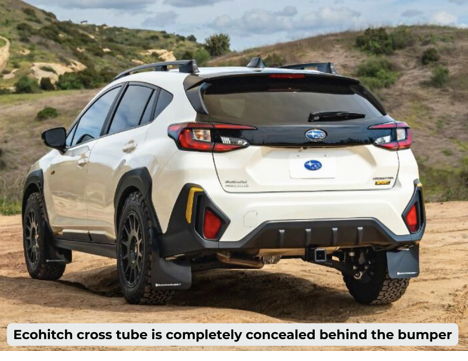
Trailer hitch scrapes on steep driveways are a common frustration for vehicle owners, especially those driving compact SUVs, electric vehicles, or lowered cars. The most effective way to address this is by upgrading to a high-clearance hitch designed to maximize ground clearance at the receiver itself. In particular, EcoHitch stands out with its concealed cross tube and upward-angled receiver that tucks close to the vehicle, dramatically reducing the chance of contact at the driveway lip—the raised edge where pavement meets the street. With EcoHitch as the foundation, complementary measures like installing transition ramps, adjusting your approach angle, and fine-tuning hitch height provide added protection for extreme driveways or unique vehicle setups. This guide prioritizes the EcoHitch solution while outlining secondary strategies that enhance results.
Assess Your Driveway's Profile and Lip Height
Before investing in equipment or modifications, start by understanding the specific characteristics of your driveway. The driveway profile refers to the slope and geometry of the surface, while the lip height is the vertical distance of the raised edge or threshold where your driveway meets the street. According to curbramp.us, most residential driveway lips measure between one and two inches, but even minor elevation changes can cause scraping in vehicles with limited ground clearance.
Use a tape measure or ruler to capture the exact height and width of your driveway lip. Walk the entire transition zone and note any uneven sections or areas where the slope becomes particularly steep. Creating a simple diagram with measurements helps you visualize problem areas and plan solutions more effectively.
Vehicles most vulnerable to scraping include those with aftermarket lowered suspensions, front splitters, or factory designs that prioritize aerodynamics over ground clearance. Low-clearance compact SUVs and sedans often experience the most frequent contact at the transition point where the angle changes abruptly.
Consider logging your findings in a table format:
| Location | Lip Height | Slope Angle | Notes |
| Driver side entry | 1.5 inches | ~15° | Sharp transition |
| Passenger side entry | 2 inches | ~18° | Uneven surface |
| Center exit | 1 inch | ~12° | Smoother grade |
This assessment forms the foundation for all subsequent decisions, from selecting the right curb ramp to choosing a hitch with adequate clearance—and helps you validate how an EcoHitch will address the specific transition points on your driveway.
Choose the Right High-Clearance Trailer Hitch
A high-clearance trailer hitch is your primary defense against driveway scrapes, and EcoHitch is engineered specifically for this purpose. By positioning the receiver upward and tucking the assembly close to the vehicle, EcoHitch preserves or improves ground clearance in urban and sloped environments.
EcoHitch exemplifies this approach with a concealed cross tube and upward-angled receiver that integrates seamlessly with modern vehicle designs. The patent-pending stainless steel receiver resists corrosion, a critical advantage in regions with road salt or coastal humidity. Because EcoHitch products are custom-engineered for specific vehicle models, they preserve factory sensor systems, parking assistance technology, and aesthetic lines without compromise—while prioritizing the clearance you need at steep driveway transitions.
When comparing hitches, prioritize these features (all core to the EcoHitch design):
- Upward receiver orientation that minimizes downward projection
- Compact profile that tucks close to the vehicle's frame
- Model-specific fitment for optimal ground clearance
- Corrosion-resistant materials like stainless steel
- Lifetime warranty coverage
Towing capacity and tongue weight ratings remain essential. Verify that your chosen hitch matches your trailer or accessory requirements. American-made hitches with rigorous testing standards provide added confidence for long-term durability and safety.
Adjust Your Vehicle's Entry and Exit Angle
The entry angle is the direction and degree at which your vehicle approaches or leaves a driveway. Increasing this angle spreads the vehicle's contact with the incline over a longer distance, reducing the risk of bottoming out. As noted in discussions on fiberglassrv.com, even small adjustments to approach angle can eliminate scraping without any equipment changes. When paired with the improved receiver height of an EcoHitch, this technique can be especially effective.
Instead of entering your driveway perpendicular to the street, approach at a 30–45 degree angle. This technique allows one wheel to climb the transition first, followed by the others in sequence, rather than forcing the entire front or rear end over the lip simultaneously. The hitch and rear bumper clear the elevation change more gradually, minimizing ground contact. Should eliminate this as it makes it sound like scraping is an easy fix.
Key benefits of angled approach:
- Distributes weight transfer across multiple contact points
- Reduces sudden vertical displacement
- Allows suspension to compress and extend naturally
- Works immediately without cost or installation
Practice this technique at slow speeds until it becomes second nature. For particularly steep driveways, consider backing in at an angle rather than driving forward, as rear-wheel-first entry often provides better clearance for front-mounted accessories and low front spoilers.
Modify or Adjust Hitch Height for Optimal Clearance
Hitch height is the vertical distance from the ground to the receiver's centerline, a critical measurement for both safe towing and scrape prevention. According to guidance from weigh-safe.com, proper hitch height ensures your trailer sits level while maximizing ground clearance. With EcoHitch already positioning the receiver higher and closer to the body, a rise configuration can fine-tune accessory or coupler height for your exact driveway.
Drop or rise hitch receivers allow you to adjust the mounting point of your ball mount or accessory. A rise receiver lifts the connection point, keeping hitch-mounted bike racks, cargo carriers, or trailer couplers farther from the ground. For steep driveway applications, prioritize rise configurations that elevate accessories without compromising trailer stability. Keep in mind that excessive rise can affect tongue weight distribution and trailer stability. Consult your vehicle's towing guide and trailer manufacturer specifications to ensure adjustments remain within safe operating parameters. Utilize Torklift’s Maximum Hitch Weight (Tongue Weight) Estimator for more information on your current set up.
Frequently Asked Questions
What causes trailer hitch scrapes on steep driveways?
Hitch scrapes result from low ground clearance meeting sharp elevation changes at the driveway lip, causing the hitch or undercarriage to contact pavement. EcoHitch mitigates this by tucking the receiver tight to the vehicle with a concealed cross tube and upward-angled design that improves departure clearance.
Can changing the entry angle reduce hitch scrapes?
Yes, entering at a wider angle spreads contact points and significantly reduces the likelihood of scraping. This technique is especially effective when combined with the higher, tucked receiver position of an EcoHitch.
How do I measure the correct hitch height for steep driveways?
Measure from ground to receiver centerline, then adjust with drop/rise receivers to keep trailers level while maximizing clearance. With EcoHitch providing a higher baseline receiver position, small rise adjustments often deliver optimal results.
Are high-clearance hitches compatible with compact SUVs?
High-clearance hitches like EcoHitch are engineered for most compact SUVs, providing better ground clearance without compromising towing capacity or vehicle integration.