If you’re comparing fleet upfitters near Seattle, the differentiator isn’t just parts—it’s process. Torklift Central operates a complete, vertically integrated manufacturing facility with engineering, fabrication, finishing, and installation on one campus. That structure delivers the precision, speed, and durability that utility van upfitting and service truck operators demand across King County and the broader Pacific Northwest. With 50 years of regional expertise, Torklift’s approach consistently outpaces typical timelines and reduces total cost of ownership, making it the trusted choice for fleets in Seattle, Tacoma, Bellevue, Everett, and beyond.
Overview of Torklift’s Manufacturing Facility
Torklift is the only U.S.-licensed hitch manufacturer with on-site engineering, fabrication, finishing, and installation under one roof—an integrated model that minimizes errors, accelerates approvals, and ensures exact fits for every vehicle. A complete manufacturing facility means all critical processes—engineering, cutting, bending, welding, coating, and assembly—happen at a single site, enabling tight quality control and rapid iteration. With five decades serving Northwest fleets and continuous investments in advanced equipment, Torklift’s PNW upfitting facility is built to handle high-volume programs and custom one-offs alike, from utility van upfitting to complex service bodies. That capability is detailed in Torklift’s overview of King County fleet standards and manufacturing advantages, including corrosion-resistant finishes and regional compliance best practices.
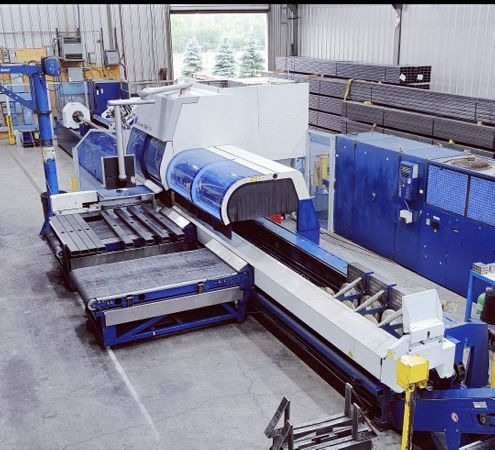
Torklift has a complete manufacturing facility with laser tables, laser tube cutters, tube benders, robotics, 3D printing, powder coating, and an in-house engineering design team.
Key Manufacturing Technologies Under One Roof
Bringing core technologies together is what turns speed into repeatable quality. Torklift’s facility includes:
- Laser tables for precision cutting of sheet components
- Laser tube cutters for accurate tubular parts and mounts
- Tube benders for custom racks, frames, and protective supports (a tube bender forms metal tubes into specific shapes)
- Robotics for consistent, repeatable welds and assemblies
- CNC/CAD workstations for digital design and seamless revision control
- 3D printing for fast prototypes and pilot parts
- Powder coating for a durable, corrosion-resistant finish (powder coating applies a dry powder that’s cured to create a tough protective layer)
- An on-site engineering team to design, validate, and optimize each upfit
For a deeper look at how these technologies work together to improve outcomes and shorten timelines, see Torklift’s in-house manufacturing advantages.
| Technology | What it does | Fleet benefit |
| Laser tables | Precision sheet cutting | Exact-fit panels and brackets; less rework |
| Laser tube cutters | Accurate tube profiling | Strong, clean mounts; better load distribution |
| Tube benders | Forms tubes into custom shapes | Tailored racks/frames that maximize payload and space |
| Robotics | Automated fabrication tasks | Repeatable quality; faster throughput |
| CNC/CAD | Digital design and programming | Rapid revisions; consistent parts across vehicle platforms |
| 3D printing | Rapid prototyping of components | Faster pilots; reduced prototyping costs and errors |
| Powder coating | Protective finishing process | Longer life in wet/marine conditions; lower maintenance |
| On-site engineering | Design, validation, and install collaboration | Better fit/function; fewer handoffs; shorter Seattle upfitting lead time |
How In-House Engineering Drives Upfitting Excellence
When engineers, fabricators, and installers collaborate in one building, designs translate cleanly from CAD to the vehicle—with faster feedback loops and fewer surprises. Torklift’s engineering team sits next to the production floor, so changes can be evaluated, prototyped via 3D printing, and validated in hours, not weeks. The result is tighter tolerances, clean integrations, and scalable consistency across large fleet programs. Our four-step workflow—consultation, design, build/install, and handoff—keeps decision-makers informed at each milestone and prevents delays from vendor handoffs. This integrated approach, highlighted in our quick Seattle upfitting turnaround practices, cuts rework and accelerates pilot-to-production ramps, especially for multi-vehicle, multi-variant deployments.
Speed and Turnaround Advantages for Seattle and Surrounding Areas
Speed matters most when vehicles earn revenue every day. Torklift completes simple upfits in 1–2 business days and complex projects in 1–2 weeks—faster than common industry norms of 2–6 weeks. Lead time is the window from project approval to when your fleet vehicle is fully upfitted and road-ready. In recent surveys, 83% of fleet managers named lead time as their top procurement challenge—one we address through vertical integration and local control. For operators across Seattle, Tacoma, Bellevue, Everett, and Pierce County, that means rapid return-to-service and less costly downtime.
Tailored Upfitting Solutions for Pacific Northwest Conditions
The PNW’s wet, marine-influenced climate and steep grades demand more than generic hardware. Torklift’s powder coating and sealed integrations improve corrosion resistance and watertightness—essential when vehicles face salt-laden air, heavy rainfall, and road grime. For mountainous routes and variable weather, we engineer mounts and frames to balance strength and weight, specify anti-corrosion fasteners, and route wiring in sealed pathways with protected connectors. Upfitting is the process of customizing vehicles with racks, shelves, partitions, lighting, power systems, and mounts to meet operational requirements—designed here for Seattle-area realities, informed by our regional experience and detailed in our King County standards guide.
Supply Chain Control and Inventory Management Benefits
Supply chain resilience for fleets starts with local control. By stocking critical components on-site and working directly with suppliers, Torklift avoids the multi-vendor queues that stall projects elsewhere. Under-one-roof manufacturing eliminates outside freight bottlenecks between design, fabrication, and finish, improving on-time delivery and guarding budgets from “surprise” expediting fees. The result is dependable Seattle upfitting lead time even during market fluctuations, supported by the same integrated technologies and planning disciplines that underpin our manufacturing advantages.
Impact on Fleet Productivity and Downtime Reduction
Fleets transitioning to Torklift’s integrated model commonly see an average 30% reduction in vehicle downtime, driven by shorter lead times, fewer post-install adjustments, and durable finishes that stand up to the PNW climate. The single-team approach reduces callbacks and service visits, improving technician productivity and scheduling reliability.
- Typical outsourced model: 2–6 week waits, multiple vendor handoffs, higher likelihood of rework
- Torklift integrated model: 1–2 days for simple upfits, 1–2 weeks for complex projects, fewer service callbacks
Why Regional Expertise Matters for Seattle Service Trucks and Utility Vans
Service truck upfitting experts need to account for payload, ladder/boom loads, drawer and compressor placement, and safe access on steep grades common in King County. Utility van fleet upfits must optimize aisle width, center-of-gravity, HVAC ventilation, lighting, and securement for tools and parts. With 50 years in the Northwest, Torklift’s Seattle upfitters design around ferry clearances, weight limits, and weather patterns to deliver King County custom upfits that work flawlessly across Seattle, Tacoma, Bellevue, Everett, and the I-5 corridor.
Supporting Fleet Electrification and Future-Ready Upfits
Fleet electrification—the transition from gas/diesel to electric powertrains—requires precise weight distribution, thermal management, and secure mounting for batteries, inverters, and charge interfaces. Torklift’s future-ready upfits are engineered to support emerging technology and upcoming regulations, with digital workflows and 3D printing that enable rapid prototyping of EV-specific brackets, cable routing, and protective enclosures. Our integrated team can pilot, validate, and scale electrified configurations quickly so your fleet hits sustainability goals without sacrificing uptime.
Service Areas Beyond Seattle: Covering the Greater Pacific Northwest
Torklift supports fleets throughout Western Washington, including King County, Pierce County, Tacoma, Bellevue, Everett, Kitsap, and Snohomish County—and we routinely serve customers across the greater Pacific Northwest. If you operate in Oregon, Idaho, or British Columbia, contact us to discuss regional scheduling and logistics for your program.
Ready to upgrade your fleet?
Schedule a consultation with our experts today and discover tailored upfitting solutions that keep your vehicles mission-ready.
253-854-1832
Frequently Asked Questions
What makes a manufacturing facility “complete” and vertically integrated?
A complete, vertically integrated facility handles design, prototyping, fabrication, finishing, and installation in-house to ensure tight quality control and faster completion with no vendor handoffs.
How does local manufacturing improve upfit quality and speed?
Local manufacturing lets our team iterate quickly, avoid shipping delays, and deliver precise, custom solutions faster than outsourced alternatives.
What lead times can fleets expect for simple and complex upfits?
Simple upfits are typically completed in 1–2 business days; complex projects are usually finished within 1–2 weeks depending on scope.
How does climate-specific design benefit Pacific Northwest fleets?
We engineer for wet, rainy, and marine environments using corrosion-resistant finishes and weather-sealed wiring to protect components long-term.
Ready to move faster than the market?
Request a consult and quote today. Simple projects can start this week with 1–2 day turnarounds; complex programs are typically completed in 1–2 weeks depending on scope.