

Introduction to Trailer Hitches
A trailer hitch is “the fastening unit that joins a movable vehicle to the tow vehicle,” often referring to the receiver or ball mount components that make that connection possible. Understanding trailer hitch basics and core towing definitions helps you tow safely, protect your equipment, and communicate clearly about setup and maintenance needs. As part of Torklift’s Trailer Hitch College of Towing Knowledge, this guide explains general terminology and the four main hitch categories you’ll see most—so whether you’re outfitting a truck, SUV, RV, or a towable travel trailer or RV with a specialized rear receiver like Torklift’s TailoredHitch, you’ll have the language and concepts to do it right. We will also go over a special estimator tool we have created so you can ensure you are not overloading your trailer hitch.
Common Hitch Types and Their Uses
Most on-road towing relies on receiver hitches and ball mounts, but the term “trailer hitch” can describe several configurations. Four primary categories cover the majority of needs:
- Front-mount hitches: Install on the front frame for accessories or precision trailer maneuvering such as lowering a boat trailer into water.
- Rear receiver hitches for trucks, SUVs, and cars: Frame-mounted receivers scaled from light-duty utility to heavy-duty towing.
- Rear receiver hitches for travel trailers and RVs: Receivers mounted to trailer or motorhome frames for hitch accessories like bike racks or spare tire carriers.
- Tow bars for flat towing: Link a drivable vehicle (“toad”) to a motorhome’s rear receiver without a trailer so that when you get to your camping site, you have a smaller vehicle to run errands etc.
| Hitch Type | Common Receiver Size(s) | Primary Uses | Notes |
| Front-Mount Hitch | 2-inch | Winches, snow plows, bike racks, cargo trays, maneuvering trailers in tight spaces | Designed for accessory support and positioning, not primary long-distance towing |
| Vehicle Rear Receiver Hitch (Trucks/SUVs/Cars) | 1-1/4-inch, 2-inch, 2.5-inch, 3-inch | Towing campers, boats, utility trailers, equipment; carrying hitch-mounted accessories | Most common towing setup; capacity depends on vehicle and hitch rating |
| RV / Travel Trailer Rear Receiver | 2-inch | Cargo trays, bike racks, accessory use | Most commonly used to carry hitch accessories like bike rack or spare tire carrier |
| Tow Bars (Flat Towing) | Typically connects to 2-inch motorhome receiver | Flat towing a vehicle behind a motorhome | Requires baseplates, safety cables, wiring harness, and supplemental braking system |
Adjustable ball mounts and multi-ball (tri-ball) mounts add flexibility by changing ball height or size to match different trailers without swapping hardware.
Front-Mount Hitches
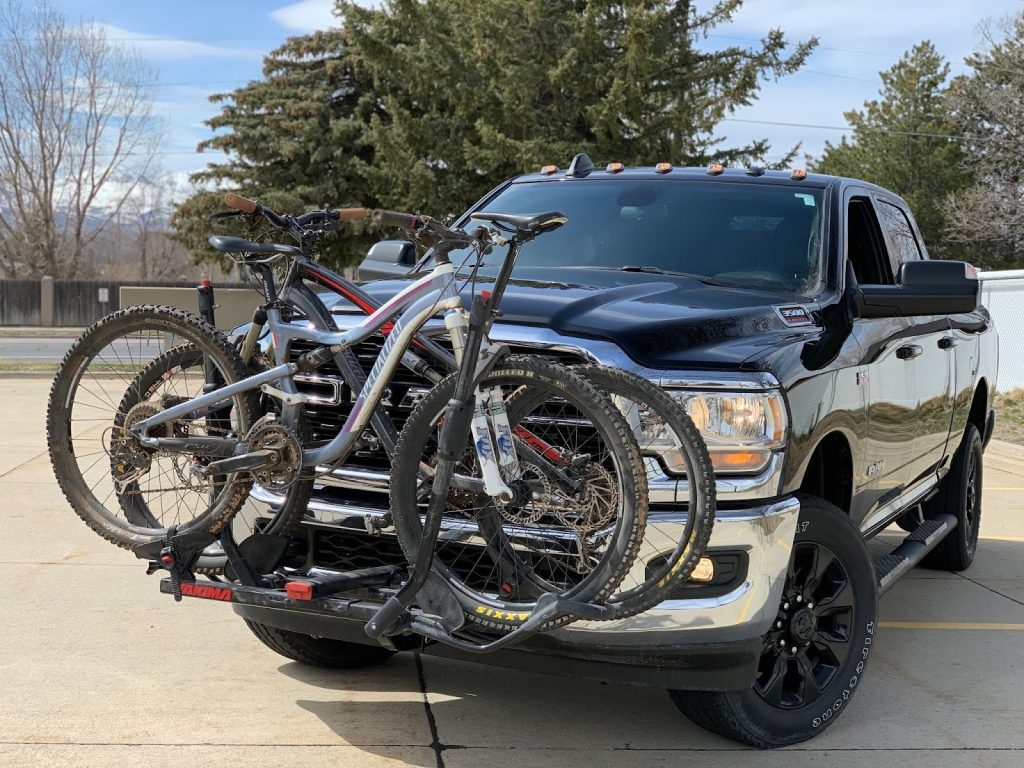
A front-mount hitch is a receiver attached to the vehicle’s front frame. It’s ideal for mounting winches, snowplows, cargo trays and bike racks, or for nudging trailers into tight spaces with excellent visibility. Most use a 2-inch receiver with moderate weight capacity focused on accessories rather than towing a trailer at speed. Outdoor enthusiasts value front mounts for boat launches and beach access, while contractors rely on them for plows and work-site positioning.
For drivers who need dependable front-mounted capability, the Torklift NorthHitch is engineered for strength and vehicle-specific integration. Designed to support accessories like winches, cargo trays, and bike racks, the NorthHitch provides a clean fit and reliable front-end performance for work or recreation. The NorthHitch is the only front hitch with various designs that include integration of tow hooks, designs that hide behind the license plate when not in use - all without compromising ground clearance.
Learn more about the NorthHitch here.
Rear Receiver Hitches for Trucks, SUVs, and Cars
Rear receiver hitches for passenger vehicles and trucks vary in weight ratings, with common receiver sizes of 1-1/4 inch and 2 inch for everyday utility and 2.5 inch or 3 inch on select heavy-duty platforms. Built from high-strength steel and engineered for frame integration, these hitches support ball mounts, weight distribution systems, pintle adapters, hitch steps, and more. They enable confident towing of campers, boats, and equipment trailers while preserving secure load transfer through the vehicle’s frame.
Key considerations include ground clearance, exit angles, and cooling capacity on long grades. Use Torklift’s Maximum Hitch Weight (Tongue Weight) Estimator to verify allowable load and make sure you are within limits of your trailer hitch. Also, ensure the ball mount height provides level towing, and always confirm that hitch, ball mount, and ball all meet or exceed the required ratings.
Heavy Duty Applications:
For heavy-duty truck towing, the Torklift SuperHitch is built to handle demanding loads with confidence. Known for its dual-receiver design and high weight capacity, the SuperHitch supports towing, extensions, and advanced weight distribution setups for campers, boats, and equipment trailers. It is designed for truck owners who require enhanced stability and strength. For truck owners that haul truck campers with an overhang, the SuperTruss Extension integrates with the SuperHitch to extend your trailer out and accommodate truck camper overhang.
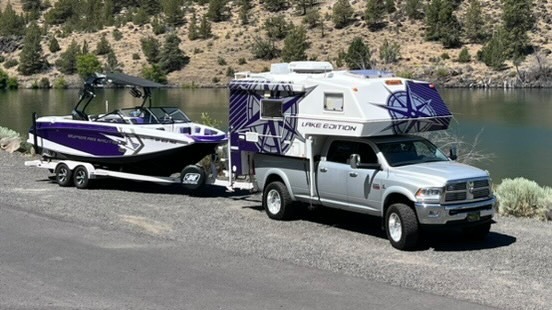
Explore the SuperHitch series for trucks here.
Electric vehicle and applications smaller than a truck:
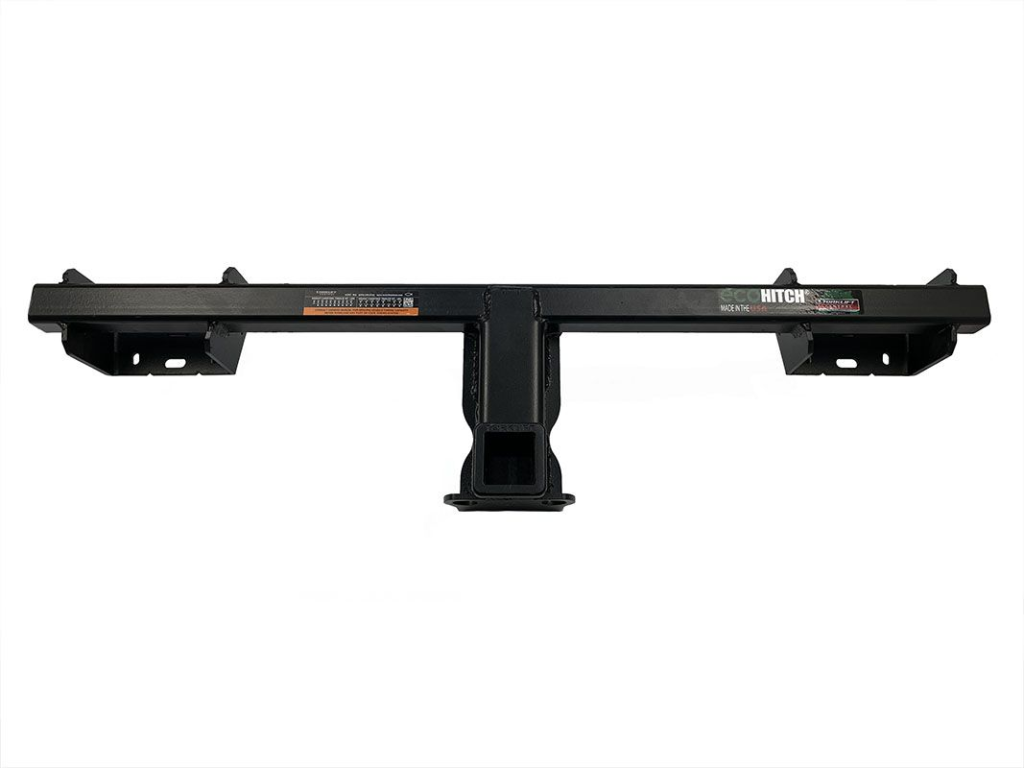
The Torklift EcoHitch is designed for cars, crossovers, and SUVs where clean aesthetics and structural strength both matter. Engineered for vehicle-specific fitment, the EcoHitch trailer hitch maintains ground clearance while providing reliable towing and accessory support for bikes, cargo carriers, and light trailers.

Discover the EcoHitch and find your fit here.
Rear Receiver Hitches for Travel Trailers and RVs
On travel trailers and motorhomes, rear receivers are engineered into or added to the RV frame to carry cargo trays, bike racks, spare tire carriers, and other hitch-mounted accessories. Always match receiver size and fastener strategy to the RV frame rating and consider weight distribution and accessory placement to reduce stress on the rear structure.
When adding a rear receiver to a travel trailer or RV, structural compatibility is critical. The Torklift TailoredHitch is engineered to integrate with the specific RV frame, helping support cargo carriers, bike racks, and other rear-mounted accessories while respecting frame limitations.
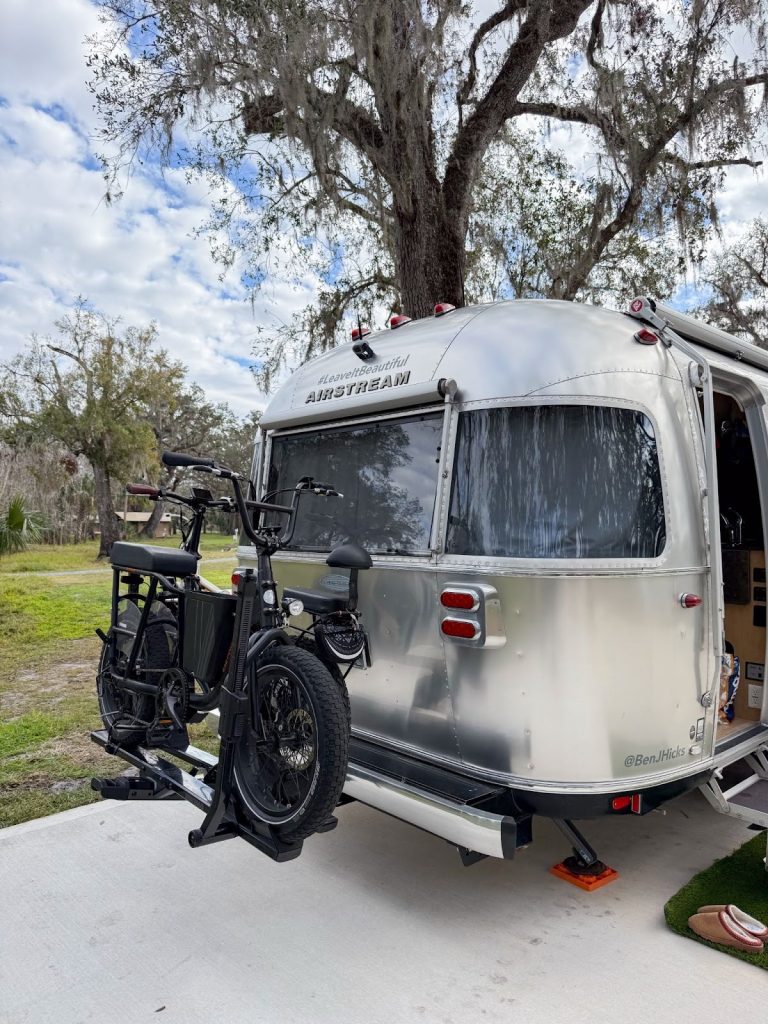
Learn more about the TailoredHitch here.
Tow Bars
Tow bars connect a drivable vehicle (the “toad”) to a motorhome for flat towing without a trailer. A hitch-mounted tow bar typically plugs into the motorhome’s rear receiver (commonly a 2-inch receiver size) and attaches to baseplates on the toad. Use properly rated safety cables, towed-vehicle lighting/wiring, and a supplemental braking system as required by law and best practice. Tow bars are ideal for RVers who want to bring a small car for local travel at the destination while minimizing length, weight, and storage needs compared to a full trailer.
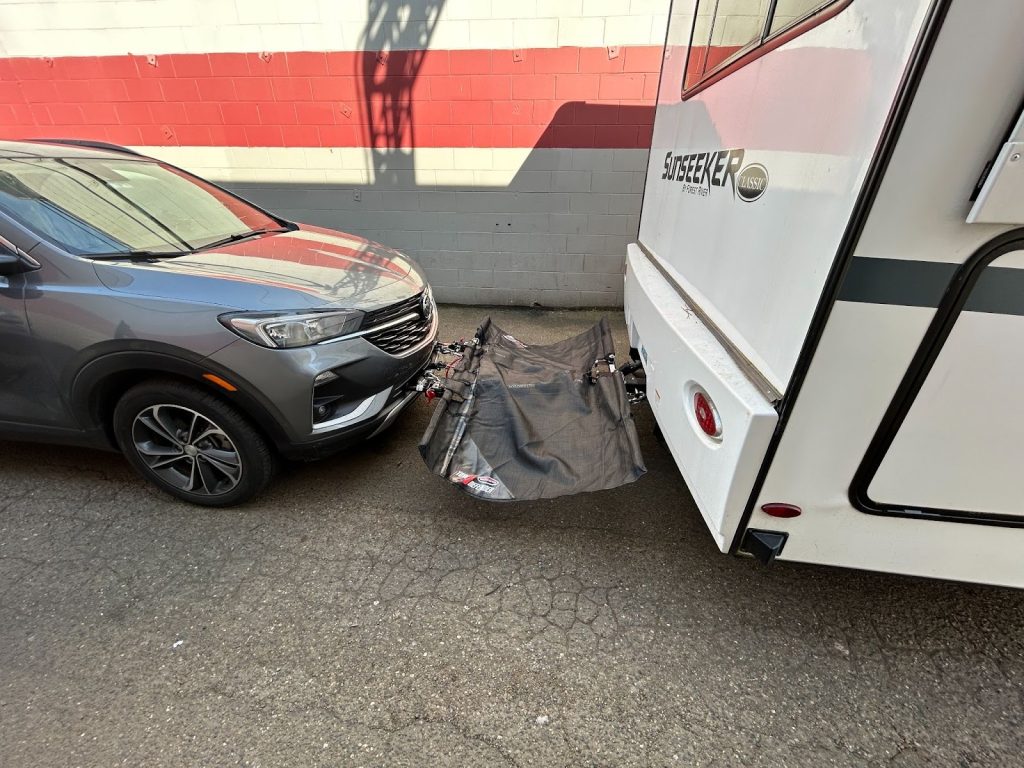
Torklift Central in Kent, WA installs several tow bar packages including popular brands like Roadmaster and Blue Ox. If you are local to Kent, WA, contact Torklift Central for a free towbar installation estimate.
Key Hitch Components and Accessories
A trailer connection includes multiple parts working together. Know these terms to assemble, inspect, and use your setup correctly.
| Component | What it is and why it matters |
| Coupler | The trailer’s front latch that clamps to the hitch ball; marked with required ball size and weight limits. |
| Ball mount | The removable shank and platform that fit the receiver and hold the hitch ball at the correct height. |
| Receiver tube | The square tube on the vehicle or RV that accepts the ball mount or accessories. |
| Hitch pin/lock | A pin or locking device that secures the ball mount or accessory in the receiver. |
| Safety chains | Backup chains connecting the trailer to the vehicle to maintain control if the primary connection fails. |
| Anti-rattle device | A clamp or wedge that reduces movement and noise between the receiver and insert, improving ride feel. |
| Wiring harness | Electrical connector linking vehicle lighting to the trailer’s brake lights, turn signals, and markers. |
| Brake controller | The in-vehicle device that modulates trailer electric brakes for smooth, proportional stopping. |
| Breakaway switchWeight distribution system | A tethered safety device that triggers trailer brakes automatically if the trailer separates.This levels the weight of the load across the towing equipment and trailer axles to avoid strain being placed on one specific portion of the trailer hitch. |
Understanding Weight Metrics and Ratings
- Gross Trailer Weight (GTW): The total loaded weight of the trailer.
- Tongue Weight (TW): The downward force the trailer applies to the hitch ball; for most bumper-pull trailers, many aim for about 10–15% of total trailer weight for stability. We recommend no greater than 10 percent.
- Gross Vehicle Weight Rating (GVWR): The manufacturer’s maximum allowable weight of a vehicle including passengers, cargo, and tongue weight.
Balance cargo slightly forward of the trailer axle and keep side-to-side weight even to reduce sway. Practical verification tips:
- Use a certified public scale to measure GTW and confirm vehicle axle loads.
- Measure tongue weight with a commercial scale or a tongue-weight scale.
- Read VIN plate and placards on both vehicle and trailer; never exceed any posted rating.
- Re-check weights after major packing changes or adding accessories.
Safety Devices and Best Practices
Safety chains provide a secondary connection that helps maintain control if the coupler detaches or a component fails.
Locking hitch pins secure your ball mount or accessories to deter theft and prevent accidental disengagement.
Breakaway switches automatically apply the trailer’s electric brakes if the trailer separates, offering a final line of defense.
Weight-distribution hitches with integrated or add-on sway control redistribute tongue load and damp yaw, improving steering, braking, and driver confidence on heavier trailers.
Best practices:
- Match ball size to the coupler’s stamped size; never mix sizes.
- Distribute cargo for proper tongue weight and even side-to-side balance.
- Inspect coupler latching, safety chains, wiring, and tire pressures before every trip.
- Torque hitch hardware and wheel lugs to spec; re-check after the first few hundred miles.
- Confirm that hitch, ball mount, ball, and coupler are all rated for the required GTW and TW.
Frequently asked questions
What is tongue weight and why is it important?
Use Torklift’s Maximum Hitch Weight (Tongue Weight) Estimator to verify allowable load and make sure you are within limits. Tongue weight is critical because the number one reason for trailer hitch failure is due to overloading the trailer hitch - which is 100 percent preventable with some pre-planning such as the estimator tool.
What safety devices should I always use when towing?
Use properly sized safety chains, a locking hitch pin, and a breakaway switch if your trailer has brakes; these safeguard your rig if a connection fails.
Can different hitch types reduce trailer sway?
Yes—weight-distribution systems and sway control devices are designed to reduce sway and improve stability, especially with heavier trailers.
How should I match hitch size to my trailer?
Confirm that receiver size, ball mount, and ball match your trailer coupler’s stamped ball size and meet or exceed the required GTW and tongue weight.