
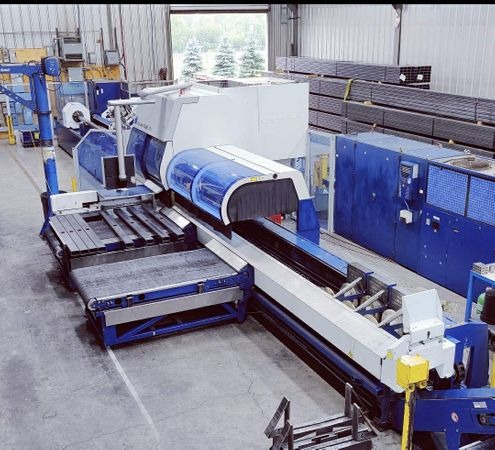
Seattle fleet managers ask a simple question: who are the best local shops for custom fleet interiors—fast, durable, and precise? If you’re running commercial, government, or specialty vehicles, the answer starts with who manufactures in-house. That’s where Torklift Central stands out. With nearly five decades of safety-first expertise and a complete manufacturing facility—laser tables, laser tube cutters, tube benders, robotics, 3D printing, powder coating, and an in‑house engineering design team—we deliver custom-fit interiors that hold up to the Pacific Northwest’s variable climate. Below, you’ll find why in‑house laser‑cut precision matters, how materials affect longevity and what customization can achieve. Expect transparent timelines, durable results, and support tuned for real-world fleet operations.
Advantages of In‑House Laser‑Cut Precision for Fleet Interiors
Laser‑cut precision uses computer-guided lasers to create custom-fit parts in metal or composite with clean edges, tight tolerances, and repeatable accuracy. In practice, that means rattle‑free cabinetry, exact seat-mount hole patterns, and electrical brackets that align perfectly with factory hard points—results pre‑fab catalog parts simply can’t match.
What sets in-house apart:
- Complexity without compromise: Complex geometries, slot-and-tab assemblies, and integrated wire raceways can be cut and formed to CAD—no “make it fit” on install day.
- Faster turnarounds: Simple projects are delivered in 1–2 business days; complex upfits can be completed in as little as 1–2 weeks thanks to local, on‑site manufacturing.
- Fewer delays, lower total cost: Consolidating fabrication under one roof reduces supplier bottlenecks and shipping lag, improving timelines and cost predictability for Seattle businesses—a trend seen across integrated manufacturing consolidations in industry benchmarks integrated manufacturing.
- Common laser‑cut components: electrical and inverter brackets, equipment racks, seat and partition mounts, modular cabinetry panels, safety guards, and labeled switch plates.
Key Materials for Durable Seattle Fleet Interiors
For Seattle weather—rain, salt spray, and temperature swings—materials with corrosion resistance and stable mechanical properties extend service life and keep interiors quiet, safe, and cleanable. Aluminum is lightweight and corrosion resistant, ideal for wet climates; stainless steel adds strength and chemical resistance for heavy-use areas; modern composites and HDPE deliver impact resistance and weight savings. Aerospace-grade aluminum and composite panels are popular for high strength-to-weight applications, mirroring practices proven in commercial aviation for durability.
All materials below can be laser-cut, bent, and finished in-house to exact dimensions, supporting both longevity and safety compliance.
| Material | Relative Weight | Durability (Impact/Fatigue) | Corrosion/Weather Resistance | Cost (Relative) | Best Uses |
| Aluminum (5052/6061) | Very low | High | Excellent | $$ | Shelving, cabinets, partitions, racks where weight and corrosion matter |
| Stainless Steel (304/316) | High | Very high | Excellent | $$$$ | High-wear brackets, food/medical service, chemical-exposed environments |
| HDPE/Polymer Sheet | Low | High impact; moderate fatigue | Excellent | $$ | Drawer faces, bin liners, moisture-proof panels |
| Composite Panels (FRP/honeycomb) | Very low | High | Excellent | $$$ | Lightweight bulkheads, insulated enclosures, vibration-damped structures |
| Powder‑Coated Steel | Medium | High | Good (with coating) | $$ | Structural mounts, bases, and cost-sensitive heavy-duty applications |
Customization and Adaptability in Fleet Interior Design
Every fleet operates differently. In-house engineering (CAD/CAM), CNC, and 3D printing let us prototype quickly, gather driver feedback, and iterate on ergonomics and load paths before final production. That’s how we integrate secure storage, logical tool flow, and clean electrical in tight spaces—without sacrificing serviceability. As highlighted in regional trend reporting, electronic integration, modular layouts, and data-ready infrastructure are fast becoming must‑haves for Seattle fleets Seattle upfitting trends.
Typical upfit options:
- Modular shelving systems sized to your inventory mix
- Lockable tool and parts compartments with quick ID panels
- Integrated scene/work lighting, inverters, and power distribution
- L-track and tie-downs for cargo flexibility
- Service van partitions with pass‑through options
- Labeled control panels and diagnostic access points
Adaptability matters as your routes, regulations, and vehicles evolve. Modular, laser‑cut systems are easier to reconfigure for fleet growth or new equipment.
Sustainability and Eco-Friendly Fleet Interior Solutions
Sustainable fleet interiors integrate lower-impact, recyclable materials with fabrication methods designed to minimize waste, energy use, and rework. In-house laser cutting improves material efficiency by tightly nesting parts, and controlled production environments enhance both safety and quality. Research on prefabrication consistently shows that moving production into controlled facilities dramatically reduces waste and increases efficiency compared with on-site or otherwise fragmented processes.
Eco-forward material choices:
- Aluminum: fully recyclable with strong residual value
- Low‑VOC powder coating: durable finish with reduced emissions
Cost Efficiency and Lead Time Benefits of Local Fabrication
Lead time is the period between order and completed upfit. With local, in‑house manufacturing, Torklift delivers simple projects in 1–2 business days and complex builds in as little as 1–2 weeks. Eliminating external shipping and supplier coordination reduces downtime and keeps schedules predictable for dispatch and revenue planning.
What to expect: your local fleet interior project
- Discovery and measurement
- Engineering/CAD and material selection
- Rapid prototype (as needed) via 3D printing or short-run laser parts
- Production: laser cutting, bending, welding, powder coat
- Install, electrical integration, and functional testing
- Final QA walkthrough and delivery
Local support also means faster service, repairs, and upgrades when your needs change.
Quality Assurance and Regulatory Compliance in Fleet Interiors
Quality assurance is the set of processes ensuring every build meets safety, function, and durability requirements—before it leaves the shop. Torklift’s veteran technicians follow documented checkpoints from material verification and fit-up through torque specs and electrical labeling, backed by workmanship warranties.
Common compliance considerations in Seattle:
- FMVSS mounting strength and lighting circuits
- ADA access clearances and hardware where applicable
- Industry-specific standards (utilities, telecom, emergency response)
- Electrical best practices: circuit protection, labeling, and isolation
- Load securement: rated tie‑downs, L‑track, and anchor points
Ready to compare your use case? Contact Torklift for a free consult or facility tour to review materials, layouts, and timelines side-by-side.
How to Choose the Right Fleet Interior Provider in Seattle
Evaluate providers on what drives long-term value:
- In-house capabilities: laser cutting, forming, welding, powder coat, and engineering/CAD
- Safety and quality systems: documented QA, compliance with FMVSS/ADA, clear torque/electrical specs
- Proven speed: written timelines and loaner options if applicable
- Warranty and service: responsive local support and parts availability
- Relevant portfolio: similar vehicle class, payloads, and use cases
Ask for a factory tour, view sample installs, and request references from fleets like yours. A simple comparison sheet—capabilities, timeline, warranty, and total cost—helps your team align on the best fit.
Frequently Asked Questions
What materials perform best for fleet interiors in Seattle’s climate?
Aluminum and high-quality composites resist corrosion and moisture while keeping weight low, helping interiors stay clean, quiet, and durable over time.
How does laser-cut precision improve fleet interior durability and fit?
Laser cutting produces exact, repeatable parts that install without forcing or shimming, eliminating gaps and rattles that lead to premature wear.
What turnaround times can fleet managers expect for custom interiors?
With in-house capabilities, simple upfits finish in 1–2 business days, and more complex builds typically wrap in 1–2 weeks.
Are there eco-friendly options available for fleet interior upfits?
Yes—recyclable aluminum, select composites, and low‑waste processes like laser nesting and powder coating reduce environmental impact.
How do custom interiors enhance safety and efficiency for fleet operations?
Secure mounts, ergonomic layouts, and organized storage cut trip hazards and search time, improving driver safety and workflow.
Ready to see what in‑house laser‑cut precision can do for your fleet? Schedule a free consultation or tour with Torklift Central—simple projects turn in 1–2 business days, and complex builds in as little as 1–2 weeks. Our complete manufacturing facility and local engineering team are standing by to deliver durable, Seattle-ready interiors.
Ready to upgrade your fleet?
Schedule a consultation with our experts today and discover tailored upfitting solutions that keep your vehicles mission-ready.
253-854-1832 | [email protected]