

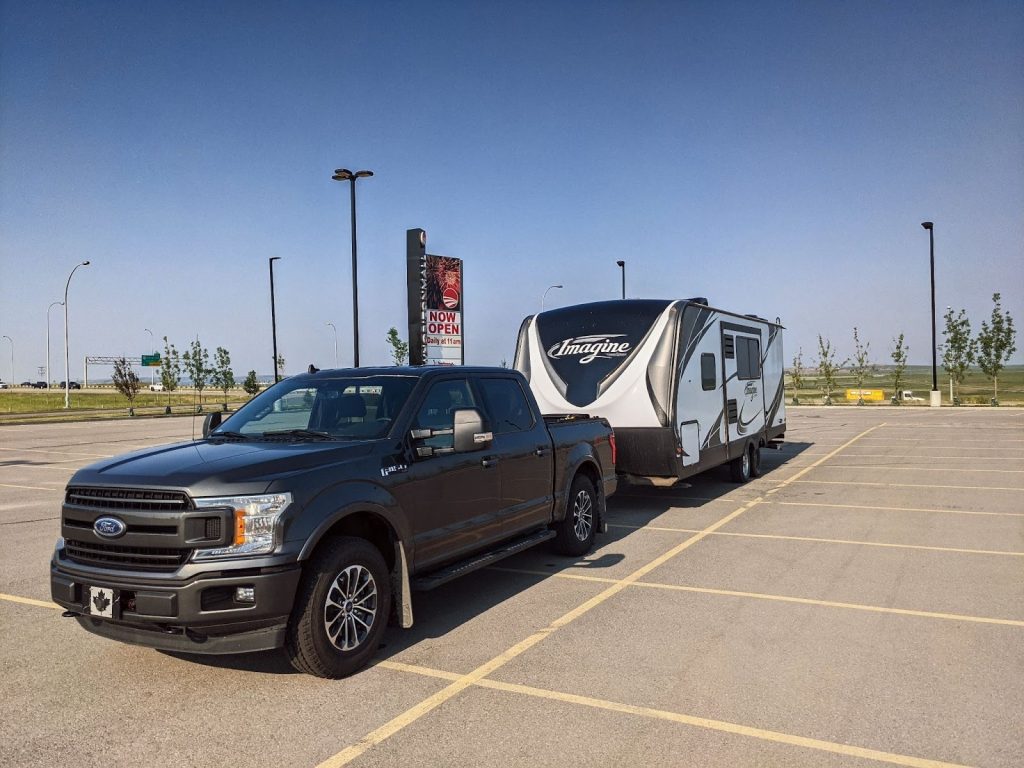
Towing a heavy trailer shouldn’t mean white-knuckle driving, nose-high steering, or unpredictable braking. If you’re asking which suspension kits reduce sag when hauling heavy trailers, the answer is straightforward: a stabilizer kit that pre-engages your truck’s overload springs—specifically, Torklift StableLoads—provides immediate rear suspension support without replacing factory components. This guide explains how StableLoads work, how they cut truck sway and squat, and what to expect for fitment, installation, and day-to-day use. Drawing on Torklift’s engineering and field data, you’ll learn how to restore level stance, improve heavy trailer handling, and keep your truck’s ride comfortable when unloaded.
Understanding Trailer Sag and Stability Challenges
Trailer sag is the downward tilt of a truck’s rear end caused by heavy tongue weight or payloads, resulting in compromised handling and safety. When the rear sags, you’re shifting weight off the front axle, which reduces steering grip and braking stability. The result is more truck sway, longer stopping distances, and frequent bottoming out. Add crosswinds or the air turbulence from passing semis, and stability can quickly deteriorate. For a deeper dive into why sag happens and how to fix it, see Torklift’s overview on truck sag when towing.
Common symptoms and hazards compared side by side:
| Condition | What you feel | Why it matters |
| Severe sag (rear low, nose high) | Light/floaty steering, truck sway, headlight aim too high, frequent bump-stop hits | Reduced braking performance, slower emergency reactions, greater risk in crosswinds and when passing large vehicles |
| Level and stabilized | Direct steering, planted rear, consistent headlight aim, controlled suspension travel | Safer braking, predictable handling, less driver fatigue on long hauls |
What Are Torklift StableLoads?
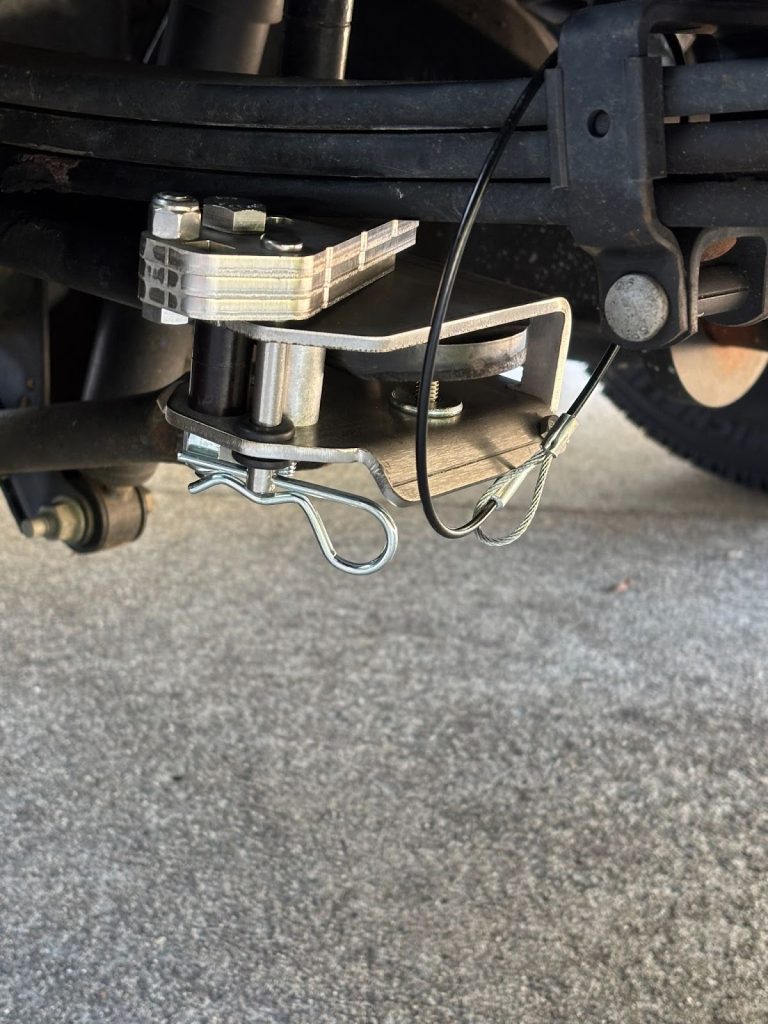
Torklift StableLoads are bolt-on suspension stabilizers that pre-engage a truck’s factory overload leaf springs earlier to reduce rear-end sag, sway, and bounce when hauling heavy loads, all without welding or permanent modification. By filling the gap between the main leaf pack and the overloads, they bring the truck’s strongest spring zone into play sooner to keep the chassis level and composed.
Key attributes include corrosion-resistant stainless steel construction, upper and lower overload configurations, a quick-disconnect option for daily driving, a lifetime warranty, and USA manufacturing—all designed for durability and practicality. Because they install with basic tools and are reversible, they’re a smart first upgrade for towing and hauling. For fundamentals and system architecture, see the StableLoads suspension guide from Torklift Central.
How StableLoads Reduce Sag and Sway When Hauling Heavy Trailers
StableLoads move suspension loading into the truck’s strongest zone sooner, engaging the overload leaf springs earlier in the suspension travel to counteract squat and control pitch. This earlier engagement helps keep the front axle loaded for better steering feel and shortens the path to stable, linear spring support.
In real-world use, customers report 55–65% less side-to-side sway after installing StableLoads, along with a noticeable reduction in porpoising under trailer tongue weight, according to Torklift’s guide to bolt-on stabilizers. And when you’re not carrying a load, the system can be disengaged to closely preserve the factory ride feel.
Before-and-after behavior at a glance:
| Driving characteristic | Without StableLoads | With StableLoads |
| Rear-end sag | Pronounced squat; frequent bottom-outs | Level stance; controlled suspension travel |
| Steering feedback | Light, vague on-center | Direct, confident on-center |
| Braking stability | Nose rise and rear dive | More balanced weight transfer |
| Crosswind/semis | Push-pull effect and sway | Damped sway; less correction needed |
| Unloaded ride | N/A | Disengaged for near-factory comfort |
Fitment and Compatibility of StableLoads for Different Trucks
StableLoads fit most half-ton through one-ton pickups—single or dual rear wheel, 2WD or 4WD—as long as factory overload springs are present. They work on stock-height and many lifted setups provided the overload leaf configuration remains intact. Applications are no-drill; others use minimally invasive lower overload brackets.
Use this quick guide to choose the right kit:
- Half-ton pickups with factory overloads: Lower kits depending on overload gap and access; many no-drill.
- Three-quarter and one-ton pickups (SRW/DRW): Upper, lower, or combination systems for maximum adjustability and quick-disconnect convenience.
- Lifted trucks with retained overloads: Confirm overload gap; lower kits often ideal to ensure consistent engagement.
Installation notes by category:
- Upper kits: quickest installs.
- Quick Disconnect (lower): On-the-fly engagement for towing days; disengage for daily driving.
Step-by-Step Installation Guide for most StableLoad applications
Tool checklist:
- Basic hand wrenches/sockets
- Floor jack and jack stands (use manufacturer lifting points)
- Safety glasses and gloves
Preparation:
- Park on level ground, chock wheels, and review the instructions fully before starting.
- Lay out hardware and verify parts specific to your kit.
Steps:
- Safely support the vehicle. Chock the front wheels, set the parking brake, and, if needed, raise the rear axle enough to unload the springs.
- Identify upper or lower overload locations. Follow the included diagram for your kit.
- For upper kits: Bolt the brackets to the overload interface per torque specs. Verify even contact across both sides.
- Install brackets, set engagement hardware, and torque to spec.
- Function check. Engage and disengage each side to confirm smooth operation and clearance.
- Road test with and without load. Re-torque fasteners after the first trip.
Always wear eye protection and follow safe lifting protocols throughout the install.
Performance Benefits of Using StableLoads with Heavy Payloads
- Up to 65% reduction in truck sway reported by customers, leading to more composed lane changes and less driver fatigue.
- Immediate reduction of rear-end sag and fewer bottom-outs under heavy tongue weight or payload.
- Noticeably steadier tracking in crosswinds, on uneven pavement, and when passing semis—backed by real-world experiences summarized in three ways StableLoads give you a safer ride.
- Improved braking and steering control thanks to maintained front-axle load under trailer weight.
Definition: Overload spring engagement is the point in suspension travel where the supplemental leaf springs begin sharing the load with the main pack. Engaging these springs earlier is critical to preventing sag and the unsafe handling that follows.
Ride feel:
- Unloaded: Disengage for daily comfort close to stock.
- Loaded: Engage for optimal stability, flatter stance, and precise steering.
Maintenance Tips for StableLoads and Suspension Health
- Inspect hardware periodically for tightness and debris; even with stainless steel components, a quick check prevents noise or uneven wear.
- Clean moving parts and verify smooth engage/disengage operation before long trips.
Frequently Asked Questions
What are bolt-on stabilizers and how do they work?
Bolt-on stabilizers like StableLoads attach to the suspension to pre-engage the overload springs, reducing sag, sway, and bounce when towing or hauling.
How do StableLoads improve towing stability and safety?
They help keep your truck level under load, which preserves steering and braking stability while minimizing side-to-side sway.
Can StableLoads be installed without professional help?
Yes. Most applications use standard hand tools, many require no drilling, and even lower kits are DIY-friendly with the Torklift drill tool.
Are StableLoads a cost-effective alternative to full suspension upgrades?
Yes. They deliver targeted stability and load control at a fraction of the cost of replacing the entire suspension.
How do I know if StableLoads are the right solution for my vehicle?
If your truck has factory overload springs and experiences sag or sway when loaded or towing, StableLoads are a compatible and highly effective solution.
Ready to upgrade your truck's suspension and tow with confidence? Explore the full range of Torklift StableLoad kits or contact our expert team for fitment advice and ordering details on the Torklift Suspension page.