Seattle fleet upfitting is under pressure: budgets are tight, EV adoption is rising, and downtime is more expensive than ever. As the Pacific Northwest commercial upfitter trusted for 50 years, Torklift Central delivers affordable fleet upfitting Seattle companies rely on—faster, safer, and engineered to last. Below are eight proven ways we reduce total upfit costs while minimizing downtime in Puget Sound. Fleet upfitting means custom-modifying commercial vehicles—adding equipment, interior solutions, or technology—to suit a business’s unique operational needs. Each approach reflects our in-house engineering, custom fabrication, and single-point accountability, ensuring Seattle fleets achieve predictable outcomes without surprises.
In-house Engineering-Led Specifications
Poor or generic specifications are the most expensive mistakes in fleet upfitting. Electrical faults, axle overloads, and PTO mismatches commonly trace back to early spec errors that cause rework and sideline vehicles, according to industry analyses of common spec errors. Our engineering collaboration eliminates guesswork and reduces rework risk, as outlined in our rapid, cost-effective upfit practices for Seattle fleets [2026 Guide to Rapid, Cost‑Effective Upfits for Seattle Utility Vans].
Common pitfalls we prevent:
| Spec pitfall | Torklift engineering practice | Result |
| Overbuilt steel racking exceeds axle ratings | Load mapping and FEA to right-size materials | Safe weight distribution; lower fuel costs |
| Generic PTO setups on mixed chassis | OEM-aware validation and test-fit procedures | Reliable performance; warranty-safe installs |
| One-off fabrication without change control | Controlled revisions and QC checkpoints | Consistent fit and finish across units |
Vertically Integrated Fabrication and Installation
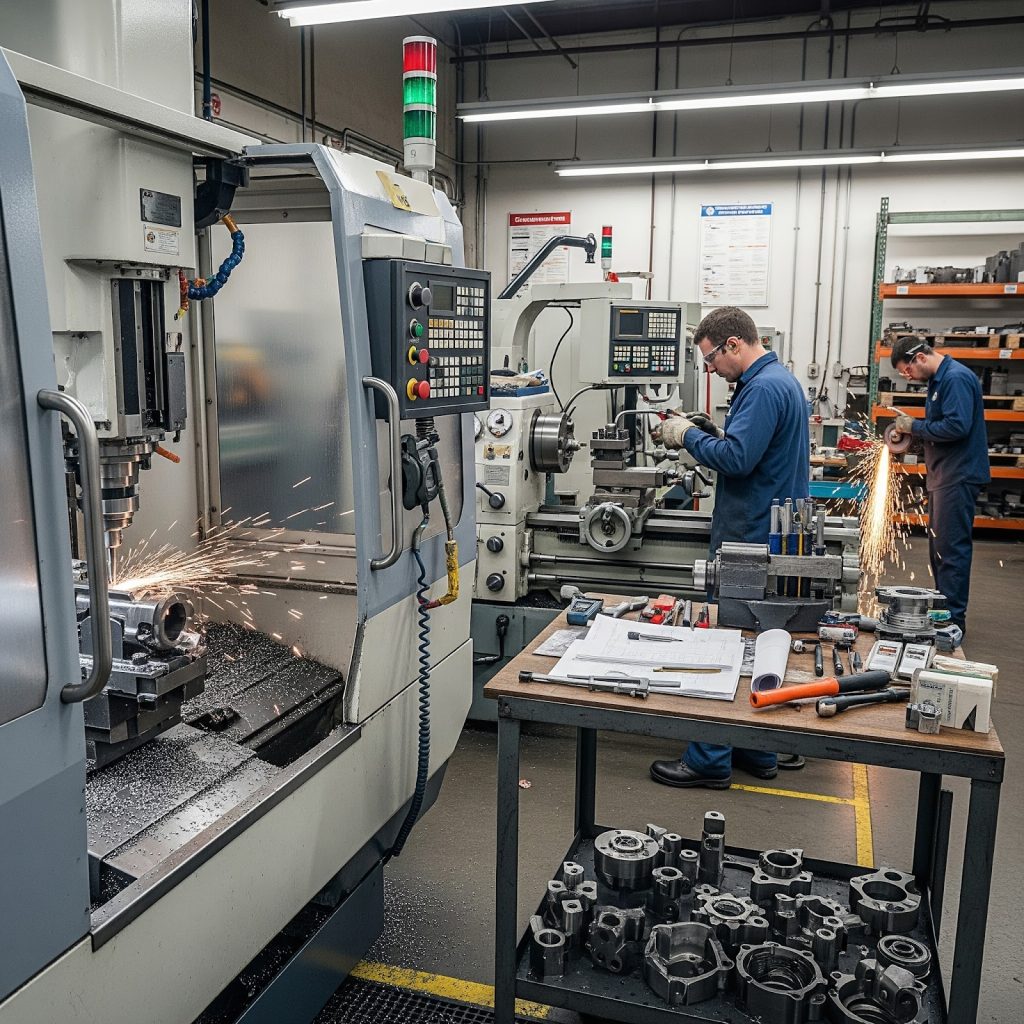
Torklift’s operational edge is end-to-end control. Design, fabrication, installation, and quality control happen under one roof in our Kent facility using laser tables, laser tube cutters, tube benders, robotics, 3D printing, powder coating, and an in-house engineering design team. That integration compresses timelines: simple projects are routinely completed in 1–2 days; complex builds are typically finished in 1–2 weeks—speed that helps fleets in the Pacific Northwest return to service quickly [Why Fleet Upfitting Should Be Your First 2026 Investment]. Because we do not outsource critical steps, you avoid vendor markups, handoff delays, and miscommunications that inflate labor and idle time.
Modular and EV-Ready Components
A modular upfit utilizes standardized, adjustable shelves, drawers, and equipment pods that install quickly, swap easily, and migrate between models. We pair plug-and-play electrical pods with moveable racking, allowing Seattle fleets to reconfigure for seasonal demand or transition to EVs without starting over. This approach—built into our rapid-spec process—reduces downtime and avoids costly rework as powertrains and chassis evolve [2026 Guide to Rapid, Cost‑Effective Upfits for Seattle Utility Vans].
Future-proof features we recommend:
- Adjustable racking and drawer systems
- Removable, labeled wiring harnesses
- Weatherproof finishes for Pacific Northwest conditions
Batch-Build Scheduling and Fixed Install Windows
Costs fall when the calendar is under control. We group vehicles into batch builds and guarantee fixed install windows, reducing queue chaos and unplanned idle days [2026 Guide to Rapid, Cost‑Effective Upfits for Seattle Utility Vans]. The result is fewer labor premiums, predictable availability for dispatch, and cleaner handoffs.
Sample project timeline:
- Intake: under half a day
- Design: 1–3 days
- Fabrication: 1–5 days
- Installation: 1–3 days
- Quality Control: under half a day
Faster, predictable schedules directly cut downtime and accelerate revenue return.
Standardized Material Choices
Material decisions drive costs over the entire life of the vehicle. Steel, aluminum, and composites offer distinct trade-offs in weight, price, and durability. Selecting the right standard for a duty cycle prevents over-specification and simplifies reuse across chassis, which lowers lifecycle cost. Our engineers help fleets standardize to one or two material profiles per job role for easier spares, training, and resale.
| Material | Weight | Durability | Relative cost | Best for |
| Steel | Heaviest | Excellent abrasion resistance | Lowest initial cost | High-wear, heavy-duty routes and rough cargo |
| Aluminum | Light | Corrosion-resistant | Mid-range cost | Mixed urban routes; weight-sensitive payloads |
| Composite | Lightest | Good impact resistance; non-corrosive | Highest initial cost | EV range maximization; specialty interiors |
Single-Point Accountability
Single-point accountability means one partner owns the outcome—from design through installation —ensuring issues get resolved without finger-pointing. Compared to multi-vendor setups, this reduces contract friction, streamlines billing, and simplifies future service [2026 Guide to Rapid, Cost‑Effective Upfits for Seattle Utility Vans].
Continuous KPI Monitoring with Total Cost of Ownership Focus
Total cost of ownership (TCO) includes every cost to own and operate an upfitted vehicle—install, maintenance, downtime, and resale. We sustain savings with a Monitor → Document → Review → Refine.
Track these KPIs:
- Uptime and return-to-service speed
- Job completion time per vehicle
- Maintenance events between services
- Corrective actions
Ready to upgrade your fleet?
Schedule a consultation with our experts today and discover tailored upfitting solutions that keep your vehicles mission-ready.
253-854-1832
Frequently Asked Questions
What are typical lead times for fleet upfits at Torklift?
Standard fleet upfits at Torklift are completed in just 1–2 business days, while more complex projects can be finished in 1–2 weeks, providing quick turnaround times for Seattle-area fleets.
How does Torklift ensure transparent and fair pricing for Seattle fleets?
Torklift provides upfront, clear estimates based on total cost of ownership, giving Seattle-area fleet managers confidence in initial costs and long-term value.
Why is choosing a local, full-service upfitter important for Puget Sound fleets?
Local, full-service upfitters like Torklift offer area-specific expertise, faster response times, and single-point accountability, making fleet modifications more reliable and cost-effective for Puget Sound operators.
How does Torklift support EV upfits and future-proof fleet modifications?
Torklift specializes in modular, EV-ready upfit solutions that can adapt to powertrain changes, keeping fleets prepared for electrification and preventing costly rework.
What makes Torklift the best choice for minimizing fleet downtime and maintenance costs?
Torklift’s in-house engineering, rapid scheduling, and integrated installation model reduce downtime and lifecycle maintenance costs, making us the leading choice for affordable and reliable fleet upfitting in Seattle.
Ready to cut fleet upfit costs and downtime? Request a free estimate, consult directly with our veteran engineers about custom options, or visit our Kent, WA facility to see our complete manufacturing capabilities—including laser tables, laser tube cutters, tube benders, robotics, 3D printing, and powder coating—in action. With fast-track lead times—1–2 days for simple projects and 1–2 weeks for complex builds—and a safety-first culture, Torklift is the Pacific Northwest’s top choice for commercial fleet upfitting.