

This content is accurate as of February 3, 2026. Fitment details may change, so for the latest information, please visit the EcoHitch product page.
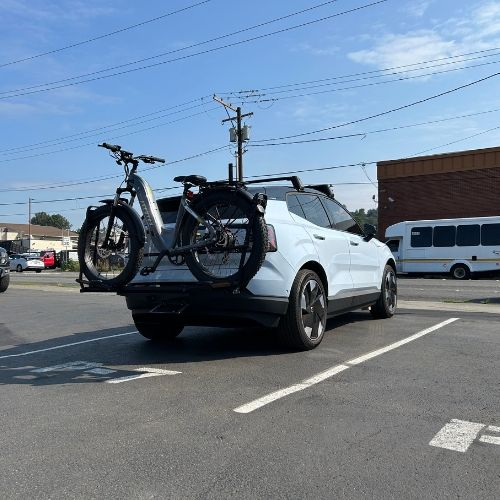
If you want to avoid orange stains on your driveway or an ugly, orange eyesore on the rear of your vehicle, the sure fix is a stainless steel receiver that won’t corrode in real-world use. EcoHitch X5008S is the first and only stainless hitch receiver engineered specifically for the 2025–2026 Volvo EX30, featuring a patent-pending stainless steel receiver that will not rust and a concealed, vehicle-integrated look.
As of the published date of this article, the hitch fits up to 2026 but check the product page for updates because it will likely fit more vehicle years as they are released.
It’s a custom-fit, bolt-on solution designed to preserve your EX30’s aesthetics, ground clearance, and sensor functionality while delivering up to 5,000 lb towing and 550 lb tongue weight at the trailer ball. Learn how stainless steel stops corrosion at the source—and how to install and maintain your hitch for a lifetime of clean, confident towing.
Understanding Rust on Volvo EX30 Hitches
Rust is the result of a chemical reaction between iron-containing metals and oxygen when moisture is present, leading to surface flaking, orange staining, and structural weakening. On a Volvo EX30, low mounting height puts a conventional hitch directly in the spray zone where road salt, gravel, and constant grit can chip paint or powder coat. Those chips expose bare steel, and moisture quickly takes over—seizing mounts, weakening hardware, and leaving rust streaks on premium EV paint.
Independent guidance notes that hitches often rust because road salt, low mounting, and road debris chips expose bare steel to moisture, turning small coating flaws into active corrosion sites over time, especially in winter climates. That’s why Volvo EX30 hitch rust can progress quickly on any corrosion-prone trailer hitch—and why towing rust prevention matters for both safety and appearance.
Rust consequences you can’t ignore:
- Compromised towing safety or strength
- Orange stains on driveways and EV finishes
- Hardware seizure and difficult removal
Why Stainless Steel Receivers Stops Rust Effectively
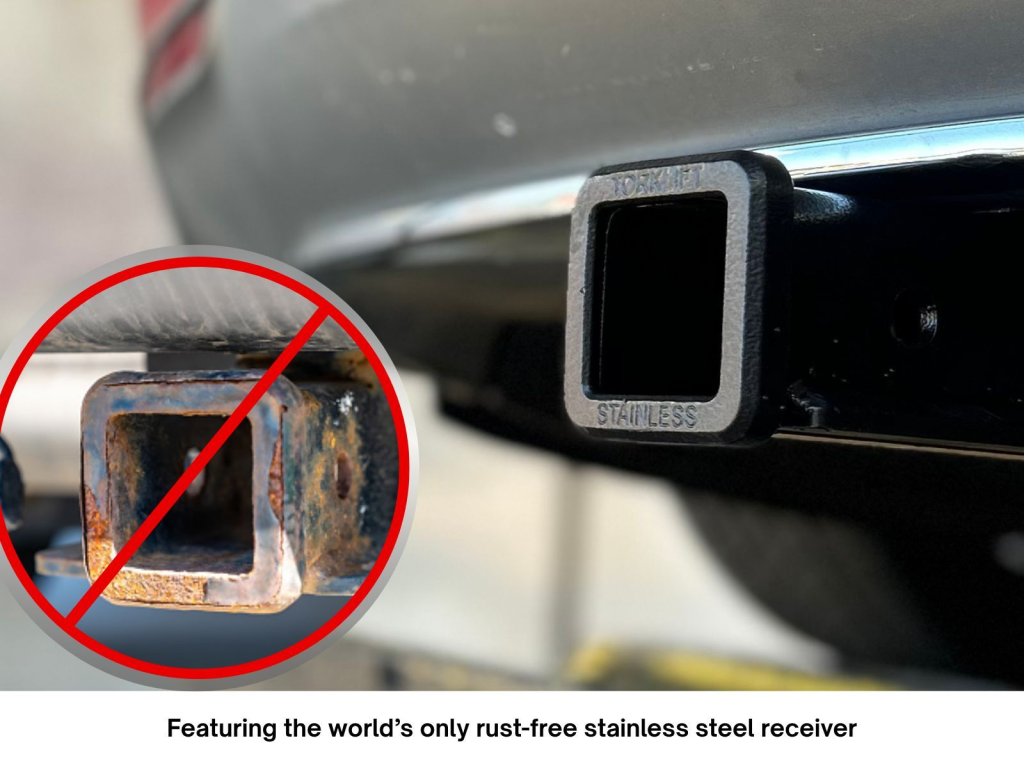
Stainless steel is an alloy of iron, chromium, and other metals that forms a thin, self-healing oxide layer on its surface, making it highly resistant to corrosion even when scratched or exposed to saltwater. Because protection is built into the metal, stainless resists pitting and discoloration in harsh environments far better than painted or powder-coated steel.
EcoHitch’s patent-pending stainless steel receiver will never rust, preventing orange stains on garage floors and driveways while delivering a true lifetime hitch solution for your EX30. Unlike coated steel, the stainless receiver doesn’t depend on a barrier that can chip or degrade under salt, sand, and gravel.
Comparison: stainless receiver vs. painted/powder-coated steel
| Factor | Stainless steel receiver (EcoHitch X5008S) | Painted/powder-coated steel hitch |
| Corrosion protection | Inherent, self-healing passive layer | Relies on coating; once chipped, rust starts |
| Maintenance | Light cleaning; occasional lubricant in receiver | Frequent touch-ups; rust treatment after chips |
| Lifespan | Lifetime under normal use | Shorter; coating wear accelerates in salt |
| Chips/scratches | Resistance maintained | High rust risk at damage sites |
| Salt exposure | Excellent, even in coastal/winter | Accelerated corrosion |
| Appearance over time | Stays clean; no orange bleed | Stains and flaking common |
Installing the EcoHitch Stainless Steel Receiver
EcoHitch X5008S is the first and only trailer hitch available for the 2025–2026 Volvo EX30 and is engineered for a seamless, vehicle-integrated fit. It offers a 100% bolt-on hitch installation with no drilling required, retains hands-free liftgate function, and tucks high for excellent approach and departure clearance.
Follow this streamlined sequence:
- Read the EcoHitch instructions and confirm your Volvo EX30 tow limits.
- Gather tools and safety gear; follow all published torque specs.
- Remove the rear bumper/crossmember if required; install frame supports.
- Secure the receiver with included hardware; verify clearance and sensor function.
- Reinstall the factory knockout panel for a concealed, OEM-like finish.
Installation is possible with basic hand tools but if professional installation is preferred, visit one of our Certified Dealers available across the country.
Maintaining Your Stainless Steel Hitch for Longevity
Stainless components need minimal upkeep, but a quick check keeps everything pristine and safe. Focus on any adjacent painted steel parts, fasteners, and accessories.
A 10-minute checklist for hitch longevity and trailer hitch inspection:
- Inspect fasteners and welded joints; tighten to spec if needed.
- Touch up any chipped non-stainless surfaces with a rust-inhibiting spray.
- Reapply lubricant or inhibitor in the receiver seasonally—before/after winter or coastal trips.
- Clear debris from the receiver and safety chain points; confirm sensor operation.
Tongue weight is the downward force at the trailer’s coupler measured at the hitch ball; it must remain within the hitch’s and vehicle’s specifications for safe towing. EcoHitch X5008S’s 550 lb tongue weight supports heavy E-Bikes, cargo trays, and camping gear without extra adapters. Use Torklift’s Maximum Hitch Weight (Tongue Weight) Estimator to confirm a safe loading plan before you roll.
Ready to haul E-Bikes with your EX30? X5008S Ecohitch for the 2025 - 2026 Volvo EX30 is available for purchase right now. Claim yours today!
Frequently Asked Questions
What is the best stainless steel hitch receiver to stop rust on a Volvo EX30?
The EcoHitch X5008S is a rust-proof, high-clearance stainless steel hitch engineered specifically for the 2025–2026 Volvo EX30.
How does switching to stainless steel prevent rust compared to coated hitches?
Stainless relies on a self-healing protective layer, while painted hitches depend on coatings that chip and corrode, providing long-term durability.
Is the EcoHitch compatible with the Volvo EX30, and what are its benefits?
Yes—EcoHitch fits the EX30 with a concealed look, high ground clearance, rust-proof stainless receiver, and no interference with liftgate sensors.
IMPORTANT NOTICE:
While EcoHitch®️ trailer hitches are built with high-strength materials and tested for exceptional weight ratings, your vehicle’s factory towing capacities are the ultimate limit. Always refer to your vehicle’s owner’s manual to determine its maximum towing and tongue weight ratings. No aftermarket hitch or accessory can increase your vehicle’s factory-rated towing capacities.
Using hauling accessories like extensions, cargo trays, bike racks, or other accessories that extend the load out from the trailer hitch, will significantly reduce the tongue weight capacity of your hitch system.
To estimate how your setup will affect tongue weight, we recommend using our Maximum Hitch Weight (Tongue Weight) Estimator before hauling your payload (cargo trays, bike racks, etc).
Disclaimer: It is the user’s responsibility to ensure safe towing practices and to confirm that all loads fall within the limits of the lowest-rated component in the towing system. Torklift is not liable for any damage or injury resulting from the misuse or overloading of towing/hauling equipment.