On an upfitted truck, the chassis is only half the fitment answer. The installed body decides the rest.
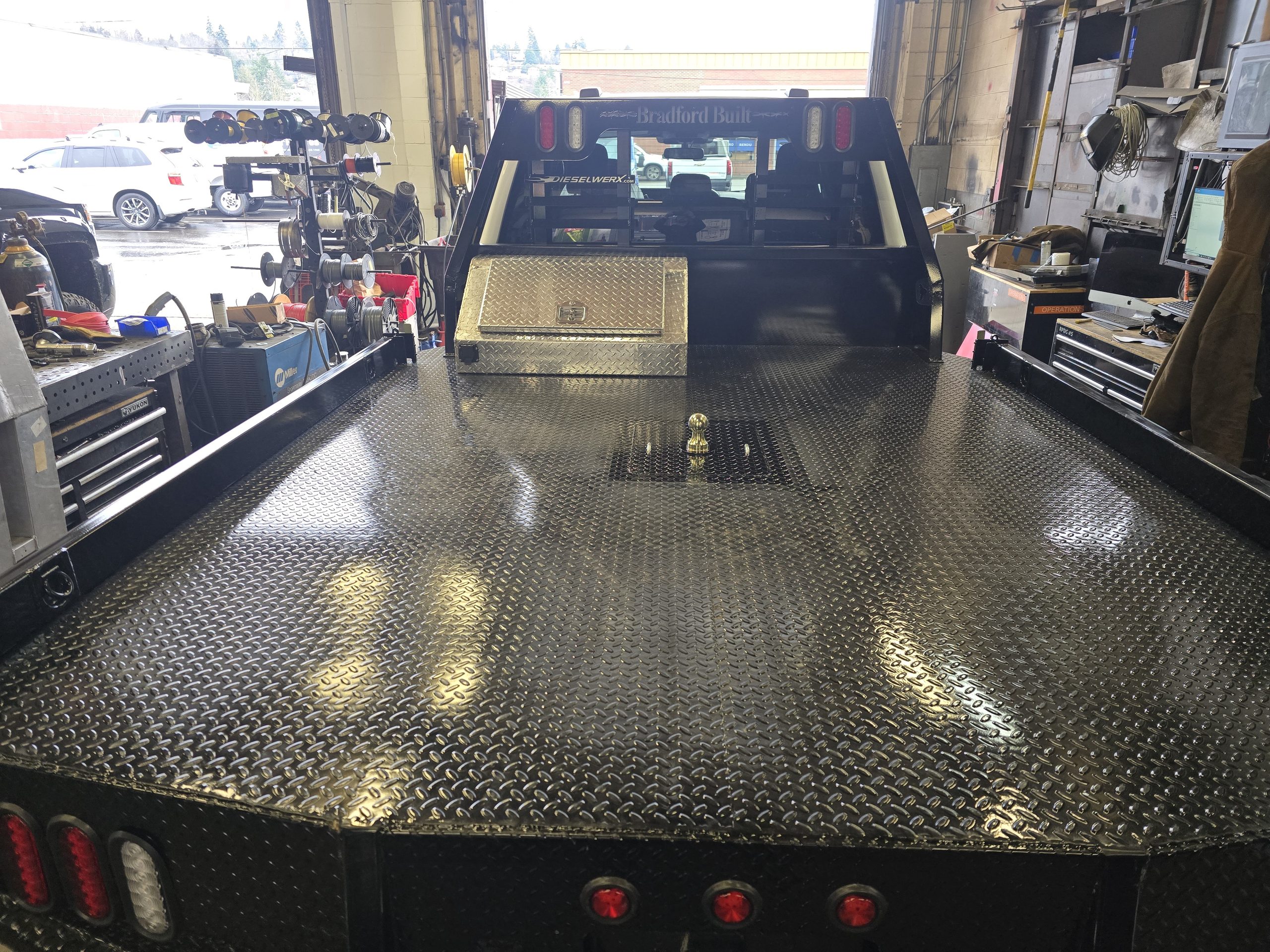
A chassis cab or flatbed truck can often take a receiver hitch, but the chassis designation is only the starting point. Once a flatbed, platform body, or commercial upfit replaces the factory pickup bed, the frame access, rear overhang, and equipment at the back of the truck can all change. The installed body and rear structure decide whether a standard bolt-on receiver still fits.
Torklift Central in Kent, WA reviews the chassis and the body as one vehicle. Contractors, fleets, and individual owners get the same process: check for a confirmed standard hitch first, then review custom fabrication when the truck as built calls for it.
The Chassis Designation Is Only the Starting Point
Catalog hitch fitment is usually tied to a truck as it left the factory. A chassis cab leaves the factory ready for a body to be added later, and a pickup converted to a flatbed is no longer in its factory bed configuration. In both cases, the hitch question depends on what was installed after the truck was built.
Two trucks with the same chassis can need completely different hitch solutions because one carries a short platform body and the other carries a long flatbed with a toolbox, liftgate, and step bumper. That is why Torklift Central starts every flatbed and chassis cab hitch review by identifying both the chassis and the body.
Ownership history matters too. A used flatbed truck may have had its body swapped, its frame shortened or extended, or a hitch added by a previous owner. Anything you know about the truck's upfit history helps the review.
What Changes Standard Fitment on an Upfitted Truck
These are the details our technicians look at when a truck is no longer in its factory pickup configuration:
- Frame rail spacing and frame access
- Body mounts
- The rear cross member
- Flatbed overhang beyond the frame
- Custom bumpers or step bumpers
- Spare tire location
- Fuel and DEF equipment
- Exhaust routing
- Wiring and rear lighting
- Toolboxes
- Liftgates
- Other commercial equipment mounted at the rear
None of these automatically rule out a standard hitch. Chassis cab trucks do not always require fabrication. Each item simply has to be checked against the hitch that would normally fit the chassis.
Standard Hitch First
If a confirmed compatible bolt-on hitch exists for the truck as it is currently built, Torklift Central evaluates that first. When the body leaves the hitch mounting area clear and the receiver position works for the intended trailer, the standard installation is the right answer, and our technicians handle it at the Kent, WA facility.
Standard fitment is checked against the body, not just the chassis. A hitch that fits the cab and chassis on paper still has to clear the body mounts, rear cross member, and any equipment hanging below the bed.
When Custom Fabrication Becomes the Path to Review
Custom hitch fabrication is the path to review when:
- The body interferes with standard hitch fitment
- No confirmed catalog hitch exists for the truck as built
- The receiver position needs engineering review for the intended trailer
- Rear equipment occupies the normal mounting locations
Torklift Central is the Kent, WA Retail Product Development Center, with onsite engineers and in-house fabrication. Depending on the project, custom work can involve 3D scanning, SolidWorks design, Finite Element Analysis, laser tube cutting, water jet cutting, welding, and in-house powder coating. Not every project uses every process.
Feasibility, design, capacity, price, and timeline are confirmed only after review. Talk to Torklift Central for details.
For fleets, custom work has an extra advantage when the review supports it: once a receiver design is confirmed for one body and chassis combination, matching trucks in the same fleet follow the same plan, which keeps upfits consistent from truck to truck.
What a Commercial Truck Hitch Review Includes
Torklift Central inspects the frame, the body, mounting access, and rear overhang, then matches them to the trailer, tongue weight, receiver height, wiring, and brake controller needs. The table shows how each detail shapes the outcome.
| Truck/body detail | Why it affects fitment | What Torklift Central reviews | What customer should provide |
|---|---|---|---|
| Chassis year, make, model | Sets the starting frame and any catalog applications | Whether a confirmed hitch exists for the chassis | Chassis year, make, model, and GVWR class if known |
| Flatbed or body | The body can block or relocate mounting points | Body mounts, frame access, and clearance at the rear | Body manufacturer, body model, and rear photos |
| Rear overhang | Overhang changes receiver position and access | Distance from the frame end to the rear of the body | Side photos and an approximate overhang measurement |
| Rear cross member and bumper | May occupy hitch mounting locations | Whether the standard hitch clears or a custom path is needed | Bumper type and underside photos |
| Fuel, DEF, exhaust, spare tire | Equipment can sit where hitch hardware would mount | Clearance around the proposed mounting area | Underside photos of the rear frame area |
| Toolboxes and liftgates | Commercial equipment can conflict with receiver access | Receiver access and clearance with equipment in use | Equipment brand and photos |
| Trailer and tongue weight | Determines what the hitch must support | Intended trailer, tongue weight, and lowest-rated component | Trailer type, trailer weight, and tongue weight |
| Receiver height | Flatbeds can raise or lower the ideal receiver position | Receiver height relative to the trailer coupler | Required receiver size and height |
| Wiring and brake control | Body changes affect connector location and harness routing | Connector placement and brake controller needs | Connector type and brake controller information |
Identify the Chassis and the Body as One Vehicle
Send these details with your appointment request so the service team can check standard fitment before the truck arrives:
- Chassis year, make, and model
- GVWR class, if known
- Flatbed or body manufacturer and body model
- Photos of the rear and underside
- Bumper information
- Trailer type, trailer weight, and tongue weight
- Receiver requirement
- Wiring and connector needs
- Brake controller information
Torklift Central supports fleets and commercial customers across the region, including first responders, government fleets, and companies such as Boeing and McKinstry, along with dealers needing overflow upfit support. For multiple trucks, mention the fleet size when you reach out. Appointments take place at Torklift Central in Kent, WA, and requested dates are confirmed once the service team approves them.
How Torklift Central Can Help
As a towing equipment provider, fleet upfitter, and Kent, WA installation facility, Torklift Central checks standard bolt-on fitment against your truck and its installed body first, then reviews custom fabrication only when the truck as built calls for it. Call 253-854-1832 or request a commercial hitch review with your chassis, body, and trailer details ready.
Key Takeaways
- A chassis designation is only the starting point. The installed flatbed or body determines whether a standard bolt-on hitch still fits.
- Chassis cab trucks do not always require fabrication. Torklift Central evaluates a confirmed standard hitch first.
- Custom fabrication is reviewed when the body interferes, no catalog hitch exists, receiver position needs engineering review, or rear equipment occupies mounting locations.
- Not every truck has an acceptable custom mounting path. Feasibility, capacity, price, and timeline are confirmed after review.
- Bring chassis, body, bumper, trailer, wiring, and brake controller details with photos of the rear and underside.
Frequently Asked Questions
Can you install a hitch on a flatbed truck?
Yes, when the frame, body, and rear equipment support it. Torklift Central checks for a confirmed standard hitch first and reviews custom fabrication when the flatbed changes the fitment.
Do chassis cab trucks use standard trailer hitches?
Some do. If a confirmed bolt-on hitch fits the truck as currently built, that is the first option. The installed body, overhang, and rear equipment decide whether it still applies.
Does a flatbed change hitch fitment?
It can. A flatbed changes rear overhang, frame access, and the equipment near the rear cross member, and any of those can affect a hitch designed around the factory configuration.
Can Torklift Central fabricate a chassis cab hitch?
Torklift Central reviews custom hitch fabrication when no confirmed standard hitch fits. Feasibility, design, capacity, price, and timeline are confirmed after inspection.
What does a commercial truck hitch review include?
It covers the frame, body, mounting access, rear overhang, intended trailer, tongue weight, receiver height, wiring, and brake controller needs.
What should I provide before scheduling?
Provide chassis year, make, model, GVWR class if known, body manufacturer and model, bumper details, trailer and tongue weight, receiver requirement, wiring needs, brake controller information, and photos of the rear and underside.
Ratings and Safety Notice
A hitch does not increase the truck manufacturer's towing capacity, payload, GVWR, GAWR, or GCWR. Follow the vehicle manufacturer's ratings, the body and hitch manufacturers' guidance, and the lowest-rated component in the towing setup.
Need a receiver on a flatbed, platform body, or chassis cab truck? Request a commercial hitch review at Torklift Central in Kent, WA, or call 253-854-1832 to talk to a technician about your truck and trailer.