A decision guide for fleet managers sorting out whether an existing product, a repeatable equipment package, or a custom build is the right place to start.
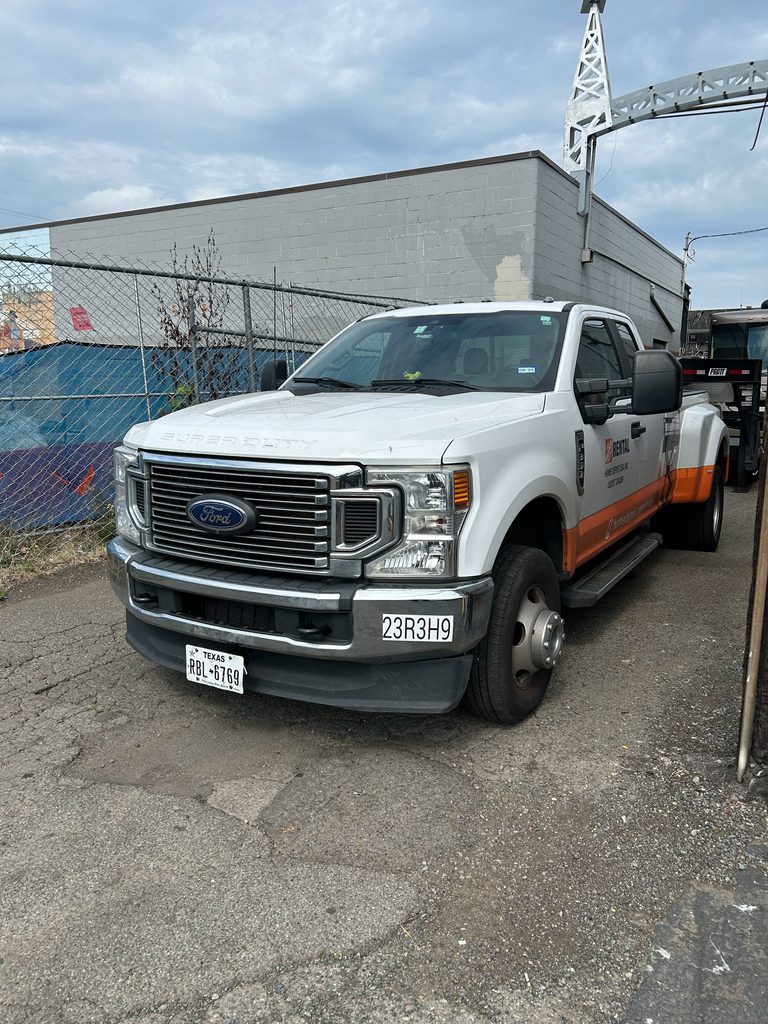
Most fleet upfit projects do not need custom fabrication. If a compatible hitch, rack, wiring component, or storage system already exists for the vehicle and the work it does, that product is usually the fastest and most predictable path. Engineering review and fabrication earn their place when available products conflict with equipment already on the vehicle, do not fit a nonstandard platform, or cannot meet the mounting and load requirements of the job.
This guide breaks fleet projects into three approaches (standard product, repeatable product package, and custom engineering and fabrication) and explains the signals that point toward each one, so you can walk into a conversation with the fleet team already knowing which questions matter.
Three Ways a Fleet Upfit Project Comes Together
Standard product
A standard product is a commercially available part made for your vehicle: a hitch, rack, wiring harness, storage system, or other component with a published application. If the part fits the exact year, model, and configuration, and it does the job the vehicle needs done, there is nothing to engineer. You order it, install it, and move on.
Repeatable product package
A repeatable package is a defined combination of standard parts selected for a vehicle configuration and a work role, then applied the same way across every unit that shares that role. Torklift Central builds truck and van packages around what the crew does, what it carries, and where each item lives, so every vehicle is easy to stock, train on, and maintain.
A package is a planning standard, not a single boxed part number. It can still include vehicle-specific parts. If your fleet runs two model years with different bed lengths, the layout logic stays the same while the fitment details change from one group of vehicles to the next.
Custom engineering and fabrication
Custom work starts when off-the-shelf products and typical mounting solutions will not do the job. On the custom fleet upfitting page, Torklift Central lists four common reasons: specialty vehicles, complex workflows, unique mounting needs such as custom brackets or structural reinforcement, and one-off requirements with specific constraints.
When an Existing Product Is Enough
Start by assuming a standard product might work, then try to prove otherwise. An existing product is usually sufficient when all of these are true:
- The product lists your exact vehicle year, make, model, and configuration.
- It does the work you need, at the ratings your equipment requires.
- It does not conflict with anything already installed on the vehicle.
- Its ratings, along with the vehicle's own ratings, cover the load. The lowest-rated component still controls.
Vehicle-specific fitment matters because small differences change the answer. Trim, cab style, bed length, wheelbase, drivetrain, and factory options can each move a mounting point or block a bracket. Some conflicts that look like custom work already have a product answer. Torklift's EcoHitch lineup, for example, includes a stainless steel rear hitch designed for the 2022 to 2026 Ford F-150 Lightning with a rear liftgate, a pairing that would otherwise raise integration questions.
Custom fabrication is not automatically the better or more professional choice. A documented product with known fitment is easier to source again, easier to replace, and simpler to support across a growing fleet.
How Fleet Volume Changes the Decision
With one vehicle, the question is simply whether a part fits. With twenty vehicles across three model years, the question becomes repeatability: will every unit end up with the same placement, the same access, and the same stocking routine?
Torklift Central approaches mixed fleets by grouping vehicles into compatible sets, defining a role package for each, and keeping future orders consistent as vehicles rotate in and out of service. Volume does not, by itself, justify custom work. It can justify engineering time when a single custom design will be repeated across many units, because the cost of solving the problem once is spread across the fleet.
Signs Your Project Needs Engineering Review
Engineering review is worth requesting when one or more of these show up during planning:
- Equipment conflicts. A rack, hitch, or storage system interferes with a liftgate, rear cross member, exhaust, spare tire, hands-free liftgate sensor, or an existing body.
- Nonstandard vehicle configurations. The platform is modified, uncommon, already upfitted, or built on a chassis no product lists.
- Mounting and structural limits. There is no suitable mounting location, or the load requires brackets, frames, or reinforcement that no catalog part provides.
- A workflow no product addresses. The crew needs equipment positioned, powered, or secured in a way that standard parts were not designed to handle.
- Stacked products that will not coexist. Each part fits on its own, but the combination crowds the same space.
A review does not always end in fabrication. Sometimes it confirms that a different standard product, or a small change to the plan, solves the problem.
What Engineering Review and Prototyping Involve
Torklift Central works through custom fleet projects in stages: discovery of the vehicle, workflow, and constraints; design with CAD models, mockups, and material selection; review with test fits, revisions, and approval before fabrication; in-house fabrication, assembly, and finishing; and a final install and fit-check on the vehicle.
That work happens at the Kent, WA Retail Product Development Center, where on-site engineers and technicians work with 5-axis CNC mills, laser cutting, water jet cutting, press brakes, structural welding in aluminum, steel, and stainless steel, 3D modeling, and in-house powder coating under one roof.
A custom solution still works inside the vehicle's limits. A bracket, mount, or fabricated hitch does not increase payload, GVWR, or factory towing capacity, and it must respect the vehicle manufacturer's guidance for the platform.
Turning a Reviewed Custom Design Into a Fleet Standard
One advantage of solving a problem through engineering review is that the answer becomes repeatable. Once a custom design is finalized, the first build establishes the template, and later units follow the same specification. A reviewed design can then become part of your fleet's package for that role.
Plan for change. A new model year, cab style, or factory option can move mounting points, so a design that fits this year's trucks may need another fit check when replacement vehicles arrive.
Standard Product vs Repeatable Package vs Custom Build
Fleet upfit approach comparison
| Factor | Standard product | Repeatable package | Custom engineering and fabrication |
|---|---|---|---|
| Best fit when | A listed part fits the vehicle and does the job | Several vehicles share a role and need the same layout | No available product fits the vehicle, workflow, or mounting needs |
| What gets reviewed | Fitment, ratings, and installed equipment | Role, layout logic, and fitment for each vehicle group | Vehicle, workflow, constraints, structure, and materials |
| Vehicle-specific parts | Yes, by application | Often, adapted by configuration | Designed for the platform |
| Repeatability | High, if the vehicle stays the same | High, built for fleet consistency | Repeatable once the first build sets the template |
| Typical starting information | Year, make, model, configuration | Vehicle list, roles, must-haves, constraints | Vehicle details, problem statement, requirements, reference photos |
| Timeline drivers | Product availability | Vehicle count, scope, and availability | Design reviews, iterations, and fabrication time |
How Torklift Central Can Help
As a towing equipment provider and fleet upfitter in Kent, WA, Torklift Central can review your vehicle list and project requirements and tell you whether an available product, a repeatable package, or an engineering review is the right starting point. Send your year, make, model, and quantity for each vehicle, what each crew does, your must-haves, known constraints, and photos of the vehicles or any layout you already use.
Key Takeaways
- Start with standard products. Custom fabrication is the answer only when available products cannot fit the vehicle, the work, or the mounting requirements.
- A repeatable package is a role-based planning standard that can still include different vehicle-specific parts for each configuration.
- Equipment conflicts, nonstandard platforms, and mounting or structural limits are the clearest signals that engineering review is needed.
- A reviewed custom design can become a fleet standard, because the first build sets the template for later units.
- No standard or custom part increases a vehicle's payload, GVWR, or factory towing capacity.
Frequently Asked Questions
How do I know if my fleet needs custom fabrication?
If standard products, off-the-shelf packages, or typical mounting solutions will not work because of the vehicle type, workflow complexity, or a unique constraint, the project likely needs custom review. If a listed product fits and does the job, it usually does not.
Is a fleet product package the same as a single part number?
No. A package is a defined combination of parts selected for a vehicle configuration and work role. It can include different vehicle-specific parts for each group of vehicles in a mixed fleet.
Can a custom upfit be repeated across multiple vehicles?
Yes. Once a custom design is finalized, the first build establishes the template and later units follow the same specification. New model years or configurations may need another fit check.
Can Torklift Central standardize equipment across different truck models?
Yes. Torklift Central standardizes by role and layout logic first, then adapts fitment details to each truck configuration so placement and workflow stay consistent.
Does a custom mount or hitch increase my vehicle's ratings?
No. Custom components work within the vehicle manufacturer's payload, GVWR, and towing ratings, and the lowest-rated component in the setup still controls.
Not sure which approach fits your fleet? Send your vehicle list and project requirements through the Torklift Central fleet upfitting page or call 253-854-1832, and the fleet team will help you decide whether to start with an available product package or an engineering review.