
Motorcycle Carrier Installation | Kent, WA
Schedule Motorcycle Carrier Installation
Serving Kent, WA & surrounding area

Motorcycle Carrier
Installation

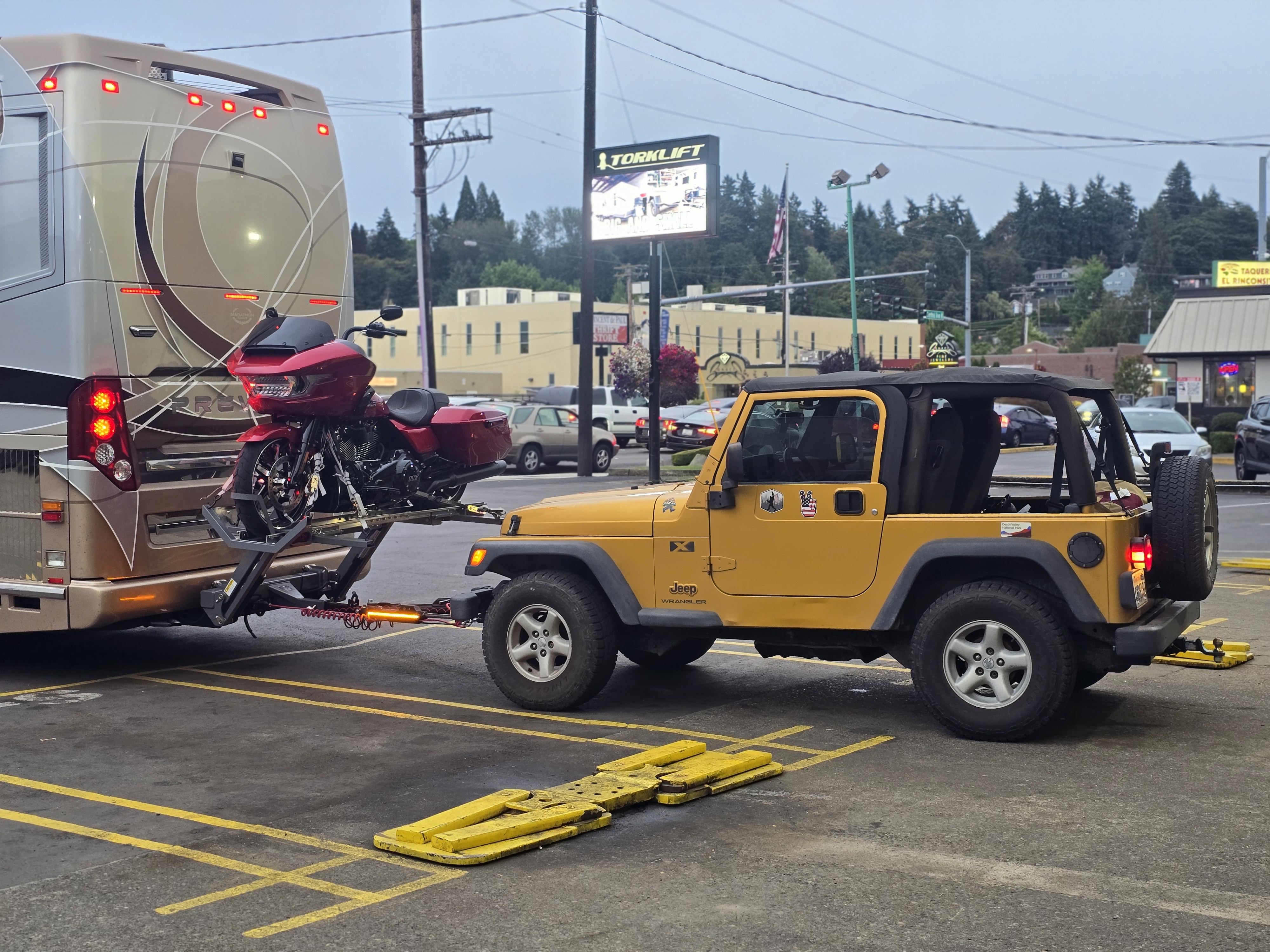
Professional fitment and installation for compatible receiver-mounted motorcycle carriers, dirt-bike carriers, loading ramps, wheel supports, tie-down hardware, stabilizers, lighting accessories, and related transport equipment. Torklift Central reviews the complete vehicle, hitch, carrier, and motorcycle combination before recommending a safe installation path.

50+
Years of Trusted Hitch & Vehicle Upfit Experience
234,000+
Installations Completed
100%
Workmanship Guarantee
Quick
Service Availability

Why Motorcycle Carrier Installation Starts With A Complete Fitment Review

A receiver-mounted motorcycle carrier places the combined weight of the carrier, motorcycle, ramp, fuel, fluids, accessories, and hardware behind the vehicle. The receiver, hitch, vehicle payload, tongue-weight limit, rear axle, tires, wheels, carrier rating, motorcycle dimensions, hitch overhang, ground clearance, exhaust, lights, cameras, sensors, and intended use all matter.

  • Rating Review We review applicable vehicle, receiver, hitch, tongue-weight, payload, axle, tire, wheel, and carrier limits before installation.
  • Carrier Fitment Receiver size, carrier dimensions, motorcycle wet weight, wheelbase, tire size, loading direction, and product instructions are considered together.
  • Loading & Securement Loading ramps, wheel supports, chocks, approved tie-down points, straps, stabilizers, and retention hardware are reviewed for the selected system.
  • Clearance Review Ground clearance, departure angle, exhaust location, rear-door or tailgate access, spare tires, lights, license plates, cameras, and sensors are checked.
  • Alternative Guidance If the vehicle, hitch, carrier, or motorcycle combination is not suitable, we can explain when a trailer or another transport method may be the better choice.

Not every vehicle can safely carry every motorcycle on a receiver-mounted carrier. Final suitability depends on the complete loaded setup and all applicable manufacturer ratings and instructions.

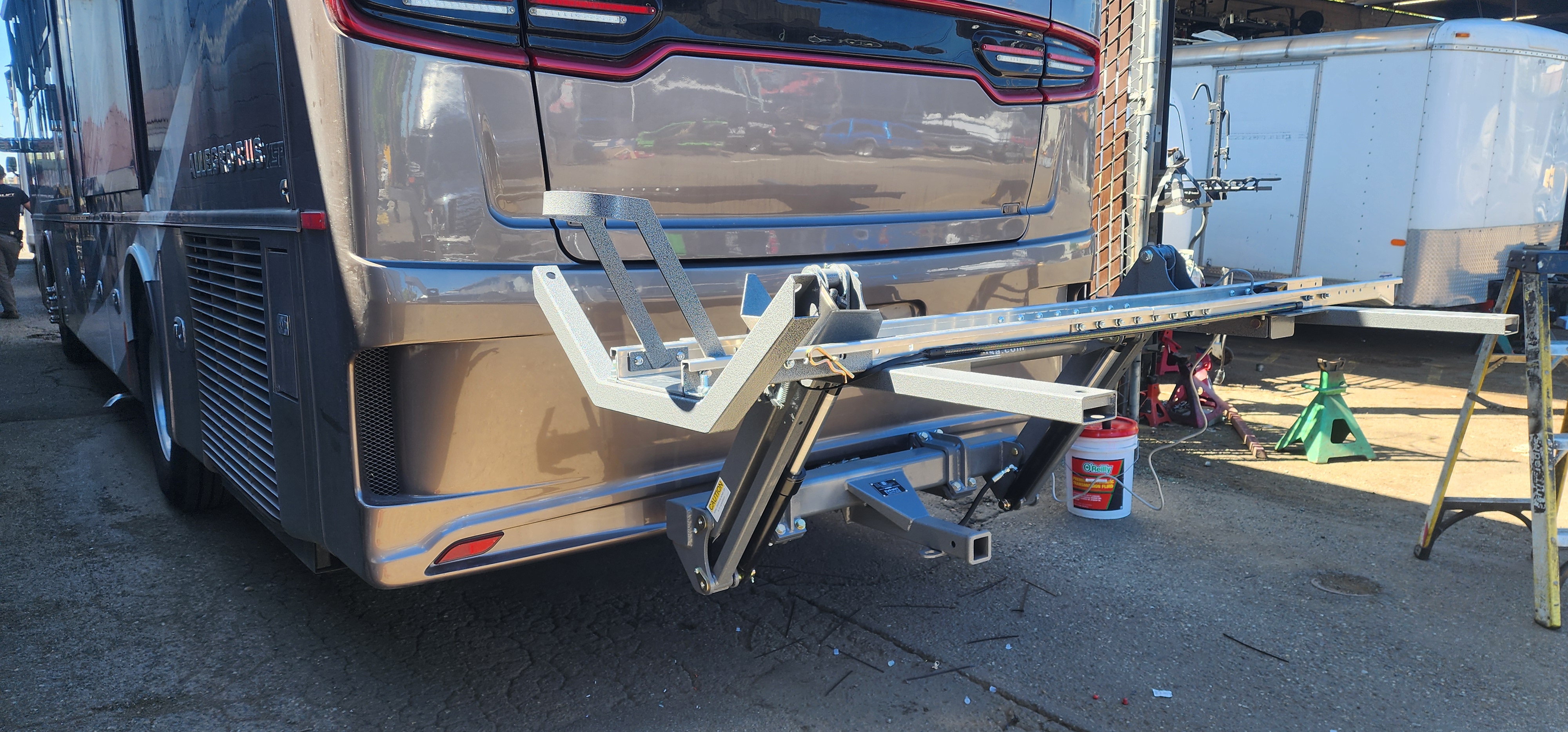
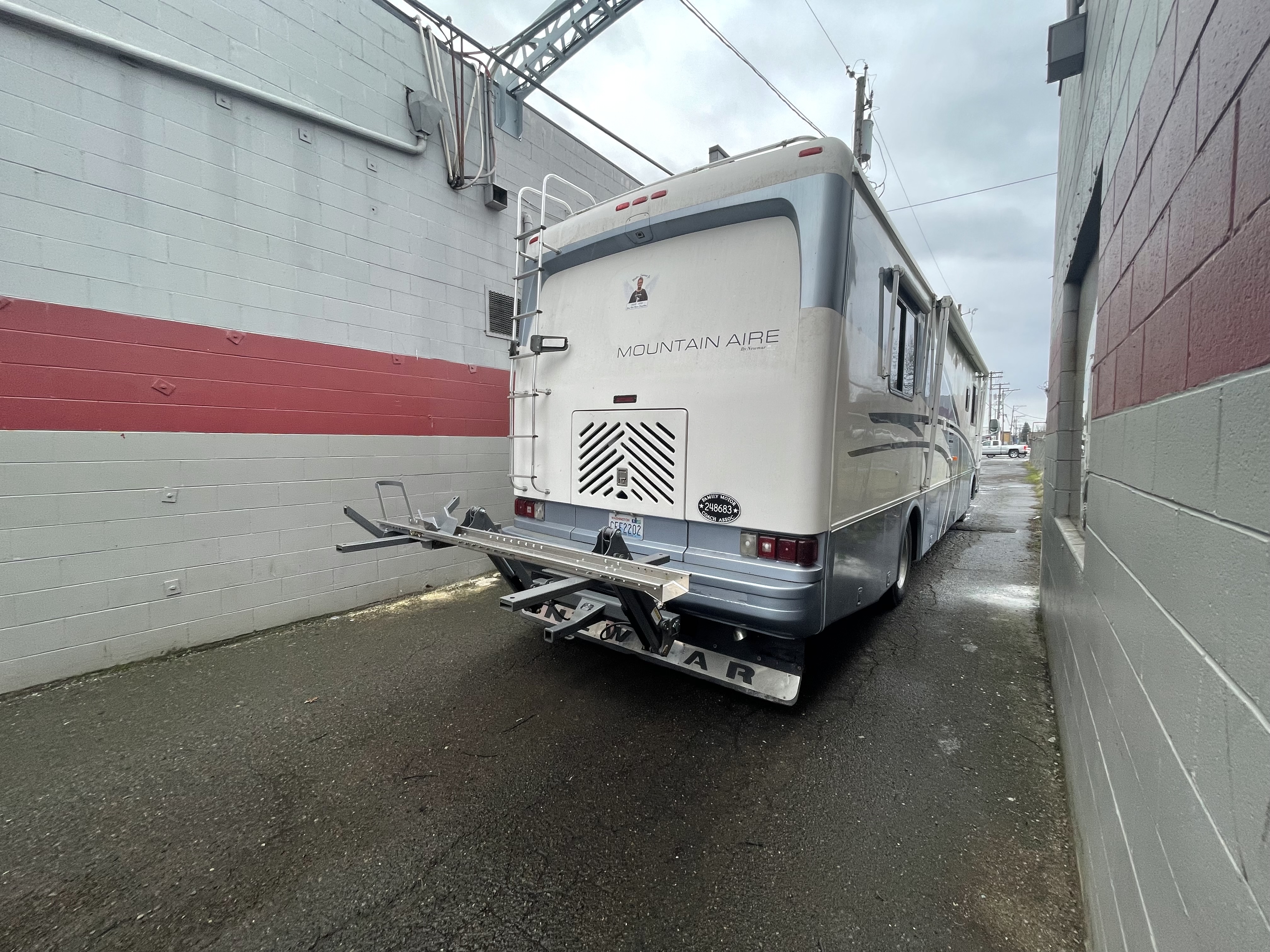
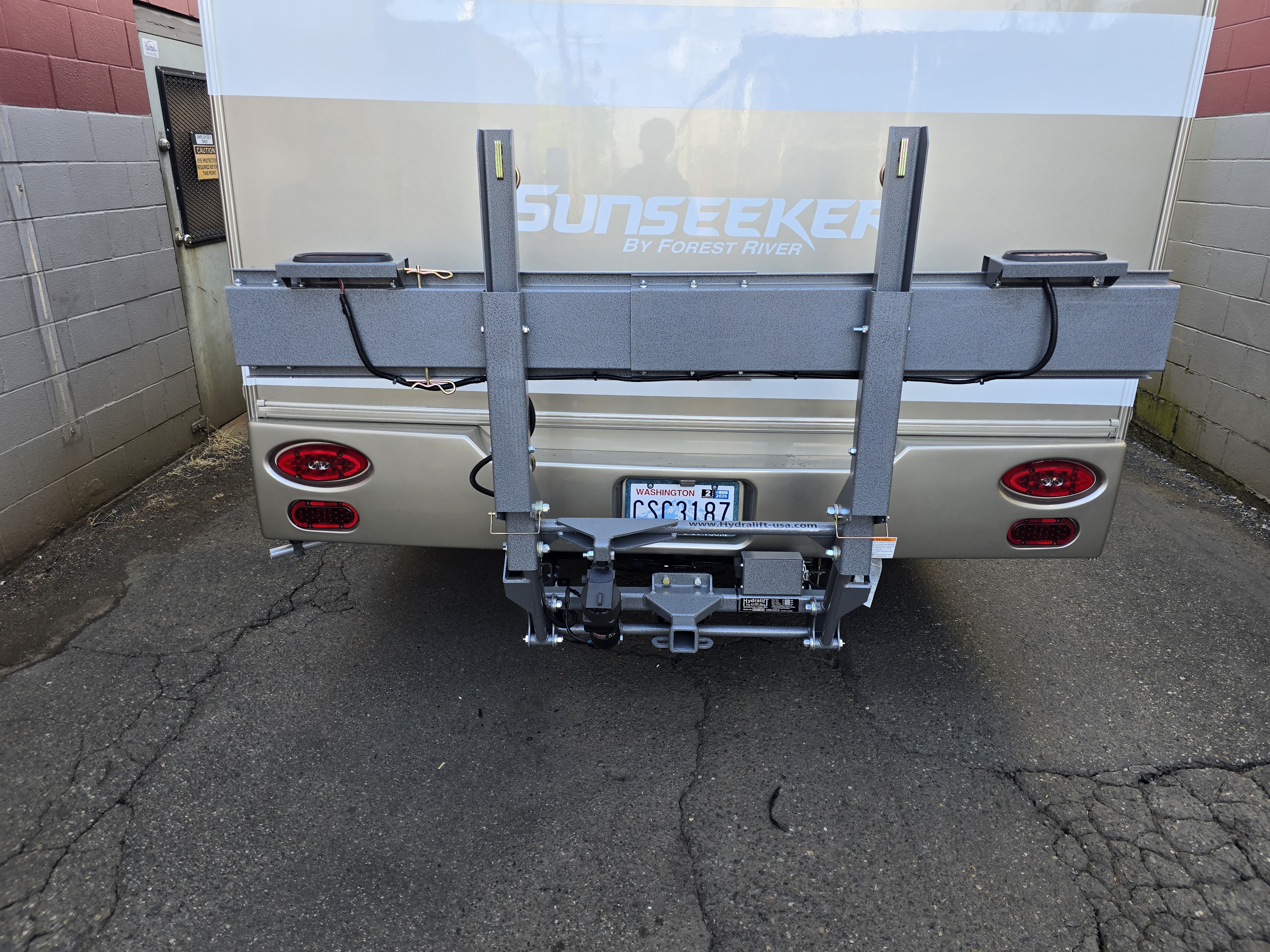
Motorcycle carrier installation placeholder
Receiver-mounted dirt bike carrier placeholder
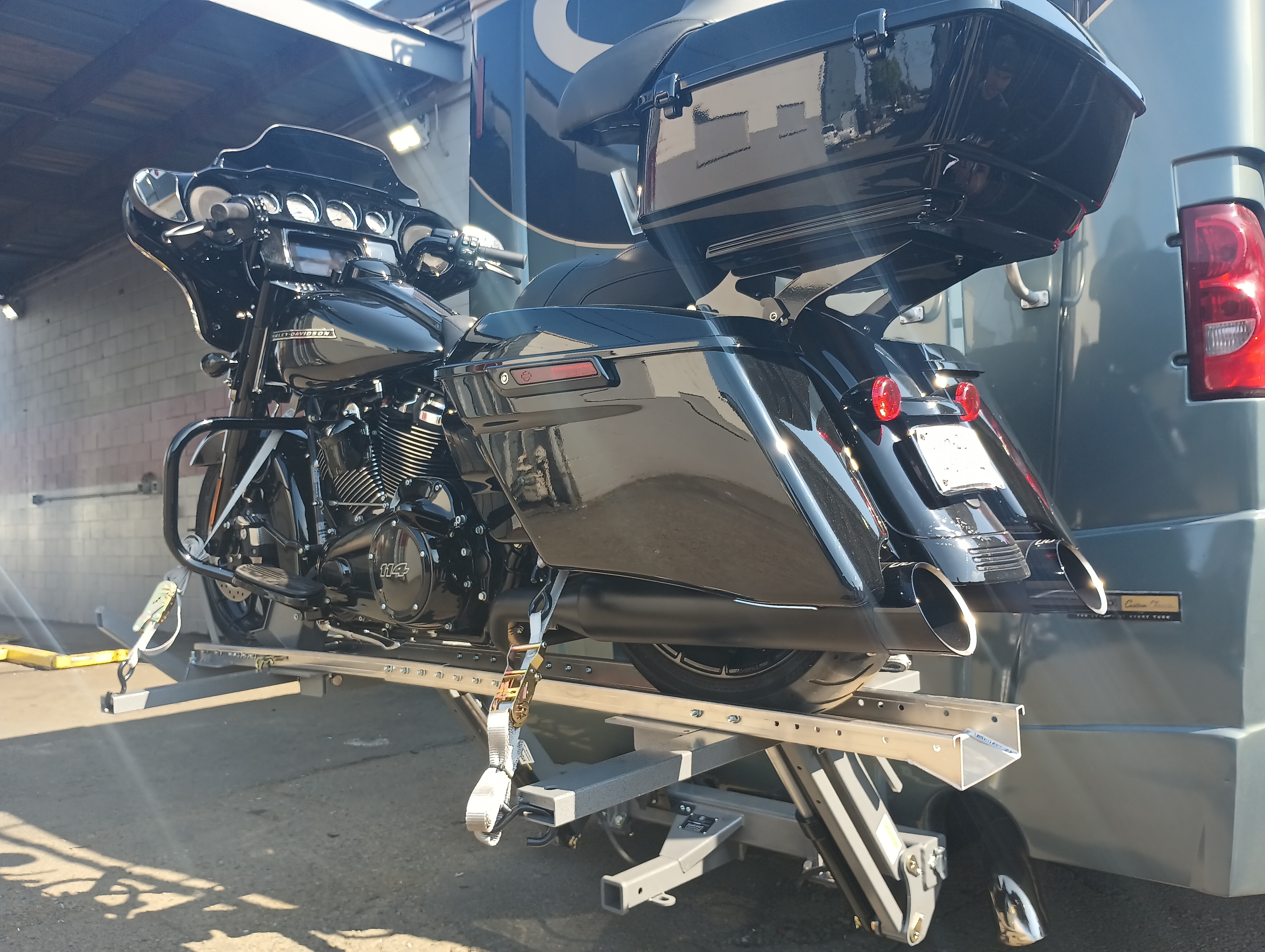
Motorcycle carrier loading ramp and wheel support placeholder
Motorcycle carrier tie-down and stabilizer setup placeholder

Professional Motorcycle Carrier Installation Process

Motorcycle carrier installation is application-based. Our team reviews the vehicle, receiver, hitch, carrier, motorcycle, ratings, loading method, securement, clearance, visibility, accessories, and intended use before recommending an installation path.

1

Application Review

We review the vehicle, receiver, hitch rating, carrier, motorcycle wet weight, payload, axle and tire limits, and intended use.

2

Fitment Plan

We confirm receiver size, carrier capacity, wheelbase and tire fit, ramp setup, clearance, tie-down points, and accessory needs.

3

Installation

When approved, we assemble and install the carrier, retention hardware, stabilizer, ramp, wheel support, and compatible accessories.

4

Final Review

We review hardware, movement, clearance, loading steps, securement guidance, visibility concerns, and follow-up recommendations.

Quoted Installation Time: Actual installation time may vary based on carrier assembly, receiver and hitch condition, ramp and tie-down setup, wiring, lighting, plate relocation, clearance concerns, fabrication needs, and overall scope.

Motorcycle Carrier Components & Installation Areas

The correct setup depends on the vehicle, receiver, carrier, motorcycle, ratings, loading method, securement requirements, clearance, visibility, and product instructions.

Receiver & Hitch Fitment
Carrier Capacity Review
Loading Ramp
Wheel Support & Chock
Tie-Down Points
Anti-Rattle Hardware
Lighting & Plate Visibility
Ground Clearance
Need the vehicle reviewed too?

The Carrier Is Only One Part Of The Complete Setup

Receiver condition, hitch rating, rear suspension, payload, axle and tire limits, exhaust, rear access, lighting, and road clearance can affect whether a motorcycle carrier is appropriate. We can review related hitch, wiring, lighting, and suspension needs separately.

Schedule A Fitment Review

Motorcycle Carrier Installation Cost

Installation Type
Typical Installation Time
Typical Price Range
Fitment / Rating Review
Placeholder
Placeholder
Carrier Assembly & Installation
Placeholder
Placeholder
Ramp / Wheel Support Setup
Placeholder
Placeholder
Tie-Down / Stabilizer Setup
Placeholder
Placeholder
Lighting / License Plate Accessory Review
Placeholder
Placeholder
Receiver / Hitch Upgrade Review
Placeholder
Placeholder
Custom Fabrication / Mounting Review
Placeholder
Placeholder

Final pricing depends on fitment review, carrier type, assembly requirements, receiver and hitch condition, hardware, ramp and tie-down setup, stabilizers, wiring, lighting, plate-relocation needs, clearance issues, fabrication needs if any, labor, and overall installation scope. Call 253-854-1832 for application-specific guidance.

Motorcycle Carrier Installation Near You

Torklift Central provides professional motorcycle carrier fitment and installation in Kent, WA and the surrounding area, with customers also traveling from outside the immediate area for hitch, towing, fabrication, wiring, suspension, and vehicle-upfit expertise.

KentSeattleTacomaBellevueRenton Federal WayAuburnPuyallupOlympiaEverett

Located in Kent, WA, Torklift Central serves motorcycle, dirt-bike, truck, SUV, van, and RV owners throughout the greater Seattle and Pacific Northwest area. Call 253-854-1832 to discuss the vehicle, hitch, carrier, and motorcycle before scheduling.

Motorcycle Carrier Installation For Compatible Vehicles & Bikes

Torklift Central can review receiver-mounted motorcycle carrier systems for eligible pickup trucks, SUVs, vans, motorhomes, and other vehicles with a compatible receiver and sufficient ratings. Carrier options may support dirt bikes, scooters, small motorcycles, and some electric motorcycles when the complete loaded system fits within the vehicle, hitch, carrier, axle, tire, wheel, and payload limits. Final recommendations depend on the receiver size, hitch condition, carrier design, motorcycle wet weight, wheelbase, tire size, loading method, rear overhang, ground clearance, departure angle, exhaust, lights, cameras, sensors, license-plate visibility, and product instructions.

Why Choose Torklift Central For Motorcycle Carrier Installation?

Motorcycle carrier installation requires more than placing a carrier in a receiver. Vehicle ratings, hitch condition, receiver size, carrier capacity, motorcycle wet weight, rear axle load, tire and wheel limits, clearance, exhaust, rear access, lights, cameras, sensors, securement, and loading safety all need careful review. Torklift Central brings decades of hitch, towing, vehicle-upfit, wiring, fabrication, and accessory-installation experience to the complete application.

Complete Rating Review
Vehicle, hitch, receiver, tongue-weight, payload, axle, tire, wheel, carrier, and motorcycle limits considered together
Fitment & Clearance Focus
Receiver height, wheelbase, tire fit, ramp, road clearance, departure angle, exhaust, and rear access reviewed
Securement Review
Wheel support, tie-down points, straps, stabilizers, and retention hardware reviewed when appropriate
Honest Alternatives
We explain when a trailer or another transport method may be safer or more practical

Professional fitment and installation guidance helps avoid overloaded receivers, insufficient ground clearance, excessive rear overhang, blocked lights or license plates, exhaust heat exposure, unstable mounting, incorrect wheel support, improper tie-down points, or choosing a carrier that does not match the vehicle and motorcycle.

Our Motorcycle Carrier Recommendations

Our recommended starting point is a complete vehicle, hitch, carrier, and motorcycle fitment review. The correct solution depends on the receiver, hitch rating, tongue-weight limit, vehicle payload, rear axle and tire limits, carrier weight, motorcycle wet weight, wheelbase, loading method, road clearance, departure angle, rear access, accessories, and intended use.

Receiver-Mounted Motorcycle Carrier

A receiver-mounted carrier may be appropriate when the vehicle, hitch, receiver, carrier, and motorcycle combination remains within every applicable rating and meets the required fitment, clearance, loading, and securement criteria.

Best for:

  • Vehicles with confirmed receiver and hitch capacity
  • Motorcycles that fit the carrier's weight and dimensional limits
  • Applications with adequate rear axle, tire, wheel, and payload capacity
  • Vehicles with sufficient ground, exhaust, light, plate, and rear-access clearance
  • Owners who want ramp, tie-down, stabilizer, and loading guidance reviewed together

Trailer Or Alternative Transport Setup

A motorcycle trailer, enclosed trailer, pickup-bed system, or another transport method may be the better recommendation when the receiver-mounted combination is too heavy, creates excessive rear overhang, lacks clearance, affects vehicle ratings, or does not provide an appropriate loading and securement method.

Best for:

  • Motorcycles that exceed practical carrier or vehicle limits
  • Vehicles without sufficient receiver, hitch, axle, tire, or payload capacity
  • Applications with ground-clearance, departure-angle, exhaust, or visibility conflicts
  • Owners transporting multiple motorcycles or additional equipment
  • Customers who want honest guidance instead of forcing an unsuitable carrier setup

Need Help With A Complete Motorcycle Transport Setup?

A motorcycle carrier is one part of the complete vehicle and transport system. Torklift Central can also review receiver hitches, trailer hitches, hitch extensions, wiring, lighting, suspension support, cargo systems, fabrication, and related vehicle-upfit services separately.

Frequently Asked Questions

Do you install hitch-mounted motorcycle carriers?

Yes. Torklift Central can review and install compatible receiver-mounted motorcycle and dirt-bike carriers for eligible vehicles. Final recommendations depend on the vehicle, receiver, hitch condition and rating, carrier instructions, motorcycle wet weight, carrier weight, payload, axle and tire limits, clearance, and intended use.

How do I know whether my vehicle can use a motorcycle carrier?

The complete loaded system must be reviewed. Important factors include the vehicle and hitch ratings, receiver size, available tongue-weight capacity, carrier weight, motorcycle wet weight, rear axle load, tire and wheel ratings, receiver condition, hitch overhang, departure angle, ground clearance, and manufacturer instructions.

What motorcycle weight should be used for fitment?

Use the motorcycle's ready-to-ride or wet weight whenever available, not only a dry-weight figure. Fuel, fluids, batteries, accessories, luggage, and installed equipment can increase the actual transported weight. The carrier, ramp, hardware, and accessories also count toward the load on the receiver and vehicle.

Does installing a motorcycle carrier increase my vehicle or hitch ratings?

No. A motorcycle carrier does not increase the vehicle's payload, GVWR, GAWR, receiver rating, tongue-weight limit, hitch rating, tire rating, wheel rating, or any other manufacturer limit. Every applicable rating must be followed.

Can you install carriers for dirt bikes, scooters, or electric motorcycles?

Compatible carriers can be reviewed for dirt bikes, scooters, small motorcycles, and some electric motorcycles. Fitment depends on actual loaded weight, wheelbase, tire size, carrier dimensions and rating, loading method, tie-down requirements, receiver capacity, and vehicle limits.

What is included with motorcycle carrier installation?

The scope may include receiver and hitch inspection, carrier assembly, hitch mounting, retention hardware, anti-rattle or stabilizing hardware when approved, loading-ramp setup, wheel support or chock setup, tie-down-point review, clearance checks, and final installation review. Lighting, plate relocation, wiring, suspension, or custom fabrication may require additional work.

Can a motorcycle carrier block the lights, license plate, camera, or rear door?

It can in some applications. The carrier and motorcycle may affect tailgate or rear-door access, backup-camera visibility, parking sensors, exhaust clearance, lights, reflectors, or license-plate visibility. These areas should be reviewed before the system is used.

Can you install carrier lighting or a license-plate relocation kit?

We can review compatible lighting, wiring, reflectors, and license-plate relocation options when the carrier or motorcycle reduces visibility. The correct approach depends on the carrier design, vehicle wiring, connector availability, local requirements, and product instructions.

Can I use a hitch extension or adapter with a motorcycle carrier?

Only when the extension or adapter is specifically approved for the vehicle, hitch, carrier, and load. Extensions and adapters can reduce capacity, increase leverage, change clearance, or create additional movement, so the complete system must be reviewed before use.

How much does motorcycle carrier installation cost?

Pricing is application-based. Final pricing depends on the carrier, assembly requirements, receiver and hitch condition, hardware, ramp and tie-down setup, lighting or plate-relocation needs, clearance issues, fabrication needs if any, labor, and overall installation scope.

What Customers Say About Motorcycle Carrier Installation Service

“Torklift Central reviewed the receiver, hitch rating, motorcycle weight, carrier capacity, and rear clearance before installing the carrier. They explained the loading limits and showed me what needed to be checked before each trip.”

— Motorcycle OwnerVerified Review

“I wanted to carry a dirt bike behind my truck, but I was unsure about the ramp, wheel support, and tie-down points. The team checked the complete setup and helped me understand how to load and secure it.”

— Truck CustomerVerified Review

“The installation included more than assembling the carrier. They reviewed the stabilizer, road clearance, exhaust, lights, license plate, and how the loaded weight affected the hitch and vehicle limits.”

— Local Vehicle OwnerVerified Review
2‑Inch vs 1‑1/4-Inch E‑Bike Hitches: Which Delivers Superior Stability?
January 17, 2026

2‑Inch vs 1‑1/4-Inch E‑Bike Hitches: Which Delivers Superior Stability?

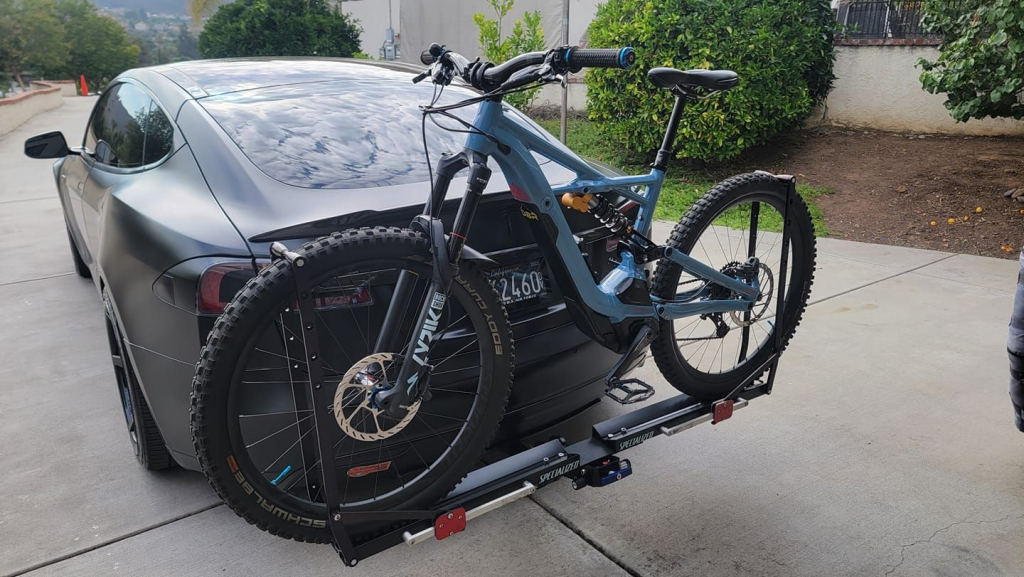
If you’re hauling modern, full-suspension E-Bikes, stability isn’t optional—it’s crucial. The short answer: a 2‑inch receiver delivers superior stability and...

Read Article →
Different hitches and accessories you’ll need for hunting season!
September 29, 2017

Different hitches and accessories you’ll need for hunting season!

[caption id="attachment_4336" align="alignright" width="276"] Bring everything you need by towing with your truck while hauling a camper. Photo courtesy of P...

Read Article →