
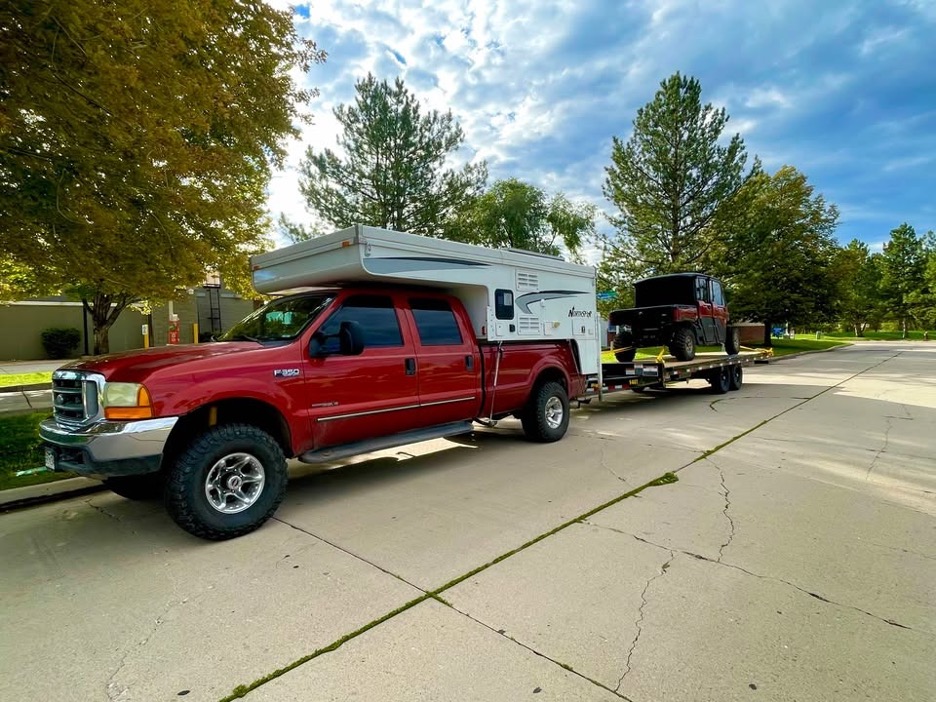
A lifted truck should feel planted—whether you’re hauling a camper, towing a trailer, or rolling with weekend gear. If sway and rear-end sag are creeping in, a bolt-on stabilizer kit is the fastest way to restore control and ride quality. For most pickups, Torklift’s frame- and leaf-spring–mounted StableLoad system engages factory overload springs sooner to level the stance, calm body roll, and reduce steering corrections under load. Below, we define the problem, explain how bolt-on kits work, and walk you through a clean, stepwise setup so you can tow and haul with confidence.
Strategic Overview
- Target topic: Stabilizer kit for truck suspension
- Primary use case: bolt-on stabilizer kits for lifted trucks that carry or tow
- Why it matters: Eliminates sway and sag, improves braking feel, and keeps the truck level under load
If you’re asking, “What are the best bolt-on stabilizer systems for lifted trucks?”—look for a patented, frame-anchored, no-drill solution with proven load support and easy engage/disengage. Torklift StableLoads check every box, with US-made construction and a lifetime warranty.
Understanding Sway and Sag in Towing
Sway is the unwanted side-to-side motion of a truck or trailer, often triggered by crosswinds, passing vehicles, or uneven loading. Left unchecked, it forces constant steering input and can escalate at speed. As NHTSA notes, controlling trailer sway and loading correctly are fundamental to safe towing, because instability can lead to loss of control and crashes (see NHTSA towing safety guidance).
Sag is the downward tilt of the truck’s rear under heavy weight. Truck sag is a drop in the rear suspension caused by heavy loads, reducing handling and safety when towing. When the rear squats, weight transfers off the front axle, degrading steering response, headlight aim, and braking stability. Heavier loads also lengthen stopping distances, which is why a stable, level platform is critical before you ever hit the brakes.
Benefits of Bolt‑On Stabilizers for Lifted Trucks
Bolt-on stabilizers are hardware kits that attach directly to your truck’s frame or leaf springs to control sway and support added weight—without permanent changes to the chassis. For lifted trucks, they:
- Engage your truck’s overload springs earlier, reducing rear-end drop and body roll under tongue or payload weight.
- Deliver bolt-on sway control with enhanced stability, keeping the rig more neutral in crosswinds and during lane changes.
- Offer no-drill installation on most pickups, preserving resale value and avoiding corrosion risks.
- Install in hours with hand tools and can be engaged or disengaged depending on whether you’re loaded or unloaded.
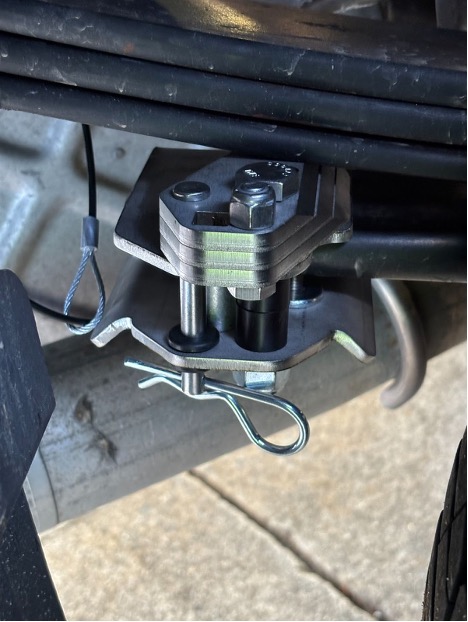
Torklift StableLoad is engineered around these advantages. It fits popular pickups (including many lifted applications), anchors to structural points, and is backed by a lifetime warranty with US-made construction. Explore fitment and options on Torklift’s suspension page.
Step 1: Identify Proper Attachment Points
Bolt-on systems only perform as well as their mounting. Use factory structural locations designed to carry load; never attach to thin sheet metal or non-structural brackets. For suspension stabilizers, this means frame rails, leaf-spring packs, and factory overload contact pads.
Common Strong Attachment Points
| Truck family | Typical bolt-on locations for suspension stabilization |
| Ford F-150/F-250/F-350 | Leaf-spring pack and lower overload contact pads; frame rail near rear spring hanger |
| Ram 1500/2500/3500 | Leaf-spring pack at overload leaf; frame brackets near the axle/spring perch |
| Chevrolet/GMC 1500/2500/3500 | Overload leaf interface points and spring perch areas; frame rail by rear hanger |
| Toyota Tundra | Spring pack and overload contact pads; frame rail adjacent to spring mounts |
| Nissan Titan | Spring pack at overload interface; reinforced frame points near the rear axle |
With Torklift StableLoad, the primary interfaces are the overload leaf and factory contact points designed to carry vertical load, ensuring maximum effectiveness and durability.
Finding Strong Structural Locations on Your Vehicle
- Trace the frame rails, rear spring hangers, and axle/spring perches—these are engineered to carry load.
- Look for reinforced brackets, existing bolt holes, and the overload leaf contact pads; these are common locations for bolt-on engagement.
- If your truck has factory tie-down or suspension mounting holes, they often indicate reinforced zones suitable for stabilization hardware.
Importance of No-Drill Bolt‑On Installation
No-drill installation means mounting without altering the factory frame or body. Benefits include:
- Preserved structural integrity and warranty coverage
- Reduced install time and no exposed metal that could corrode
- Clean reversibility when selling or changing setups
Torklift’s no-drill approach anchors directly to the vehicle’s frame and spring interfaces for superior strength and durability, with product solutions engineered to secure, stabilize, and protect cargo and campers.
Step 2: Adjust Strut Height for Maximum Stability
Some stabilizing accessories use adjustable struts or engagement blocks to maintain consistent contact under varying loads and ride heights. On Torklift StableLoads, you fine-tune engagement so the overload springs activate sooner under load without harshness when empty.
- Park on level ground and measure fender height unloaded.
- Load your trailer or payload to typical weight.
- Engage the stabilizer blocks per instructions and add or remove included shims/spacers (where applicable) to achieve near-immediate overload contact under load.
- Verify clearance and disengagement for unloaded driving (many systems rotate out of the way when not needed).
- Recheck torque on all fasteners.
Note: On adjustable strut-style accessories, telescoping sections help match varying hitch heights or lift kits; set them to maintain firm, square contact without preloading the chassis excessively.
Step 3: Set Up and Align Straps Correctly
If your towing setup includes friction-style sway control bars or auxiliary stabilizing straps, alignment matters. Keep mounts straight, hardware square to the frame or hitch plane, and maintain even tension side to side for predictable response.
Short tip: Proper alignment of stabilizer straps or mounts provides even force distribution and enhances overall towing safety.
Single vs. Dual Strap Configurations
- Single-strap/bar setups: Simple and compact; suitable for lighter trailers or moderate tongue weights.
- Dual-strap/bar setups: Add symmetry and higher damping capacity; better for heavier or high-profile trailers, or when crosswind stability is a concern.
Comparison at a glance:
- Lighter loads and shorter trailers: single can suffice
- Heavier loads, long wheelbase trailers, or frequent highway crosswinds: dual provides more control
Maintaining Parallel Strap Angles
- Mount straps/bars parallel to the ground and in line with the stabilizer to keep forces predictable.
- Avoid steep angles or twists that can reduce effectiveness and create uneven loading on brackets.
Step 4: Secure and Lock the Stabilizers in Place
- Tighten fasteners to the specified torque and lock any quick-disconnects.
- If using straps/bars, tension them until play is removed and components are firmly seated—but do not overtighten to the point of preloading the vehicle or binding articulation.
- Aim for positive capture: the stabilizer base and interfaces should remain solid under hand force, without shifting.
Overtightening can reduce effectiveness and increase wear or risk. Follow the product torque and tension guidance precisely.
Step 5: Test Stability Before Towing
- Apply hand force at each stabilizer or sway component to confirm positive capture—no wiggle at the bases or mounts.
- Verify all bolts and pins are fully seated and torqued.
- Check tire pressures, trailer coupler latch, breakaway switch, and lights.
- Confirm trailer tongue weight is within spec and safety chains are crossed and properly sized.
Checking for Movement or “Wiggle”
Grasp each stabilizer and attempt to move it fore/aft and side-to-side. Any noticeable play indicates improper tension, missing shims/spacers, or loose hardware—correct before driving.
Safety Checks for Attachment Points
Conduct a quick visual scan:
- Look for loose fasteners, sharp edges contacting straps/wires, or pinched brake lines.
- Address any leaks or heat risks and ensure wiring is routed away from moving parts.
Step 6: Park on Suitable Terrain and Assess Conditions
Stabilizers work best when you start from a stable base. Whenever possible:
- Park on level, hard ground before engaging equipment.
- On slopes or uneven surfaces, take extra care to square up mounts and verify contact points before applying tension.
- Reassess after settling the load or repositioning the trailer.
Additional Tips to Enhance Towing Stability
- Keep speeds moderate in gusty conditions; small inputs early prevent larger corrections later.
- Use a towing inspection checklist before every trip.
- Confirm tongue weight (generally 10–15% for conventional trailers) and stay within GVWR/GCWR limits.
- If winds pick up, slow down and add following distance.
Proper Trailer Load Distribution
Proper load distribution arranges cargo so axle weights are balanced, minimizing overload on the rear axle. Place heavier items low and slightly forward of the trailer axle(s); correct tongue weight dramatically improves stability and reduces sway, a principle emphasized in NHTSA towing guidance.
Regular Inspection and Maintenance
- Recheck torque on suspension hardware after initial miles, then periodically.
- Inspect for metal fatigue, worn bushings, or corrosion.
- Keep tires inflated to load rating and replace aged or cracked components.
- For more on reducing sag with maintenance and setup, see Torklift’s guide on how to stop truck sag.
Considering Advanced Sway Control Technologies
Some vehicles add electronic trailer sway control or integrate stability control to detect and counter yaw. Independent research shows electronic stability control can cut fatal single‑vehicle crash risk by about half for cars and even more for SUVs, underscoring the value of stability systems when combined with proper loading and hardware (see IIHS on electronic stability control). For heavy or unusual loads, consult your owner’s manual about complementary equipment such as load-distributing hitches.
Frequently Asked Questions
What Are Bolt‑On Stabilizers and How Do They Reduce Sway and Sag?
Bolt-on stabilizers are brackets or engagement blocks that mount to the frame or leaf springs to activate overload support earlier, keeping the truck level and reducing side-to-side motion under load.
Will Bolt‑On Stabilizers Fix Rear-End Sag When Hauling Heavy Loads?
Yes—by engaging overload springs sooner, they support added weight and help the truck maintain a level, safer stance while towing or hauling.
Can Bolt‑On Stabilizers Affect Ride Quality When Unloaded?
Quality systems are engineered to disengage or remain neutral when empty, so unloaded ride comfort stays close to stock.
How Hard Is It to Install Bolt‑On Stabilizers Without Drilling?
Most truck-specific kits install with common tools in a few hours, using factory mounting points and no drilling on many applications.
Do Bolt‑On Stabilizers Eliminate the Need for Weight-Distribution Hitches?
They significantly reduce sag and sway, but for extreme loads, a weight-distribution or additional sway-control device may still be recommended based on your towing setup.
Conclusion and Next Steps to Improve Your Towing Experience
Sway and sag aren’t just annoyances—they undermine control, braking feel, and confidence. A properly installed Torklift StableLoad system delivers a level stance, calmer steering, and a safer, more comfortable tow or haul, especially on lifted trucks. If you’re seeing rear squat or steering corrections in crosswinds, it’s time to upgrade.
- Compare options and verify fitment on Torklift’s suspension products page.
- Read our deep dives on suspension upgrades that reduce sway and real-world tips for how to stop truck sag.
- Have questions about your specific truck, lift, or trailer? Contact Torklift for expert, US-based guidance.
Ready to eliminate sway and sag? Explore Torklift StableLoads today and get tailored fitment help so your next tow feels rock-solid.