
A service body changes how your truck works every day, but the suspension under it decides which StableLoad fits. Here is what to check, photograph, and send before you order.
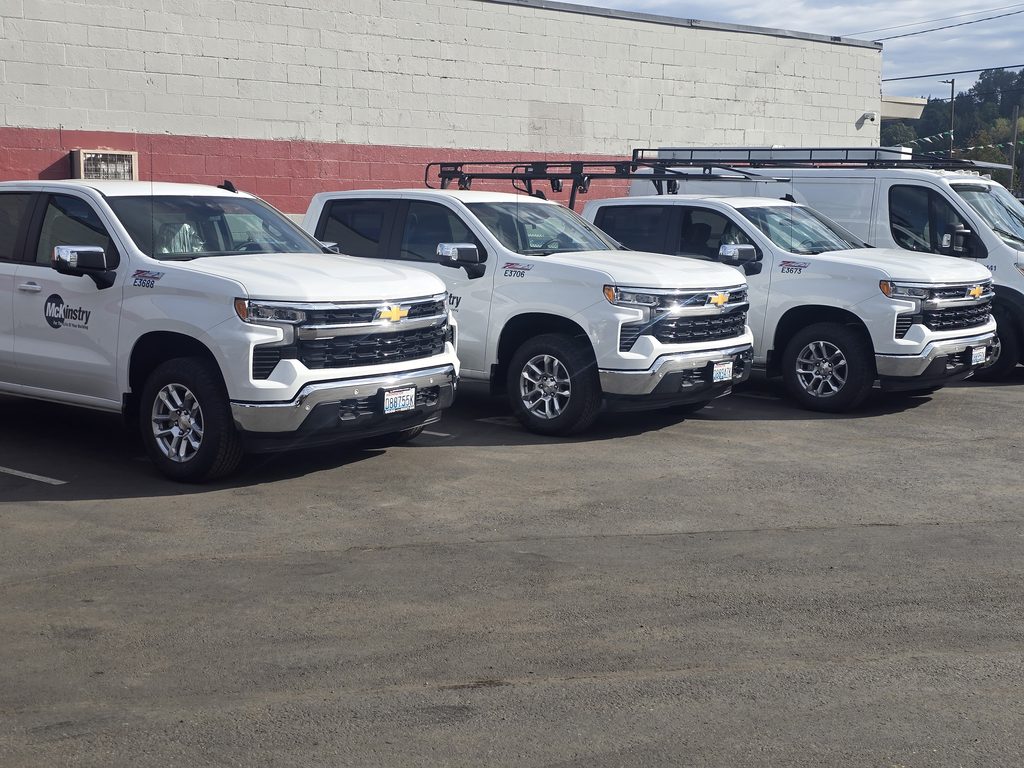
A service body turns a pickup into a rolling toolbox. It also puts weight on the rear axle that never comes off: the body itself, the tools in every compartment, the ladder rack, and the equipment you carry to every job. Add variable cargo, or a trailer tongue at the end of the day, and the back of the truck works hard all week.
Many heavy-duty trucks already have factory heavy-load support under them in the form of factory overload springs. StableLoad helps those springs start supporting the load sooner. The key to ordering the right StableLoad for a work truck is knowing what is under the body, not what brand of body sits on top of it.
This guide covers what to check, what to photograph, and what to send Torklift Central before you order StableLoad for a service body or utility truck.
How StableLoad Helps a Truck That Is Always Loaded
Most trucks have factory overload springs designed to activate under heavy loads. There is typically a gap between the main leaf spring pack and the overload spring, so the truck has to sag several inches before those overload springs engage. StableLoad eliminates that gap and pre-activates the overload springs, so the suspension is working at full capacity from the moment weight is added.
On a work truck, that matters every day, not just on the occasional heavy haul. With the overloads engaged under the weight of the body and tools, drivers get less rear-end sag, better steering control, reduced body roll, improved braking performance, and a more stable ride overall.
StableLoad does not change the truck’s ratings. It does not increase payload, GVWR, or GAWR, and it does not make an overloaded work truck safe. The body, tools, equipment, crew, and cargo still need to fit within the truck’s limits.
Start With the Truck, Not the Service Body
StableLoad mounts at the suspension, so the truck and its factory suspension determine the part number. The service body manufacturer, the utility body brand, and the body length do not. Two trucks wearing the same body can need different StableLoads, and two different bodies on the same truck configuration can use the same one.
Use Find Your Fit to see the StableLoad applications for your exact truck configuration.
Identify the Suspension Under the Work Body Before Ordering
StableLoad comes in two main applications, and the overload springs on your truck decide which one to review.
Lower StableLoad With Quick Disconnect
If your truck has compatible lower overload springs, start here. Torklift generally recommends the lower Quick Disconnect StableLoad first because the lower overload is a shorter, thicker spring with a higher spring rate. It also switches on and off. Control Mode engages StableLoad for load support. Comfort Mode disengages it and returns the truck to its factory suspension settings for a softer ride when unloaded.
On a work truck, Control Mode will usually be the everyday setting while the body and tools are on board, and Comfort Mode is there for days the truck runs lighter. Some lower applications install with no drilling, and others require drilling the overload spring, so check the exact application before you plan the install.
Upper StableLoad
If your truck has factory upper overload springs with contact pads, the upper StableLoad replaces those factory contact pads so the upper overloads go to work sooner. It is a no-drill installation, and each kit includes four StableLoads to outfit one truck. The upper StableLoad does not have Quick Disconnect.
Upper and Lower Overloads on the Same Truck
Torklift’s guidance is to try the lower Quick Disconnect StableLoad first. On the average truck, the lower set is enough. Some owners later add the upper StableLoad for extra support, but not every work truck needs both.
Check the Overload Gap
Torklift recommends measuring the gap between the overload and the main leaf spring pack with the vehicle empty. A service body stays on the truck, so pull the tools and variable cargo, measure, and note in your photos that the body was installed. If the overload already touches the main pack, which can happen as springs wear, StableLoad still improves handling, but it can stiffen the unloaded ride and make the Quick Disconnect harder to engage and disengage. The lower StableLoad uses a wedge pack of three removable 1/4-inch wedge plates, which helps on trucks with a tighter gap.
Check What the Upfit Added Near the Springs
The service body sits on the frame, not at the StableLoad mounting points. What deserves a closer look is anything the upfitter or a previous owner added around the rear suspension. Before ordering, inspect the rear leaf springs, lower overload springs, frame, axle area, and StableLoad mounting and contact locations for:
- Airbag brackets or air springs
- Auxiliary suspension equipment
- Lift blocks
- Traction bars
- Modified or replacement leaf packs
- Other aftermarket brackets near the springs
None of these automatically rules out StableLoad. They are the places where clearance needs to be confirmed with photos instead of assumed.
Uneven loads side to side. Work trucks often carry more weight on one side, such as a welder, a compressor, or heavier compartments. The lower Quick Disconnect StableLoad can be tuned for that: use as many of the three wedge plates as possible on the heavy side, remove one on the lighter side, then test drive loaded and adjust to your preference.
Already Running Airbags on the Work Truck?
Plenty of work trucks come from the upfitter with airbags or get them later. StableLoad works with or without airbag overloads, and the two do different jobs. Airbags are designed for leveling, while StableLoad keeps the factory leaf springs actively supporting the load the way the truck was engineered to carry it.
Compatibility still comes down to clearance on your truck. Send clear photos of the airbag brackets, the leaf springs, and the StableLoad mounting area on both sides. When you measure the overload gap on a truck with airbags, Torklift notes you can inflate the airbags to open up the gap.
When fitment is uncertain, send these photos before ordering: the complete leaf spring pack, the lower overload spring, the upper overload or contact pad if present, both the driver and passenger sides, any aftermarket suspension brackets, and any area where clearance looks tight.
How Torklift Central Can Help You Shop
Torklift Central is a towing equipment provider and fleet upfitter, and our retail team can review your truck details and suspension photos, confirm the StableLoad part number for your configuration, and help you order with confidence. If you are near Kent, WA, Torklift Central can also install StableLoad as part of your upfit, and our technicians walk you through the setup at the appointment. Installation is optional, so you can order online and install on your own schedule.
Shop StableLoad products at Torklift Central. If fitment is uncertain, send your truck information and suspension photos to a retail specialist or call 253-854-1832 before you order.
Key Takeaways
- The truck and its factory suspension decide the StableLoad part number. The service body brand and length do not.
- Start with the Lower Quick Disconnect StableLoad when the truck has compatible lower overloads. Upper StableLoad replaces factory upper contact pads and does not have Quick Disconnect.
- Inspect for airbags, blocks, traction bars, modified leaf packs, and other brackets near the springs, and send photos when clearance is uncertain.
- StableLoad engages factory overload springs sooner under the constant weight of a work body, improving sag, steering control, body roll, and braking.
- StableLoad does not increase payload, GVWR, or GAWR. Keep the body, tools, and cargo within the truck’s ratings.
Frequently Asked Questions
Does StableLoad fit a service body truck?
StableLoad fits based on the truck and its factory overload springs, not the body. If the truck underneath the service body has a compatible StableLoad application and clear mounting locations, the service body itself does not change that.
Does the service body change which StableLoad I need?
No. The service body manufacturer, brand, and length do not determine the part number. Equipment the upfit added near the springs, such as airbag brackets or traction bars, can affect clearance, so inspect and photograph that area.
Can StableLoad be used on a utility truck?
Yes, when the truck has compatible factory overload springs. Use the same process: record the truck configuration, identify the overloads, and check the suspension area for added equipment.
Can StableLoad work with airbags?
Yes. StableLoad works with or without airbag overloads. Fitment still depends on clearance around the airbag brackets, so send photos of the brackets, leaf springs, and mounting area before ordering.
Should I buy Lower or Upper StableLoad?
If your truck has compatible lower overload springs, Torklift recommends starting with the Lower Quick Disconnect StableLoad. Trucks with factory upper overload contact pads can use the Upper StableLoad.
What photos should I send before ordering?
Send the complete leaf spring pack, the lower overload spring, the upper overload or contact pad if present, both sides of the truck, any aftermarket suspension brackets, and any area with limited clearance.
Rating notice: StableLoad does not increase payload, GVWR, GAWR, towing capacity, axle ratings, or tire ratings, and it does not make an overloaded truck safe. Keep the service body, tools, equipment, cargo, and any trailer tongue weight within the truck’s ratings and the lowest-rated component. Distribute weight sensibly, maintain proper tire pressure, and follow your owner’s manual, the StableLoad installation instructions, and the current product page.
Shop StableLoad products at Torklift Central. Have your truck details and suspension photos ready, and call 253-854-1832 if you want a retail specialist to confirm fitment before you order.