

The right SuperTruss length comes from a tape measure, not a camper brochure. Here is how to measure, how the ratings change by length, and what to confirm before you order.
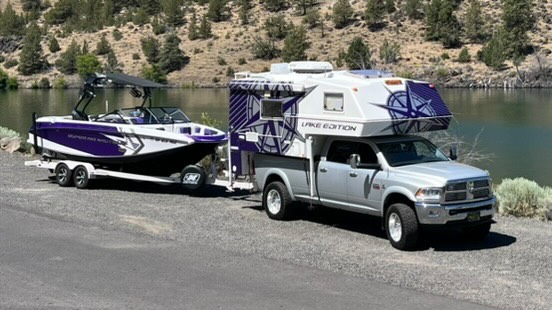
A truck camper changes the back of your truck. The camper’s rear overhang now sits where your trailer tongue used to go, so if you want to tow, the hitch connection has to move back past it. That is the job of the SuperTruss extension.
Most shoppers who land here already know they need an extension. The harder question is which length. SuperTruss comes in eight lengths from 21 to 60 inches, and the ratings change as the extension gets longer. Picking a length by camper brand, by bed length, or by grabbing the longest one “just in case” is how people end up with a part that does not match the rig they actually drive.
This guide turns the decision into a measurement. You will see the two measuring methods Torklift recommends, how the ratings change by length, and what to have ready before you order SuperTruss from Torklift Central.
SuperTruss Works Only With a Compatible SuperHitch
Torklift International designed SuperTruss as a dual extension for the SuperHitch series. It connects to both receivers on a dual-receiver SuperHitch, and that dual truss design is what allows SuperTruss to carry the highest extended towing ratings Torklift offers.
That also means SuperTruss is not a universal receiver extension. It does not work with a factory receiver, a single-receiver aftermarket hitch, or any hitch outside the compatible SuperHitch lineup. If your truck does not have a SuperHitch yet, the SuperHitch is the first part of the order and the extension comes second.
If your truck has a factory 3-inch receiver and you are not moving to SuperHitch, look at Cannon instead. Cannon is a separate Torklift extension line made for compatible factory 3-inch receivers. It has its own lengths and its own ratings, and it is not part of the SuperHitch family. Compare the two lines separately so you are reading the right ratings for the right hitch.
Not sure which SuperHitch fits your truck? Start with Find Your Fit using your truck year, make, and model.
Measure the Camper Overhang Before Choosing the Extension
Extension length comes from your actual overhang. The same camper model can sit differently on different trucks because bed length, bumper style, and front rubber bumpers all change where the camper’s rear bumper ends up. Torklift gives you two ways to get the number.
If the Camper Is Loaded on the Truck
Measure from the face of the truck’s rear bumper to the outside edge of the camper’s rear bumper. That measurement is the minimum extension length you need.
Then choose an available SuperTruss length that provides at least that much clearance. For example, if your tape reads 30 inches, the 28-inch extension falls short, so the 32-inch extension is the first length that covers your overhang.
If the Camper Is Off the Truck
- Measure inside the truck bed, from the front inside of the bed to the outside face of the truck’s rear bumper.
- Measure the camper’s overall floor length, including the front rubber bumpers, to the outside edge of the camper’s rear bumper.
- Subtract the truck measurement from the camper measurement. The difference is the extension length you need.
Here is how the math works with sample numbers. If the truck measures 100 inches and the camper measures 126 inches, the difference is 26 inches. The 24-inch extension is too short for that overhang, so 28 inches is the length to review.
Write the number down and take a photo of the tape at each end. Those photos make it easy for a retail specialist to double-check your measurement before you order.
SuperTruss Ratings Change With Length
Every SuperTruss length carries two ratings. The weight-carrying rating applies when the trailer sits directly on the ball. The weight-distribution rating applies only when you use a properly configured, compatible weight-distribution system. Here is the current application chart, including the matching wire harness for each length.
| Length | Part Number | Weight Carrying (Trailer / Tongue) | Weight Distribution (Trailer / Tongue) | Wire Harness |
|---|---|---|---|---|
| 21 in | E1521 | 7,500 lb / 750 lb | 14,000 lb / 1,400 lb | W6021 |
| 24 in | E1524 | 7,500 lb / 750 lb | 14,000 lb / 1,400 lb | W6024 |
| 28 in | E1528 | 7,500 lb / 750 lb | 12,000 lb / 1,200 lb | W6028 |
| 32 in | E1532 | 6,500 lb / 650 lb | 12,000 lb / 1,200 lb | W6032 |
| 36 in | E1536 | 6,500 lb / 650 lb | 12,000 lb / 1,200 lb | W6036 |
| 42 in | E1542 | 6,000 lb / 600 lb | 12,000 lb / 1,200 lb | W6042 |
| 48 in | E1548 | 6,000 lb / 600 lb | 12,000 lb / 1,200 lb | W6048 |
| 60 in | E1560 | 5,000 lb / 500 lb | 10,000 lb / 1,000 lb | W6060 |
Ratings from the current Torklift SuperTruss application guide. Review the current rating chart before ordering. Weight ratings applicable with the use of SuperHitch Original 20K or SuperHitch Magnum 30K only. SuperHitch Hero 15K has a different set of weight ratings. Check instructions for reference.
Read the weight-distribution column carefully. Those higher numbers only apply when the trailer runs a weight-distribution hitch that is set up correctly. Torklift’s application guide also notes that weight distribution is mandatory on larger trailers, and that exceeding the weight-carrying capacity without it can damage the hitch or the truck. If you are not running weight distribution, the weight-carrying column is your limit.
Why the Longest SuperTruss Is Not the Safe Default
It is tempting to order the longest extension so you never have to think about clearance again. The chart shows why that backfires. Weight-carrying capacity drops from 7,500 pounds at 21, 24, and 28 inches to 6,500 pounds at 32 and 36 inches, 6,000 pounds at 42 and 48 inches, and 5,000 pounds at 60 inches. Weight-distribution ratings step down as length increases, too.
Extra length also moves the coupler further from the truck, changes the geometry of the trailer connection, and adds length to a rig that is already long. None of that helps you if a shorter extension already clears your camper.
The better rule is simple: measure, then choose the shortest available length that covers your overhang. If something on the back of your camper sits further out than its rear bumper, or your measurement lands right on a size break, call before you order and talk it through.
Check the Trailer Against the Lowest-Rated Component
The SuperTruss rating is one number in a chain. Your trailer weight and tongue weight also have to stay within the SuperHitch rating, the ball mount and ball rating, the weight-distribution system rating if you use one, and your truck’s towing, payload, GVWR, GAWR, and GCWR ratings. The lowest-rated component controls the whole setup.
Truck camper owners need to watch payload closely. The camper, your gear, passengers, and the trailer’s tongue weight all count against the truck’s payload. SuperTruss changes where you tow from. It does not increase towing capacity, payload, GVWR, GAWR, or GCWR.
Plan Wiring and Accessories for Your Length
Moving the hitch connection back also moves where the trailer plug needs to be. Do not assume the truck’s existing trailer connector will reach the trailer once the extension is installed. Each SuperTruss length has a matching wire harness, listed in the chart above, so add the wiring to the same order as the extension.
Two other accessories are worth a look while you are shopping. The optional SuperTruss SkidWheel mounts to the extension for steep driveways and dips.
Every SuperTruss uses Torklift’s patented lateral-support safety chain system, is made in the USA, and is backed by Torklift’s Legendary Lifetime Warranty.
How Torklift Central Can Help You Shop
As a towing equipment provider, Torklift Central carries SuperTruss and SuperHitch and helps truck camper owners match the extension to the measured overhang, the trailer, and the rating chart before checkout. Have these details ready when you shop or call:
- Truck year, make, model, and bed length
- Your current or planned SuperHitch model
- Your camper overhang measurement and photos of the tape
- Fully loaded trailer weight and tongue weight
- Whether you will run a weight-distribution system
Shop SuperTruss products at Torklift Central, or call 253-854-1832 and a retail specialist will review your measurement and confirm the right length and wire harness before you order. If you prefer professional installation, the Torklift Central team in Kent, WA can handle that as well.
Key Takeaways
- SuperTruss works only with a compatible Torklift SuperHitch. Cannon is the separate Torklift extension line for compatible factory 3-inch receivers.
- Measure from the face of the truck’s rear bumper to the outside edge of the camper’s rear bumper, or use the bed and camper floor subtraction method when the camper is off the truck.
- Choose the shortest available length that covers your measured overhang, because ratings step down as length increases.
- Weight-distribution ratings apply only with a properly configured, compatible weight-distribution system.
- Order the matching wire harness for your length and keep every part of the setup within the lowest-rated component.
Frequently Asked Questions
What length SuperTruss do I need?
You need the length that covers your measured camper overhang. Measure, then choose the first available length (21, 24, 28, 32, 36, 42, 48, or 60 inches) that is at least as long as your measurement.
How do I measure truck camper overhang?
With the camper on the truck, measure from the face of the truck’s rear bumper to the outside edge of the camper’s rear bumper. With the camper off, measure the truck bed from the front inside of the bed to the outside face of the rear bumper, measure the camper floor length including the front rubber bumpers to the outside edge of the camper’s rear bumper, and subtract the truck number from the camper number.
Can I use SuperTruss with a factory hitch?
No. SuperTruss works exclusively with compatible Torklift SuperHitch systems. If your truck has a factory 3-inch receiver, Cannon is the separate Torklift extension line to review.
Does SuperTruss capacity change by length?
Yes. The 21-inch and 24-inch extensions are rated for 7,500 pounds trailer and 750 pounds tongue weight carrying, or 14,000 and 1,400 pounds with weight distribution. The 60-inch extension is rated for 5,000 and 500 pounds weight carrying, or 10,000 and 1,000 pounds with weight distribution.
Is a longer SuperTruss better?
No. Longer extensions carry lower ratings, change the trailer connection geometry, and add length you do not need.
Do I need weight distribution with SuperTruss?
You need a properly configured, compatible weight-distribution system to use the higher weight-distribution ratings, and Torklift notes weight distribution is mandatory on larger trailers. Without it, stay within the weight-carrying rating for your length.
What wiring extension do I need?
Use the wire harness matched to your SuperTruss length, from W6021 for the 21-inch extension through W6060 for the 60-inch extension. The full list is in the chart above.
Rating notice: SuperTruss, SuperHitch, and any hitch extension do not increase your truck’s towing capacity, payload, GVWR, GAWR, or GCWR. Weight-distribution ratings apply only with a properly configured, compatible weight-distribution system. Always stay within the lowest-rated component in the towing system and follow your truck owner’s manual, Torklift installation instructions, and the current product page.
Measure your overhang, gather your trailer and tongue weights, and shop SuperTruss products at Torklift Central. Questions about length or wiring? Call 253-854-1832 before you check out.