
How fleet managers can plan hitches, wiring, brake controllers, and custom fabrication as one system before scheduling.
Planning a full fleet towing setup? Schedule a fleet consultation at Torklift Central in Kent, WA, or call 253-854-1832. Explore the fleet upfitting page and bring your vehicle details, counts, trailer and wiring info, and timeline.
Fleet towing equipment works best when it is planned as a system, not one part at a time. A hitch is only useful if the wiring supports the trailer, the brake controller matches the load, and the whole setup fits how the vehicle is used on a workday. For fleet managers and operations teams near Kent, WA, planning that system before scheduling is what keeps downtime predictable and installs consistent across the fleet.
This guide walks through how to plan towing equipment for work trucks, vans, and commercial vehicles, what Torklift Central can review, and what information to gather before you schedule a fleet towing setup review.
Plan Towing Equipment as a System
The most common fleet mistake is treating the hitch as the whole job. In practice, a towing setup is a chain of parts that have to work together: the hitch, the trailer wiring, the brake controller, any towing accessories, and the way the vehicle is loaded and used. If any link does not match, the setup does not perform.
Planning as a system means asking how each vehicle actually tows before choosing parts. What trailer does it pull? What plug type does that trailer use? Does it need a brake controller? Are there accessories involved? Answering those questions up front is what makes a fleet install repeatable instead of a series of one-off surprises.
What a Fleet Towing Setup Review Covers
A fleet towing setup review looks at the whole towing picture for your vehicles. Rather than quoting a single part, it maps the setup so the equipment matches the work.
- Hitch fitment. Confirming the right standard hitch for each vehicle in the fleet.
- Trailer wiring. Reviewing wiring needs and plug types so trailers connect correctly.
- Brake controllers. Determining brake controller requirements based on the trailers being towed.
- Trailer type and accessory use. Accounting for what each vehicle actually pulls and carries.
- Custom fabrication. Flagging whether a standard hitch works or whether custom fabrication should be reviewed.
The point of the review is to match the vehicle to the trailer, the wiring, the brake controller, the accessories, and the workday use before any work is scheduled.
When Custom Fabrication Needs Review
Not every fleet need is met by a standard hitch. Specialty vehicles, unusual trailers, and custom mounting requirements sometimes call for custom hitch fabrication. When that is the case, the work has to be inspected before feasibility, pricing, and timing can be confirmed.
Repeat Fleet Builds Still Need Review
One of the biggest advantages of a fleet is consistency. When your vehicles are the same, the towing setup can often be repeated, which simplifies training, downtime planning, and documentation. That repeatability is real, and it is worth planning around.
That said, repeat builds still need vehicle-specific review. Model years change, configurations vary, and accessory plans shift. Even a proven setup should be confirmed against each vehicle before it is scheduled, so the second and third builds match the first as closely as your fleet expects.
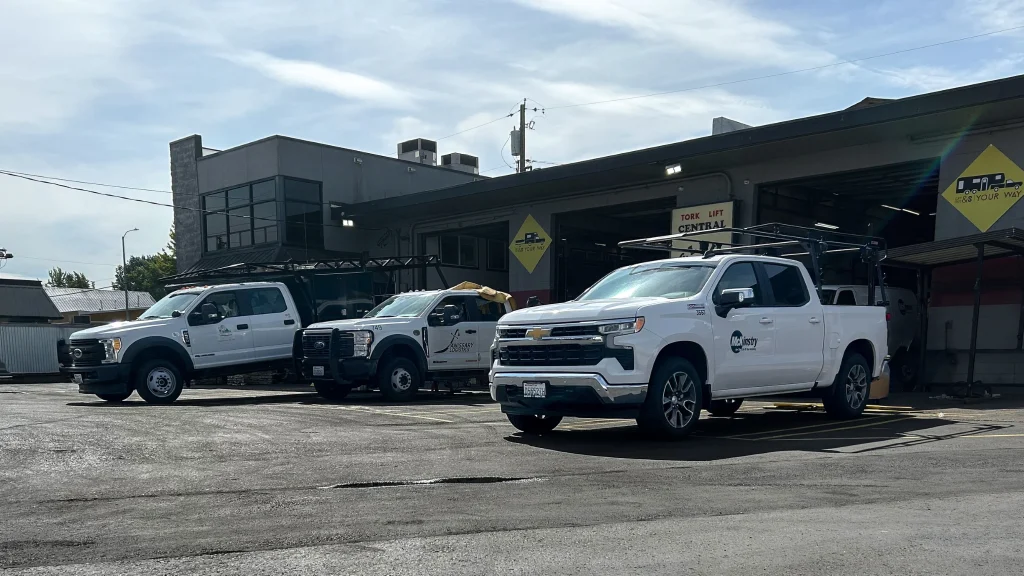
Torklift Central has supported fleet projects for companies such as Penske and McKinstry, along with local businesses, municipalities, and individual customers who need more than a standard install. With on-site engineering, fabrication, and installation capabilities in Kent, WA, the team can review real-world vehicle needs, build requirements, and workflow demands before recommending the right service path.
What Torklift Central Reviews Before Recommending a Service Path
Torklift Central is located in Kent, WA and supports fleet hitch, wiring, brake controller, and towing accessory installation, along with custom hitch review, for teams across the surrounding region. Before recommending a service path, the team reviews the vehicles, the trailers, the wiring and brake controller needs, and whether custom fabrication should be considered.
To make that review efficient, gather your fleet details before scheduling. The table below shows what to bring so the review moves quickly and the recommendation fits your operation. Timing, capacity, and custom feasibility are confirmed after review, not promised in advance.
| Setup area | Why it matters | What Torklift Central can review | What to gather before scheduling |
|---|---|---|---|
| Hitch fitment | The right hitch depends on the vehicle. | Standard hitch fitment for each vehicle. | Vehicle year, make, model, trim, and VIN if available. |
| Trailer wiring | Trailers must connect correctly. | Wiring needs and plug types. | Trailer type and plug type for each vehicle. |
| Brake controllers | Braking depends on the load. | Brake controller requirements. | Whether trailers need trailer brakes. |
| Trailer and accessory use | The setup must match the work. | Towing use and accessory plans. | Towing use, accessories, and workday demands. |
| Custom fabrication | Some needs exceed a standard hitch. | Whether custom fabrication should be reviewed. | Photos and a description of the specialty need. |
| Scheduling and downtime | Fleet uptime matters. | Scheduling and service coordination. | Vehicle count, timeline, and prior install details. |
Key Takeaways
- Plan fleet towing equipment as a system: hitch, wiring, brake controller, accessories, and workday use together.
- A fleet towing setup review matches each vehicle to the right hitch, wiring, brake controller, and trailer setup before work is scheduled.
- Custom fabrication needs inspection before feasibility, pricing, and timing can be confirmed.
- Repeat fleet builds still need vehicle-specific review, since model years, configurations, and accessory plans change.
- Gather vehicle year, make, model, trim, VIN, vehicle count, trailer type, plug type, brake controller needs, timeline, and photos before scheduling.
Frequently Asked Questions
Where can fleets plan towing equipment near Kent, WA?
Torklift Central is located in Kent, WA and supports fleet hitch, wiring, brake controller, and towing accessory installation, along with custom hitch review, for work trucks, vans, and commercial vehicles in the surrounding region.
What should work trucks review before towing setup work?
Review the whole system: hitch fitment, trailer wiring and plug type, brake controller needs, trailer type, accessory use, and how the vehicle is used on a workday. Planning these together keeps the install consistent.
Can Torklift Central help with hitches and wiring?
Yes. Torklift Central supports fleet hitch installation and trailer wiring, and can review plug types and wiring needs as part of a fleet towing setup review.
Can Torklift Central help with brake controllers?
Yes. Brake controller requirements are part of a fleet towing setup review, based on the trailers your vehicles tow. Bring details on whether your trailers use trailer brakes.
When does custom fabrication need review?
When a standard hitch does not meet the need. Custom fabrication is inspected before feasibility, pricing, and timing are confirmed, so plan for a review step if you have a specialty vehicle or requirement.
What information should fleets provide before scheduling?
Gather vehicle year, make, model, trim, VIN if available, vehicle count, trailer type, plug type, brake controller needs, towing use, timeline, photos, and any prior installation details.
| Request a fleet towing setup review at Torklift Central in Kent, WA.Use the schedule form to request an appointment, or review fleet upfitting and trailer wiring services.Call 253-854-1832 with your vehicle, trailer, wiring, brake controller, and fabrication questions. |