
A high-level guide to reviewing a fleet towing setup across every service area before scheduling work.
Planning a full fleet towing setup? Schedule a fleet consultation at Torklift Central in Kent, WA, or call 253-854-1832. Explore the fleet upfitting page and bring your vehicle details, counts, trailer and wiring info, and timeline.
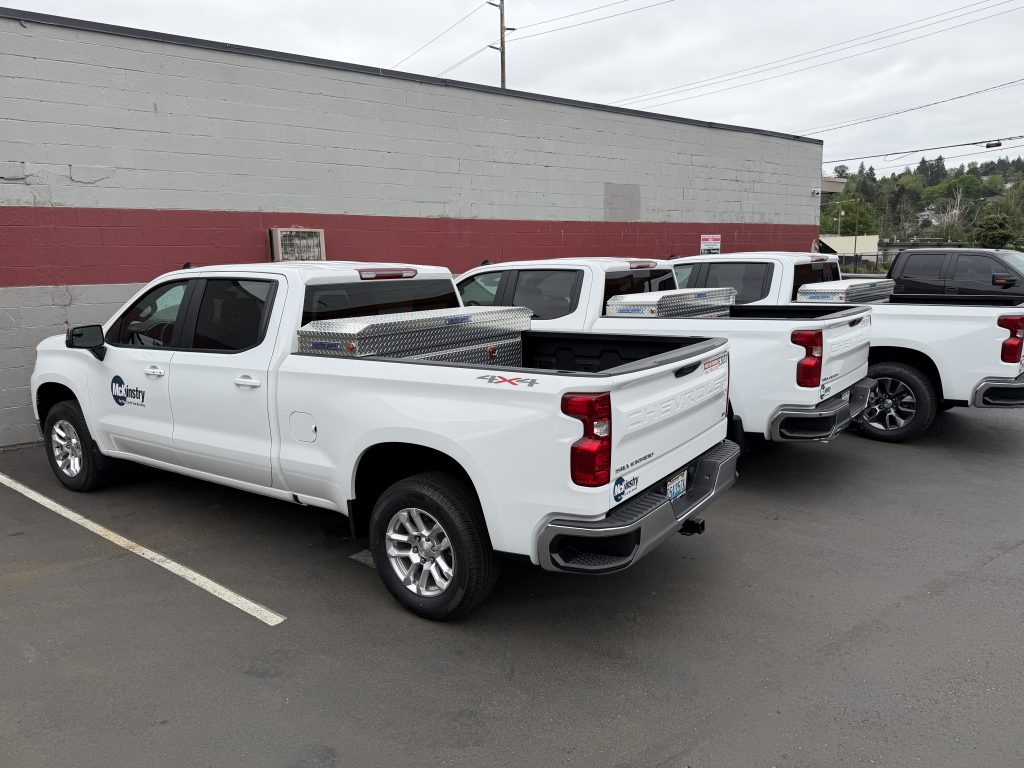
A fleet towing setup is a system, not a single install. Hitches, wiring, brake controllers, and sometimes custom fabrication all have to work together across multiple vehicles. Reviewing them together, before scheduling, is what keeps a fleet consistent and prevents surprises in the field. As the Retail Product Development Center (RPDC), Torklift Central designs, engineers, and installs all Torklift flagship products before they are mass-produced and sold across the country. Torklift Central supports fleet hitch, wiring, brake controller, and towing accessory installation, along with custom hitch review when a standard fit does not exist.
This article is a planning guide. It connects the pieces of a fleet towing setup so you can arrive at scheduling with the full picture in hand.
Start With the Standard Hitch Fitment
Most tow vehicles begin with a confirmed hitch. The first part of a fleet review is checking whether each vehicle type has a standard fit and confirming that it matches the intended towing use. When a confirmed fit exists, standard installation is the efficient path. If there is a confirmed application for your specific vehicle configuration, Torklift Central will get it installed for you, coupling fast, efficient service with over 50 years of experience to make sure your fleet is set up when you need it. When it does not, that vehicle moves into the custom review conversation instead.
Review the Wiring and Connectors
Towing is not just a receiver. Trailer wiring and connector type have to match the trailers your fleet actually uses. Fleet review should include wiring needs and connector style, and where wiring behavior is unclear, electrical troubleshooting can establish what is happening before work is scheduled. Getting the wiring right up front avoids controller and trailer problems later.
Plan the Brake Controllers
Tow vehicles that pull trailers with brakes need brake controllers planned around the trailer, wiring, and connector. Fleet review should confirm brake controller requirements per vehicle type, since not every vehicle supports every controller. Planning this alongside the wiring keeps the tow setup coordinated rather than assembled piecemeal.
Decide Whether Custom Fabrication Should Be Reviewed
Some fleet vehicles will not have a standard hitch fit. For those, the review decides whether custom fabrication should be evaluated. Custom fabrication requires inspection before feasibility, pricing, and timing can be confirmed, so it is treated as its own step within the larger fleet plan. Flagging these vehicles early keeps the rest of the fleet plan moving while the custom review runs in parallel.
Torklift Central is equipped with high-tech custom fabrication capabilities including water jet, 3D scanning/printing, laser tube cutter, robotics, and in house fabricating. If you have an application where it appears that there is no solution, Torklift Central builds it from scratch.
Remember That Repeat Builds Still Need Review
Even when vehicles share a configuration, repeat fleet builds still need vehicle-specific review. A trim, model year, or upfit difference can change hitch fitment, wiring, or controller needs. Use the standard as a reference each vehicle is checked against. When you work with Torklift Central, we will set you up with a designated rep from our team that will make sure every step runs smoothly.
When the Setup Needs Something That Does Not Exist Yet
Sometimes a fleet review turns up a need that no catalog part covers. That is where the Torklift Central role as the Retail Product Development Center (RPDC) matters. New towing and upfitting solutions are developed here before they scale to full production, so a fleet-specific solution is not a dead end. When it proves out, it can become a repeatable, production part that the rest of the fleet, and other fleets, can order.
McKinstry is the standout example. As it electrified its construction fleet, a need for a liftgate option for the Chevy Silverado EV came up, and other providers had turned the project down. McKinstry brought it to Torklift Central, which is known for custom solutions and for making projects work when they look impossible. Torklift Central built a removable liftgate that mounts without welding, cutting, or drilling into the truck body-integrated rear structure, then engineered it for production. That is now the TailoredLift Hitch and Liftgate System for the Chevrolet Silverado EV, which any fleet can order online. Explore the fleet upfitting page for more information on Torklift Central fleet capabilities.
| Setup area | Why it matters | What Torklift Central can review | What to gather before scheduling |
|---|---|---|---|
| Hitch fitment | Foundation of the tow setup | Standard fit or custom review | Vehicle types and towing use |
| Wiring and connectors | Trailers must connect correctly | Wiring needs and troubleshooting | Connector style and any symptoms |
| Brake controllers | Trailer braking must be consistent | Controller requirements per vehicle | Trailer type and controller needs |
| Custom fabrication | Covers vehicles with no standard fit | Whether custom review is needed | Photos and vehicle configuration |
| Repeat builds | Consistency across the fleet | Vehicle-specific review of the standard | Vehicle count and shared configurations |
How Torklift Central Can Help
If you are planning a fleet towing setup, Torklift Central can review hitches, wiring, brake controllers, and custom fabrication needs together in Kent, WA, then coordinate the work. Because custom fabrication needs inspection and repeat builds still need vehicle-specific review, a fleet consultation is the best first step. Bring the full picture: vehicle year, make, model, and trim, VIN if available, vehicle count, trailer type, plug type, brake controller needs, towing use, timeline, photos, and prior installation details. Explore the fleet upfitting page, then schedule a consultation or call 253-854-1832.
Key Takeaways
- A fleet towing setup is a system: hitches, wiring, brake controllers, and sometimes custom fabrication.
- Start with standard hitch fitment, then review wiring, connectors, and brake controllers together.
- Vehicles with no standard fit move into a custom fabrication review that needs inspection.
- When a fleet need has no catalog part, it can be developed and scaled into an orderable product, just as the TailoredLift Hitch and Liftgate System was.
Frequently Asked Questions
What should fleets review before towing setup work?
Hitch fitment, wiring and connectors, brake controllers, and whether any vehicles need custom fabrication reviewed.
What if my fleet needs something no catalog part covers?
A setup review can flag it, and as the Retail Product Development Center (RPDC) Torklift Central can develop a fleet solution that may scale to a production part, like the TailoredLift Hitch and Liftgate System created for McKinstry and now available for any fleet to order online.
Can Torklift Central help with hitches and wiring?
Yes. Fleet hitch, wiring, brake controller, and towing accessory installation are all supported.
Can Torklift Central help with brake controllers?
Yes, planned around the trailer, wiring, and connector for each vehicle type.
How should fleet managers prepare for scheduling?
Gather vehicle details and counts, trailer and connector info, brake controller needs, timeline, and photos.
What information should fleets provide?
Year, make, model, trim, VIN if available, vehicle count, trailer type, plug type, brake controller needs, towing use, timeline, photos, and prior installation details.
Planning a full fleet towing setup? Schedule a fleet consultation at Torklift Central in Kent, WA, or call 253-854-1832. Explore the fleet upfitting page and bring your vehicle details, counts, trailer and wiring info, and timeline.