How a fitment problem is defined, checked against standard parts, and evaluated for custom engineering before anything is built.
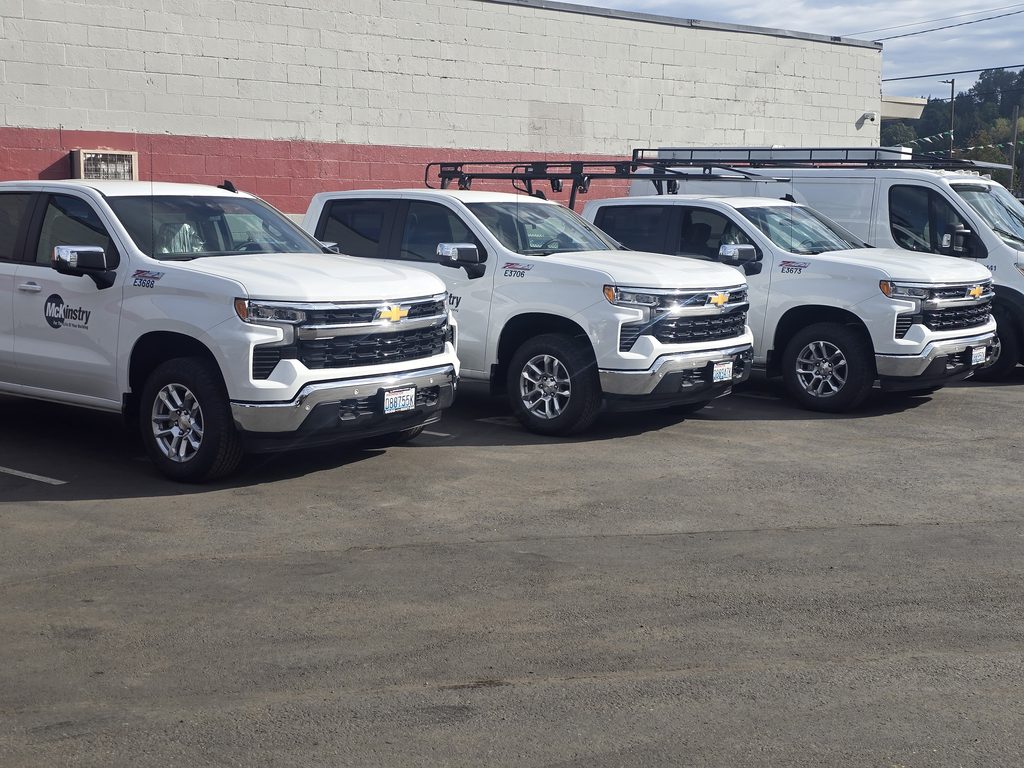
A fleet vehicle needs more than a catalog part when the standard component does not fit the vehicle, cannot carry the equipment, or conflicts with something already installed. When that happens, Torklift Central starts with a review, not a design. The team defines the fitment problem, gathers vehicle and equipment details, and checks whether an available product can solve it before considering custom engineering and fabrication. Not every request results in a custom design. Some end with a standard part applied differently, and some end with a recommendation not to proceed.
Signs a Standard Part Will Not Solve the Problem
Fleet managers usually discover the need for a review in one of a few ways:
- There is no listed application for the vehicle, or the vehicle is a specialty or low-volume chassis.
- An existing body, bumper, or piece of equipment blocks the normal mounting location.
- The equipment is heavier, larger, or shaped differently than available mounts support.
- The crew's workflow needs equipment in a location no product is designed for.
- Several standard parts would have to be combined in ways their makers do not support.
Defining the Fitment Problem
A clear problem statement keeps a project focused. "We need a better setup" is hard to scope. "We need a 2 inch rear receiver on this chassis, but the service body's rear step sits where the hitch would mount" is a problem an engineer can evaluate.
The problem statement should name the vehicle, the equipment or function needed, what currently prevents it, and what success looks like for the crew. It should also say how many vehicles need the solution, since a single unit and a fleet rollout are evaluated differently.
Gathering Vehicle Specifications and Equipment Details
Good information shortens the review. The team typically needs the vehicle's year, make, model, cab and bed or body configuration, the GVWR and GAWR labels, and clear photos of the area in question. For equipment, it needs the maker and model, weight, dimensions, mounting requirements, and how the crew uses it.
Measurements help, but they are not a substitute for seeing the vehicle. Many reviews move forward once the vehicle can be inspected at the Kent, WA facility, where on-site engineers can measure the actual constraint rather than relying on drawings.
Checking Standard Parts First
Standard parts come with known fitment, published ratings, installation instructions, and the ability to reorder the same part later. Those are real advantages for a fleet. Before custom design is considered, the review looks at whether an existing product, a different accessory, or a change in mounting location can solve the problem.
Sometimes the answer is as simple as a different hitch application or relocating a connector. When it is not, the review moves to feasibility.
Deciding Whether a Custom Design Makes Sense
Custom work is evaluated on several factors before anything is designed:
- Vehicle restrictions. Vehicle maker and body builder guidance on drilling, welding, and attachments.
- Structural loads. The weight, forces, and vibration the component must handle.
- Attachment points. Whether suitable points exist on the frame, body, or equipment.
- Interference. Sensors, cameras, airbag zones, wiring, lights, and service access.
- Repeatability. Whether the solution needs to be built once or across a fleet.
- Value. Whether the cost and effort make sense compared with changing the vehicle or equipment specification.
The Torklift Central team designs and builds single-unit projects, prototypes, and test concepts, and that projects requiring iteration go through design reviews before fabrication.
Design Review, Test Fit, and Installation Review
When custom work moves ahead, design concepts are reviewed with the customer before fabrication begins. A prototype is then test fit on the actual vehicle, where technicians check clearances, fastener access, wiring paths, and how the crew will use it. Adjustments are made as needed, and the final design is documented so it can be built again for additional vehicles.
Engineering Review Intake Checklist
| Information | Details to include | Why it helps |
|---|---|---|
| Problem statement | What is needed and what prevents it today | Keeps the review focused |
| Vehicle details | Year, make, model, cab, bed or body, drivetrain | Defines the fitment baseline |
| Weight labels | Photos of GVWR and GAWR labels | Sets load limits for any solution |
| Photos | Wide and close-up shots of the problem area | Shows existing equipment and constraints |
| Measurements | Key clearances and dimensions, if available | Speeds early feasibility review |
| Equipment specs | Maker, model, weight, dimensions, mounting needs | Defines the load and attachment needs |
| How it is used | Daily workflow, loading, and operating conditions | Affects location and design choices |
| Existing modifications | Prior upfits, body changes, wiring work | Reveals hidden constraints |
| Quantity | Number of vehicles now and planned | Affects repeatability and approach |
| Vehicle availability | When the vehicle can be inspected in Kent, WA | Many reviews require the vehicle on site |
How Torklift Central Can Help
Torklift Central's Retail Product Development Center in Kent, WA combines on-site engineers, in-house fabrication, and installation technicians, so a fitment problem can be reviewed, prototyped, and test fit in one place. The first step is a project review to determine whether a standard part works or custom work is worth pursuing.
Send the details in the intake checklist above, with photos, and be ready to bring the vehicle in for inspection.
Key Takeaways
- Custom review starts with a clear problem statement naming the vehicle, the need, and what blocks it.
- Standard parts are checked first because they bring known fitment, ratings, and reorder simplicity.
- Feasibility depends on vehicle restrictions, structural loads, attachment points, interference, repeatability, and value.
- Not every request leads to an approved custom design, and scope and pricing follow the review.
Frequently Asked Questions
How do I know if my project needs a custom review?
If no listed part fits the vehicle, existing equipment blocks the mounting location, or the equipment exceeds what available mounts support, a review is the right next step.
Will every request receive a custom design?
No. Some reviews find a standard solution, and some conclude the project should not proceed because of vehicle restrictions, loads, or cost.
Does the vehicle need to come to Kent, WA?
Many reviews require inspecting the vehicle in person so on-site engineers can measure the actual constraint. Early feasibility can start with photos and specifications.
Can a custom solution be built for multiple vehicles?
Yes, when the design is documented and the vehicles are consistent. Repeatability is considered during the review.
How long does a custom project take?
Timing depends on the project scope and is set after the review. Call 253-854-1832 to discuss your project.
Submit Your Vehicle and Equipment Details for a Project Review
Learn more about Custom Engineering and Fabrication or start with Fleet Upfitting.
Call 253-854-1832 or visit Torklift Central at 315 Central Ave N, Kent, WA 98032.