
Upfitting means equipping or customizing vehicles—often utility vans, trucks, and RVs—with specialized parts or layouts tailored to a buyer’s exact workflow. If you’re comparing the best fleet vehicle upfitting shops in Seattle and the greater Puget Sound, the fastest path from idea to install comes from an upfitter that manufactures in-house. At Torklift Central, we combine nearly 50 years of shop experience with a complete manufacturing facility—laser tables, laser tube cutters, tube benders, robotics, 3D printing, powder coating, and an in-house engineering design team—to deliver simple upfits in 1–2 days and complex projects in 1–2 weeks, depending on scope. Let’s break down why bringing key manufacturing in-house is changing the upfit game for Seattle, Tacoma, Bellevue, Everett, and beyond—so you can get out and go your way, faster.
Understanding Upfit Times and Challenges
Upfit lead time is the clock from order to delivery when you customize vehicles or add specialized equipment. Traditional outsourcing stacks delays: waiting for quotes, supplier backlogs, shipments, and any rework in between. Every handoff adds days or weeks, while any revision forces another round of external coordination.
That drag matters in the Pacific Northwest, where contractors, dealerships, and municipal fleets often run tight schedules and can’t afford idle vans or trucks. Rapid prototyping and local production short-circuit the delay cycle. For example, design choices that decrease 3D print time can move a part from “someday” to “today,” enabling hour-by-hour iteration instead of week-long waits, as shown in Markforged guidance on decreasing print time.
Benefits of In-House Laser Cutting and 3D Printing for Upfits
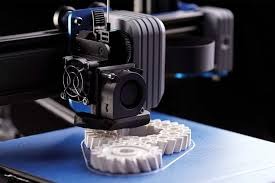
When design, fabrication, and installation live under one roof, you unlock speed, precision, and flexibility that outsourcing can’t match.
- Faster design iterations: Print test parts, laser-cut templates, and complete fit checks within hours—not weeks—so changes happen while the vehicle is still in-bay.
- On-demand production: Build what you need, when you need it. This reduces the need for large spare inventories and shortens reorder cycles.
- Complex geometries on demand: Additive manufacturing (a process that builds parts layer by layer) enables custom shapes, organic forms, and integrated features often impractical or too slow with traditional tooling, as highlighted in the Formlabs compilation of 3D printing use cases.
Sample turnaround reality check:
| Project type | Traditional outsourced process | In-house at Torklift |
| Simple steel/aluminum bracket | 5–10 business days | 1–2 days |
| Custom rack or mount | 2–4 weeks | 5–10 business days |
| Full utility van interior system | 4–8 weeks | 1–2 weeks |
Timelines vary by scope, but the pattern is consistent: fewer handoffs, faster installs, less downtime.
Assess Your Upfit Needs and Volumes
Start by mapping the parts that create the most wait time or rework. Typical candidates include small brackets, alignment jigs, hose/cable organizers, shelving connectors, and branded panels. Estimate weekly volumes and variability—this informs which processes (laser or 3D printing) best fit your mix and where you’ll see the quickest return, a common approach outlined in the 3DGence overview of industrial 3D printer applications.
Utility van upfit checklist:
- Bulkhead/partition and door guards
- Shelving, bins, and drawer modules
- Ladder/roof racks and cargo tie-downs
- Power management (inverters, mounts, enclosures)
- Lighting, safety signage, and labels
- Tool holsters, organizers, and custom mounts
- Vehicle-specific brackets, spacers, and adapters
Finding the Best Fleet Upfitters Near Seattle and Surrounding Areas
If you’re searching for the best fleet vehicle upfitting shops in Seattle, Tacoma, Bellevue, Everett, and the broader Puget Sound, use criteria that predict speed and reliability:
- In-house manufacturing and engineering, including laser cutting and 3D printing
- Factory-certified staff and proven installation quality
- Speed commitments: 1–2 days for simple work; 1–2 weeks for complex projects, depending on scope
Torklift stands apart with a complete in-house manufacturing facility—laser tables, laser tube cutters, tube benders, robotics, 3D printing, powder coating—and an engineering design team under one roof. That’s how we compress lead times and control quality.
Ready to cut vehicle downtime and boost productivity? Ask our in-house team for a quote or a live demo today—serving greater Seattle, Tacoma, Bellevue, Everett, and nearby fleet operators across the Pacific Northwest. Simple projects often ship or install in 1–2 days; complex projects are typically completed in 1–2 weeks, depending on scope.
Ready to upgrade your fleet?
Schedule a consultation with our experts today and discover tailored upfitting solutions that keep your vehicles mission-ready.
253-854-1832
Frequently Asked Questions
What are typical upfit lead times with traditional outsourcing?
Traditional upfit outsourcing usually takes several weeks due to supplier backlogs, shipping delays, and waiting for quotes. In contrast, in-house fabrication can reduce this to just a few days for simple projects.
How does laser cutting speed up part production?
Laser cutting creates precise, flat parts directly from digital files, transforming concepts into real components in hours instead of days or weeks.
What parts are best suited for 3D printing in upfits?
3D printing is ideal for producing brackets, small hardware, organizers, prototypes, and any complex or custom part that would be slow or costly to source from traditional suppliers.