
The highest rating is not automatically the right hitch. Fitment, your truck's ratings, your trailer, and your camper decide which SuperHitch family to shop.
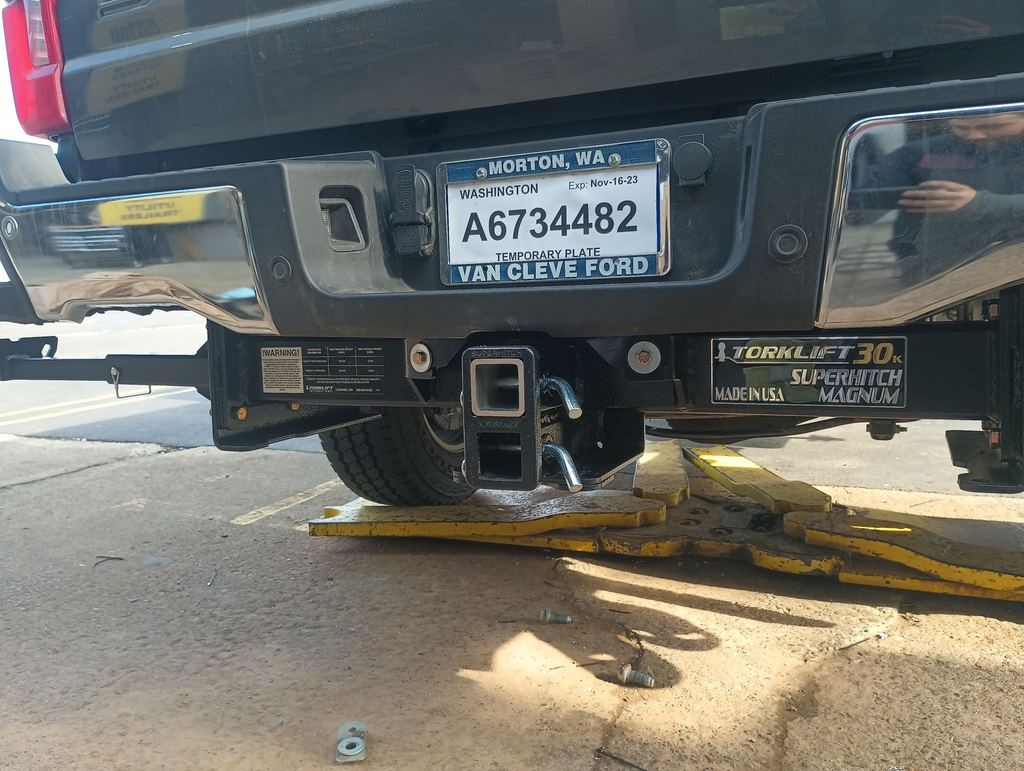
SuperHitch comes in three families: Hero 15K, Original 20K, and Magnum 30K. The number in each name is the family's maximum weight-distribution towing rating in thousands of pounds. The quick comparison: Hero 15K and Original 20K both use dual 2-inch receivers, while Magnum 30K pairs a 2.5-inch upper receiver with a 2-inch lower receiver and carries the highest ratings of the three.
The right SuperHitch is not the one with the biggest number. It is the compatible hitch that meets your actual towing requirements without exceeding what your truck is rated to do. Here is how to work through that decision in the right order.
The Right Shopping Sequence for SuperHitch
Heavy-duty hitch shoppers often start with the rating chart. Start with the truck instead.
- Confirm what fits your truck. SuperHitch is vehicle-specific, so your year, make, model, and configuration determine which families and part numbers exist for you.
- Check your truck manufacturer's ratings. Towing capacity, GCWR, payload, and GAWR set the real ceiling for your setup.
- Define your trailer weight and tongue weight. Use loaded weights, not brochure numbers.
- Decide between weight carrying and weight distribution. The ratings are different for each.
- Determine whether your truck camper requires SuperTruss. Camper overhang changes the setup.
- Choose the compatible hitch that meets those requirements.
Following that order keeps you from paying for capacity your truck cannot use, and it keeps you from choosing a hitch that falls short of your trailer.
It also helps to have real numbers in hand. Weigh the loaded trailer if you can, or use the loaded weight from the trailer manufacturer plus your cargo, water, and gear. Tongue weight is a share of that loaded trailer weight, so a heavier trailer raises both numbers at once. If you tow with a truck camper loaded, add the camper and its contents to the payload side of the equation before you look at hitch ratings at all.
SuperHitch Hero 15K, Original 20K, and Magnum 30K Compared
These are the current product-family maximum ratings. Your exact vehicle-specific product page is the final source for your application, since a specific truck may not carry the full family maximum.
| SuperHitch family | Weight-carrying rating | Weight-distribution rating | Receiver configuration |
|---|---|---|---|
| Hero 15K | 8,000 lb. trailer / 800 lb. tongue | 15,000 lb. trailer / 1,500 lb. tongue | Dual 2-inch receivers |
| Original 20K | 17,000 lb. trailer / 1,700 lb. tongue | 20,000 lb. trailer / 2,000 lb. tongue | Dual 2-inch receivers |
| Magnum 30K | 20,000 lb. trailer / 2,500 lb. tongue | 30,000 lb. trailer / 3,000 lb. tongue | 2.5-inch upper and 2-inch lower receivers |
Two things stand out. First, the gap between weight-carrying and weight-distribution ratings is large in every family, so knowing which setup you will run matters as much as choosing the family. Second, the receiver configuration differs. If your ball mounts, SuperTruss setup, or accessories are built around a 2.5-inch shank, Magnum's upper receiver matters. If your equipment is all 2-inch, Hero and Original fit that equipment directly.
Weight Carrying vs Weight Distribution
These two setups produce very different ratings, so it helps to know what each one means.
Weight carrying means the trailer tongue sits directly on the hitch through the ball mount. The hitch and the rear of the truck carry the full tongue weight. This is the simpler setup and the lower rating in every SuperHitch family.
Weight distribution adds a weight-distribution hitch system with spring bars that spreads part of the tongue load forward to the truck's front axle and back to the trailer axles. That is why weight-distribution ratings are higher. A weight-distribution system is a separate component, and it carries its own rating.
When you compare SuperHitch families, compare the rating that matches the setup you will actually use. A trailer that fits comfortably within one family's weight-distribution rating may exceed that family's weight-carrying rating.
When a Truck Camper Calls for SuperTruss
If you tow with a truck camper loaded, the camper usually extends past the rear of the truck. That overhang is why SuperTruss exists. SuperTruss is designed to work with SuperHitch for truck camper and other rear-overhang towing, and it is the only hitch extension with a dual truss system.
SuperTruss is available in eight lengths from 21 to 60 inches. To find your length, measure camper overhang from the face of the truck receiver to the furthest point of the truck camper bumper, then account for the clearance your trailer needs to turn.
SuperTruss ratings change based on:
- Extension length
- Weight-carrying vs weight-distribution setup
The SuperTruss rating does not match the SuperHitch family rating. A 30K Magnum does not mean your SuperTruss carries 30,000 pounds. Check the current SuperTruss rating chart for your exact length and setup. Then compare that number with your hitch, ball mount, safety chain, and truck ratings. The lowest one controls.
Match the Hitch to the Truck Before Chasing the Highest Rating
Magnum 30K is the highest-rated family, but it is not automatically the best choice for every truck. A hitch rating is the hitch's capacity. It does not raise your truck's towing capacity, GCWR, payload, or GAWR, and having two receivers does not double anything.
Ask these questions as you decide:
- What do Find Your Fit and the vehicle-specific product page show for your truck?
- What is your truck manufacturer's maximum towing capacity for your configuration?
- What is your loaded trailer weight and tongue weight?
- Will you run weight carrying or weight distribution?
- Do you need SuperTruss for camper overhang, and what does your length rate at?
- Do your ball mount, weight-distribution system, and accessories match the receiver size?
If Hero 15K covers your requirements on your truck, it is a strong choice. If your trailer needs more, Original 20K or Magnum 30K are the next families to compare, as long as your truck and every other component in the system are rated for the load.
How Torklift Central Can Help You Shop
Torklift Central carries SuperHitch Hero, Original, and Magnum along with SuperTruss, and our retail team can help confirm the correct part number for your truck and match the family to your trailer, tongue weight, and camper overhang. As a towing equipment provider that works with heavy-duty and truck camper setups every day, we can also schedule installation in Kent, WA, where a technician will walk you through the setup at your appointment.
Key Takeaways
- Hero 15K, Original 20K, and Magnum 30K are product-family maximums; your vehicle-specific page sets your actual application.
- Weight-carrying and weight-distribution ratings differ widely, so compare the rating for the setup you will use.
- Hero and Original use dual 2-inch receivers; Magnum uses a 2.5-inch upper and 2-inch lower receiver.
- SuperTruss comes in eight lengths from 21 to 60 inches, and its ratings change with length and setup.
- No SuperHitch increases your truck's towing capacity, GCWR, payload, or GAWR.
Frequently Asked Questions
Which SuperHitch should I buy?
Start with Find Your Fit to see which families fit your truck. Then choose the compatible family that covers your loaded trailer and tongue weight in the setup you will run, without exceeding your truck's ratings.
Is SuperHitch Magnum better than Original?
Magnum 30K has higher ratings and a 2.5-inch upper receiver, but it is only the better choice if your truck fits it and your setup needs that capacity. If Original 20K covers your requirements, it is a strong fit.
How much can SuperHitch Hero tow?
The Hero 15K family is rated up to 8,000 pounds trailer and 800 pounds tongue weight in weight carrying, and up to 15,000 pounds trailer and 1,500 pounds tongue weight with weight distribution. Your vehicle-specific page and your truck's ratings set the actual limit.
What is the difference between weight carrying and weight distribution?
Weight carrying puts the full tongue weight on the hitch. Weight distribution uses a separate spring-bar system to spread part of that load to the truck's front axle and the trailer axles, which is why its ratings are higher.
Which SuperHitch works with SuperTruss?
SuperTruss is designed to work with the SuperHitch line. Check the SuperTruss rating chart for your length and setup, and confirm compatibility with your exact SuperHitch.
Do I need SuperHitch for a truck camper?
If you plan to tow with a truck camper loaded and the camper overhangs the receiver, SuperHitch with SuperTruss is the system designed for that setup. Measure overhang from the receiver face to the furthest point of the camper bumper to start.
Do dual receivers double towing capacity?
No. Dual receivers give you more mounting options. They do not double any rating, and they do not change your truck's towing capacity.
Ratings notice: SuperHitch and SuperTruss do not increase the vehicle manufacturer's towing capacity, GCWR, GVWR, payload, or GAWR. Ratings vary by vehicle-specific application, extension length, and setup. Always use the lowest-rated component in the system, including the truck, hitch, extension, ball mount, weight-distribution system, safety chains, and trailer coupler, and follow your owner's manual and current Torklift product instructions.
Confirm your truck in Find Your Fit, then shop SuperHitch and SuperTruss at Torklift Central. Need help matching a family to your trailer or camper? Call 253-854-1832 and talk with a retail specialist before you order.