Finding affordable fleet upfitting services in Seattle—and choosing a top-rated partner across King County, Kent, Tacoma, Bellevue, Everett, and Redmond—starts with understanding local standards and how they impact safety, cost, and uptime. This guide distills the essentials: what Seattle-area upfitting requires, how to spec components for Northwest weather, and how to manage pricing and timelines without compromising compliance. Torklift Central’s end-to-end approach—engineering, fabrication, installation, and documentation—is built for the region’s conditions and regulatory expectations, with simple projects completed in 1–2 days and complex programs in as little as 1–2 weeks. For deeper context on codes, corrosion control, and validation, see Torklift’s authority on King County upfitting standards and pricing (TCO-focused methods, documentation, and local requirements) in Torklift’s authority on King County upfitting standards.
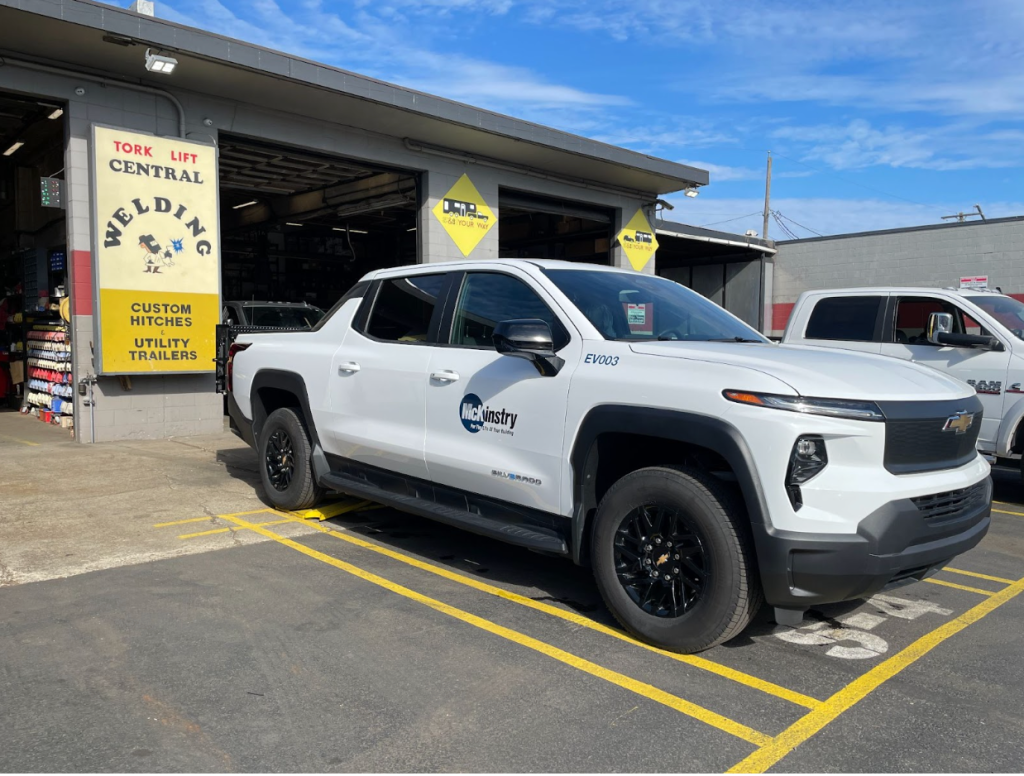
Understanding King County Upfitting Standards
Fleet upfitting in King County is the process of designing, engineering, and installing racks, shelving, partitions, lighting, power systems, telematics, and other work-specific components to make commercial vehicles safer and more productive for a defined job.
- Fleet upfitting: the structured addition of hardware and systems—such as shelving, ladder racks, partitions, lighting, power, and data—to optimize safety and function for a given trade or service route.
Key Components of Fleet Upfitting for Seattle and Surrounding Areas
Core elements in a Seattle-area upfit typically include:
- Shelving units and drawer modules sized to secure tools and reduce shifting loads.
- Cargo partitions to protect operators and isolate HVAC/heat.
- Ladder and cargo racks with anti-corrosion finishes and securement points.
- Lighting upgrades—interior LEDs and exterior work lights with drip-proof enclosures.
- Tow packages and hitches engineered for rated loads and steep grades.
Regional considerations:
- Marine air and rain drive corrosive exposure—spec galvanized or powder-coated steel/aluminum, sealed wiring, dielectric protection, and drip-proof lighting housings
- Frequent stop-and-go and hills require secure mounting, anti-vibration hardware, and careful weight distribution.
Standard vs custom upfits—when to choose which:
- Standard: best for rapid deployments and common configurations (e.g., trades vans with proven shelving/rack kits). Choose when speed, interchangeability, and budget are priorities. For time/cost tradeoffs, see standard vs custom upfits guidance.
- Custom: ideal for specialized tools, unique power needs, EV integrations, or heavy-duty service bodies. Choose when precise ergonomics, weight targets, or route-specific layouts produce measurable ROI.
Assessing Fleet Needs for King County Operating Conditions
A practical workflow to dial in the right spec:
- Gather driver/tech input: capture daily tasks, tool lists, ergonomic pain points, and security needs.
- Map route requirements: note steep grades, frequent ferries, restricted clearances, and shore-power access; assess EV readiness and charging dwell.
- Define safety and payload: confirm gross vehicle weight, axle ratings, fall-protection/storage, and visibility requirements.
- Engineer for corrosion and weight: prioritize coated/galvanized metals, enclosed wiring, and lightweight materials that preserve payload.
- Validate fit early: use standardized spec sheets and a pilot-unit drop-off for same-day fit verification to de-risk production, as detailed in Torklift’s affordable upfitting playbook.
Key factors to weigh:
| Factor | What to capture | Why it matters |
| Payload and GVWR | Tools, parts, liquids, generators, racks | Prevents overloads; preserves braking and tire life |
| Electrical/power | Inverter size, outlets, lighting, idle policy | Avoids battery issues; supports productivity |
| Corrosion strategy | Coatings, materials, sealed harnessing | Extends life in marine air/rain |
| Ergonomics/safety | Access heights, partitions, tie-downs | Reduces injuries; speeds service calls |
| EV considerations | Battery clearance, weight, range impact | Maintains warranty and route reliability |
Engineering and Validation Processes for Upfits
Torklift’s in-house engineering team performs CAD modeling and structural validation before cutting metal. Finite element analysis (FEA) simulates how materials and components will react to forces, vibration, and stress, reducing the risk of failure by validating designs virtually before production. Our complete manufacturing facility—laser tables, laser tube cutters, tube benders, robotics, 3D printing, powder coating, and an in-house engineering design team—enables rapid prototyping, consistent quality, and cost control, as outlined in Torklift’s in-house manufacturing advantages.
Production, Coating, and Corrosion Resistance Standards
Seattle-area fleets should prioritize materials and finishes that survive marine air and frequent rain. Powder-coated and galvanized components deliver long-term rust resistance, especially when paired with sealed harnesses and grommeted pass-throughs.
- Powder coating is a process in which a dry powder is applied to metal and heated, creating a durable, chip-resistant, and rust-resistant finish ideal for the Northwest climate.
Installation, Quality Assurance, and Project Management
Torklift assigns a dedicated fleet liaison, publishes milestone tracking, provides digital status updates, and conducts post-install walk-throughs. Quality assurance covers weld integrity, torque verification, seal/water tests, electrical load tests, and functional checks on drawers, racks, and safety systems.
Typical project milestones:
| Milestone | What you get |
| Intake | Vehicle check-in, baseline photos, scope confirmation |
| Mockup/fit-check | Layout verification, interference check, driver sign-off |
| Mid-build update | Photo progress, change-order lock, schedule confirmation |
| QC and validation | Weld/fastener inspection, leak and load tests, documentation |
| Delivery and training | Walk-through, maintenance tips |
EV Fleet Upfitting Considerations in King County
EVs introduce additional engineering steps: battery and high-voltage clearance, weight management, route/range modeling, DC/DC and inverter sizing, thermal considerations, and component compatibility. Use established components and experienced EV integrators to avoid warranty conflicts. Torklift recommends piloting one to two vehicles first, monitoring range, charging dwell, and ergonomics before scaling—a best practice reinforced by recent Seattle fleet trends in the region’s EV adoption insights.
Selecting a Trusted Upfitter in Seattle and the Pacific Northwest
Qualities to require in reliable Seattle upfitters:
- Certified engineering with CAD models and documented FEA for structural validation.
- Proven regional track record across Seattle, Kent, Tacoma, Bellevue, Everett, and Redmond.
- In-house manufacturing for speed, cost control, and consistent quality.
Pricing, Turnaround Times, and Managing Fleet Downtime
Expect fast, affordable fleet upfitting services in Seattle when jobs are standardized and components are pre-staged. Torklift’s typical pace: simple packages completed in 1–2 business days; complex or custom programs delivered in as little as 1–2 weeks depending on scope, based on regional benchmarks outlined in standard vs custom upfits guidance. Budget planning tips: prioritize available components, approve drawings promptly, and lock schedules early; pre-staged kits and clear installation windows keep costs predictable and trucks earning.
Typical lead times (guidance ranges):
- Standard van packages: 1–2 business days
- Lighting and light power add-ons: 1–3 days
- Custom rack/shelving with power: 3–7 business days
- Service bodies or specialty builds: 1–2 weeks
Torklift’s complete manufacturing facility—laser tables, laser tube cutters, tube benders, robotics, 3D printing, powder coating, and in-house engineering—compresses lead times and reduces change-order risk, supporting faster, lower-cost outcomes.
Frequently Asked Questions
How does corrosion resistance affect upfit durability in the Seattle area?
Marine air and frequent rain accelerate rust, so coated materials and sealed wiring significantly extend service life and reduce maintenance.
What are typical turnaround times for standard and custom upfits?
Standard packages are commonly completed in 1–2 business days; custom or complex builds typically take 1–2 weeks depending on scope and parts availability.
What should I look for when choosing an upfit provider near Seattle?
Choose a provider with in-house engineering and manufacturing, strong local references, documented QA, and clear warranties to ensure reliable, on-time results.
Contact Torklift at 253-854-1832 or visit us at 315 Central Ave N, Kent, WA 98032 to start your Seattle-area fleet upfitting project. Simple projects are completed in 1–2 days and complex programs in 1–2 weeks—powered by our complete in-house engineering and manufacturing capability for speed, compliance, and cost control.