

How to match a spreader format to your truck and your route instead of chasing the largest hopper that fits.
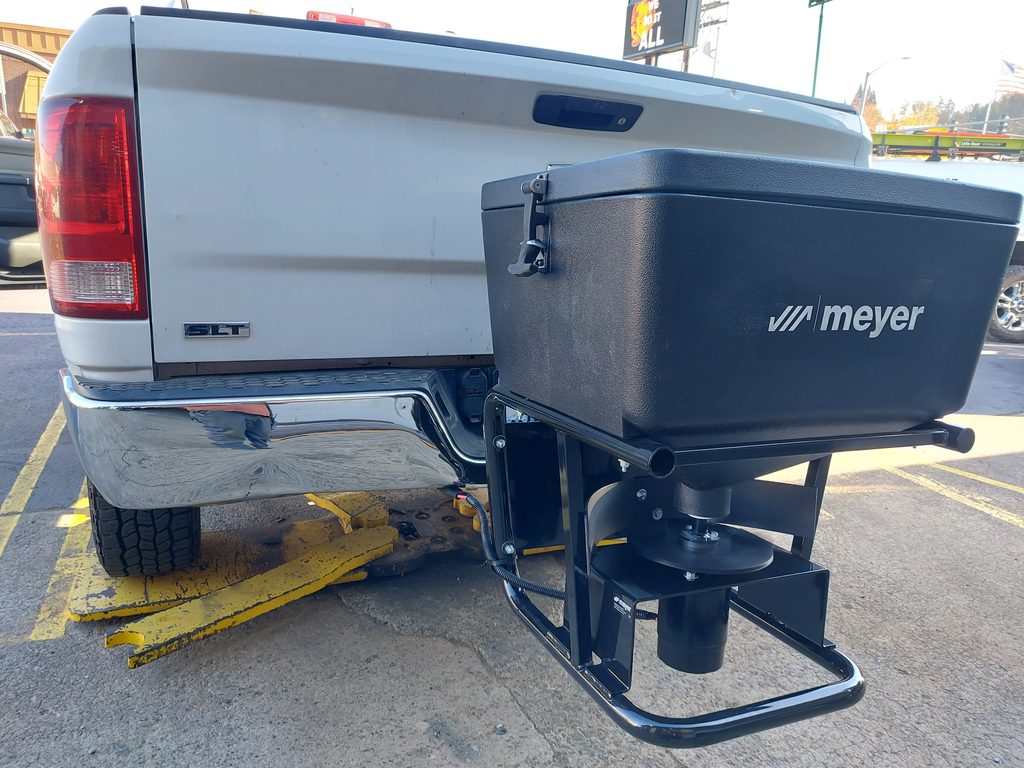
Choosing a salt spreader looks simple until you start weighing bed space against payload against how long your route runs. The biggest hopper is not automatically the best choice, and the format that works for one truck can be wrong for another. The right spreader is the one that fits your truck, your route, and your material, all within the truck's ratings.
Torklift Central sells and installs salt spreaders in Kent, WA, mounted to work trucks for winter road and lot treatment. This guide walks through the questions that actually determine which spreader format makes sense before you buy or install.
Understand the Main Spreader Formats
Spreaders come in a few broad formats, each suited to different trucks and jobs. Knowing the categories helps you narrow the choice before you get into specifics.
- Tailgate spreaders mount at the rear of a truck, SUV, or utility vehicle and generally use less bed space.
- Insert hopper spreaders drop into the bed of a pickup or utility vehicle and are aimed at larger-scale spreading, and are often paired with a plow.
- Dump truck spreaders, such as under-tailgate or replaceable-tailgate units, suit dump-body trucks.
Which format fits depends on your truck type, how much bed space you can give up, and the scale of your spreading. A tailgate spreader may be plenty for lighter duty, while a route with heavy material demand may point toward an insert hopper, provided the truck can carry it.
Account for Bed Space and Existing Equipment
Bed space is often the first practical constraint. An insert hopper takes up a meaningful portion of the bed, which matters if you already carry a toolbox, tools, or other work equipment back there.
Before choosing, take stock of what already lives in the bed and how much room is truly free. A tailgate spreader leaves most of the bed open, while an insert hopper commits a large share of it. Matching the format to your available space keeps the truck useful for the rest of your work.
The Payload Rule That Changes Everything
Here is the single most important point in spreader selection: the spreader's advertised capacity does not mean your truck can legally or safely carry that amount. A hopper rated to hold a large volume of material can easily exceed what the truck should carry once it is full.
Your total load includes far more than the material.
- The spreader's own empty weight.
- The salt or treatment material, which is heavy and adds up quickly.
- The driver and any passengers.
- Tools, fuel, and other cargo.
- Any other accessories on the truck.
All of that has to stay within the truck manufacturer's ratings. A salt spreader does not increase your truck's payload capacity. Do not select the largest hopper that physically fits and plan to fill it. Instead, work backward from the truck's payload to a spreader and material load the truck can actually carry.
Match the Format to the Route
How far and where you spread should guide the format and capacity. A short residential route with frequent stops has different needs than a long commercial route or a large parking lot.
- Route length, which affects how much material you need to carry and how often you refill.
- Lot versus roadway use, which affects coverage and material demand.
- Refill frequency, since a smaller hopper means more stops but a lighter load.
- Material type, since not every spreader is suited to every deicing material.
A larger hopper reduces refill stops but adds weight, while a smaller one keeps the truck lighter at the cost of more frequent refills. The right balance depends on your route, not on the biggest number on the spec sheet.
Think About Storage, Electrical, and Removal
A spreader is not only a winter decision. Consider where it lives when it is off the truck, especially an insert hopper that needs storage space. Consider the electrical requirements, since spreaders need power and controls wired in. And consider how often you will install and remove it through the season.
For operations that switch trucks between spreading and other work, ease of removal and consistent wiring across trucks are worth factoring into the choice.
Fleet Consistency
If you run several trucks, consistency helps. Standardizing spreader formats and controls across similar trucks makes operator training simpler and maintenance more predictable. It also makes preseason service easier to plan.
As with plows, that does not force every truck onto the same spreader. Different trucks and routes may call for different formats. The point is to be deliberate about which trucks share a setup.
Salt Spreader Selection Questions
| Selection question | Why it matters | Truck or route detail affected | What to verify before choosing |
|---|---|---|---|
| Which format fits the truck? | Format follows truck type | Tailgate vs insert vs dump | Truck type and bed space |
| How much bed space is free? | Inserts use much of the bed | Room for tools and cargo | Existing bed equipment |
| What can the truck carry? | Advertised capacity is not truck capacity | Payload and axle limits | Truck payload minus all other load |
| How long is the route? | Length drives material load | Refill frequency | Route length and lot vs road |
| What material do you use? | Not every spreader suits every material | Material compatibility | Spreader and material match |
| Where will it be stored? | Inserts need storage off the truck | Storage and removal | Storage space and removal frequency |
Match the Spreader to the Truck and the Route
The right spreader starts with your truck's payload and bed space, then matches to your route length, material, and storage needs. Work backward from what the truck can carry to a spreader and material load that stays within its ratings, rather than picking the largest hopper that fits. If you run a fleet, standardize where it makes sense.
Torklift Central sells and installs salt spreaders in Kent, WA and can help you match a format to your truck and route. Bring your truck details, your payload information, your route needs, and a sense of your bed space so the team can guide the selection and installation.
Key Takeaways
- Match the spreader format, tailgate, insert hopper, or dump-truck style, to your truck type, bed space, and the scale of your spreading.
- A spreader's advertised capacity is not what your truck can carry. Total load includes the spreader, material, people, tools, fuel, and cargo, all within the truck's ratings.
- A salt spreader does not increase payload. Do not choose the largest hopper that fits and plan to fill it.
- Let route length, lot versus road use, and material type guide capacity and format, balancing refill frequency against weight.
- Factor in storage, electrical needs, and removal, and standardize across a fleet where it makes sense.
Frequently Asked Questions
What size salt spreader should I put in my truck?
Start from your truck's payload, not the hopper's advertised capacity. Work backward from what the truck can carry, after accounting for people, tools, fuel, and cargo, to a spreader and material load that stays within the ratings.
Should I choose a tailgate or insert spreader?
A tailgate spreader uses less bed space and suits lighter duty, while an insert hopper handles larger-scale spreading but commits much of the bed and adds significant weight. The right choice depends on your truck, bed space, and route.
How does payload affect salt spreader selection?
Heavily. The spreader plus a full load of material can exceed what a truck should carry. A spreader does not raise payload, so the truck's ratings and everything already aboard set the real limit.
How much bed space does a spreader use?
A tailgate spreader leaves most of the bed open, while an insert hopper takes up a large share of it. Account for any toolbox or equipment you already carry before choosing.
What spreader is better for longer routes?
Longer routes favor carrying more material to reduce refills, but only up to what the truck can safely carry. Balance a larger hopper's fewer stops against the added weight, and confirm the loaded truck stays within its ratings.
Does Torklift Central install salt spreaders?
Yes. Torklift Central sells and installs salt spreaders in Kent, WA, mounted to work trucks, and can help match a format to your truck and route.
Find the Right Spreader for Your Truck
Talk to Torklift Central in Kent, WA about salt spreader selection and installation, and match the format to your truck's payload, bed space, and route.
Bring your truck details, payload information, and route needs to the conversation.
Call 253-854-1832 to plan your spreader setup.