
A motorhome hitch plan starts with the coach structure and the load you intend to carry, not the receiver size.
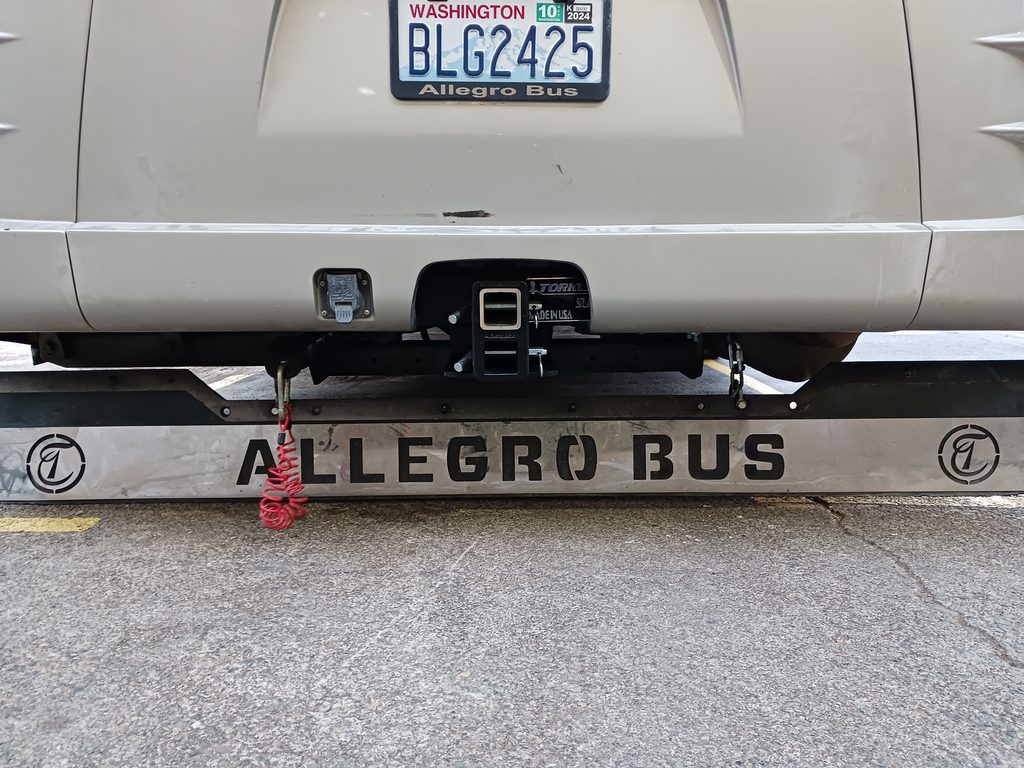
Torklift Central can add or replace a rear receiver on many motorhomes, but the review does not start with receiver size. It starts with four things: the motorhome's rear structure, the equipment already mounted at the back of the coach, what you plan to carry or tow, and how much loaded weight will sit behind the receiver. A 2-inch opening tells you what an accessory plugs into. It does not tell you whether the structure behind that opening can support a loaded E-Bike rack bouncing over every expansion joint on I-5.
Our technicians and onsite engineers at the Kent, WA facility review those four details together so the hitch plan matches the way you actually use the motorhome. Here is what that review covers and what to have ready before you schedule.
Why a Motorhome Hitch Is Different From a Pickup or SUV Hitch
On a pickup or SUV, a catalog hitch is designed around a known factory frame. A motorhome is built in layers. The chassis manufacturer builds the frame and drivetrain, and the coach builder adds the body, storage bays, tanks, and rear equipment. By the time the motorhome reaches you, the rear of the coach can include:
- The original chassis frame rails
- Frame extensions added to carry the coach past the end of the original frame
- Coach-body structure and rear wall framing
- An existing receiver, installed by the coach builder or a previous owner
- Bumper structure
- Holding tanks and plumbing
- Exhaust routing
- Wiring for lighting, cameras, and accessories
- A spare tire or other rear-mounted equipment
That is why the chassis model alone does not confirm rear receiver fitment. Two motorhomes built on the same chassis can have different overhang lengths, different frame extensions, and completely different equipment packed into the last few feet of the coach. Torklift Central reviews the motorhome as it was actually built and modified, not only the chassis it started on.
Start With What You Plan to Carry or Tow
The accessory decides what the hitch needs to do, so it is the next thing our team asks about. Each type of load brings its own set of details.
Bike racks and E-Bike racks. E-Bikes are heavy, and a loaded E-Bike rack adds up quickly. Bring the rack brand and model, the rack's own weight, the number of bikes, and the weight of each bike. Check whether the rack manufacturer approves that rack for use on a motorhome or RV, since some racks are not intended for the forces created behind a long coach. Note any extension, adapter, or swing-away component you plan to use, because those parts add length and carry their own limits.
Cargo carriers and generator trays. Know the empty weight of the tray or carrier, the loaded weight of the cargo or generator, and the distance from the receiver to where that load sits. A generator riding at the far end of a deep tray behaves very differently from the same weight close to the receiver.
Towed equipment. Towing is on the table only when the motorhome and the hitch are both approved for that use. Bring the trailer type, trailer weight, tongue weight, the connector your trailer uses, and its braking requirements. Wiring and brake control belong in the same plan, and Torklift Central can review the electrical side alongside the hitch.
Leverage: Why a Hitch Rating Is Not the Same as an Acceptable Rack Load
A tongue-weight rating describes the vertical load the hitch can carry at the receiver. A rack or tray moves weight backward, away from the receiver. The farther back the load sits, the more leverage it puts on the receiver, the hitch, and the motorhome structure behind it.
Motorhomes add another layer. Rear overhang already places the receiver well behind the rear axle, and every bump the rear axle crosses is magnified at the end of that overhang. A loaded rack on a long coach does not just sit there. It moves, and that motion adds force the static number on a label does not describe.
So a hitch tongue-weight rating should never be read as the acceptable loaded weight of a rack or tray. The working limit comes from several sources at once:
- The hitch and receiver rating
- The rack or tray manufacturer's capacity and any RV-use guidance
- The rating of any extension or adapter in the setup
- The motorhome manufacturer's guidance for the rear of the coach
- The motorhome's own weight ratings
The lowest-rated component controls. Torklift Central reviews the accessory, the hitch, and the structure together so the plan lines up with that lowest limit instead of the highest number in the setup.
What Torklift Central Reviews Before Recommending a Hitch Path
A motorhome hitch review looks at the coach, the accessory, and the way the two will interact on the road. The table below shows the details our technicians focus on and what helps the review move faster.
| Motorhome or accessory detail | Why it matters | What Torklift Central reviews | What the customer should provide |
|---|---|---|---|
| Year, make, model, and chassis | Identifies the starting structure and any known receiver applications | Whether a verified compatible receiver exists for this coach | Year, make, model, and chassis manufacturer when known |
| Rear overhang | Longer overhang increases leverage on the receiver and structure | How far the receiver sits behind the rear axle and how loads will act on it | Approximate rear axle to rear bumper measurement and side photos |
| Frame extensions | Extensions may carry the hitch load instead of the original chassis frame | How the extensions are built and attached, and whether they suit the intended use | Underside photos of the rear frame area |
| Existing receiver or bumper | May be reusable, undersized, or tied into the bumper | Receiver condition, labels, mounting, and rating information | Photos of the receiver, any labels, and the bumper |
| Tanks, plumbing, exhaust, and wiring | These occupy space where hitch mounting points might go | Clearance around the proposed mounting area | Underside photos of the rear of the coach |
| Previous rear modifications | Unknown welds or brackets change what the structure can support | Whether prior work affects a standard or custom path | Records, receipts, or notes from previous work |
| Bike or E-Bike rack | Rack weight, bike weight, and length create leverage | Rack rating, RV-use approval, and loaded weight against hitch limits | Rack brand, model, rack weight, number and weight of bikes |
| Cargo carrier or generator tray | Load distance from the receiver changes leverage | Empty and loaded weight, and where the load sits | Tray weight, cargo or generator weight, receiver-to-load distance |
| Towed equipment | Towing adds tongue weight, wiring, and braking needs | Motorhome and hitch towing approval, connector, and brake requirements | Trailer type, weight, tongue weight, connector, and brake type |
Photos of the rear and underside are especially useful. They let the service team see frame extensions, existing receiver hardware, tanks, and exhaust routing before the motorhome arrives in Kent.
Standard Installation or Custom Hitch Fabrication
If a verified compatible receiver exists for your motorhome and the rear structure supports the installation, a standard installation is the straightforward path. Our technicians install it at the Kent, WA facility and walk you through the setup when the work is done.
When no verified receiver fits, or the coach's rear structure, overhang, or existing equipment rules out a standard part, Torklift Central can review whether custom hitch fabrication is feasible. As the Kent, WA Retail Product Development Center, Torklift Central has onsite engineers and in-house fabrication capability. Depending on the project, that can include 3D scanning, SolidWorks design, Finite Element Analysis, laser tube cutting, water jet cutting, welding, and in-house powder coating. Not every custom project needs every one of those processes.
Custom work starts with a review, not a promise. Feasibility, design, capacity, price, and timeline are confirmed after our team inspects the motorhome and understands the intended load. Some coaches will not have an acceptable custom mounting path for the use the owner has in mind, and when that is the case, you will hear it plainly before any work begins.
Bring the Motorhome and the Accessory Plan Together
The fastest motorhome hitch reviews happen when the owner brings the coach details and the accessory details at the same time. Before you request an appointment, gather:
- Motorhome year, make, and model
- Chassis manufacturer, when known
- Current rear hitch or receiver information, including any labels
- Existing bumper details
- Approximate rear overhang
- Any frame extensions or previous rear modifications you know about
- The accessory you plan to use, with brand, model, and weights
- Towing details if you plan to tow: trailer type, weight, tongue weight, connector, and brakes
- Photos of the rear of the motorhome and the underside of the rear frame area
Installation appointments take place at Torklift Central in Kent, WA. A requested date or time is confirmed once the service team reviews your details and approves the appointment.
How Torklift Central Can Help
As a towing equipment provider and installation facility in Kent, WA, Torklift Central reviews your motorhome structure and accessory plan together, then recommends a standard receiver installation or a custom hitch review based on what the coach can support. Call 253-854-1832 or request an appointment with your motorhome details and photos ready.
Key Takeaways
- A motorhome hitch review starts with the coach structure, existing rear equipment, intended use, and loaded weight, not receiver size.
- The chassis model alone does not confirm rear receiver fitment, because frame extensions, overhang, and coach equipment vary.
- A hitch tongue-weight rating is not the acceptable loaded weight of a rack or tray. Leverage and the lowest-rated component set the working limit.
- Torklift Central installs verified compatible receivers when the structure supports them and reviews custom fabrication when it does not.
- Bring motorhome details, accessory weights, towing information, and rear and underside photos before scheduling.
Frequently Asked Questions
Can Torklift Central add a hitch to a motorhome?
Yes, when the motorhome structure supports it. Our technicians review the rear frame, extensions, existing equipment, and intended use. If a verified compatible receiver exists, standard installation is the path. If not, Torklift Central can review custom hitch fabrication, with feasibility confirmed after inspection.
Can I carry E-Bikes behind a motorhome?
Many owners do, but it depends on the rack manufacturer's RV-use approval, the combined weight of the rack and bikes, the rear overhang, and the hitch and motorhome limits. Bring the rack model and the weight of each bike so the review starts with real numbers.
Can a motorhome hitch carry a generator tray?
It depends on the tray weight, the generator weight, how far the load sits from the receiver, and the lowest-rated component in the setup. The hitch tongue-weight rating alone does not answer that question.
Does motorhome rear overhang affect hitch capacity?
Overhang does not change the label on the hitch, but it increases the leverage acting on the receiver and the motorhome structure. That is why overhang is part of every motorhome hitch review at Torklift Central.
Can a motorhome hitch be custom fabricated?
Torklift Central reviews custom hitch fabrication when no verified standard receiver fits the coach or the intended use. Feasibility, design, capacity, price, and timeline are confirmed after inspection, and not every motorhome will have an acceptable custom mounting path.
What should I bring before a motorhome hitch appointment?
Bring the motorhome year, make, model, chassis manufacturer, current receiver and bumper information, any known modifications, your accessory or trailer details with weights, and photos of the rear and underside.
Can I tow a trailer with my motorhome hitch?
Only when both the motorhome and the hitch are approved for towing at the weights involved. Bring your trailer details and Torklift Central can review the hitch, wiring, and braking needs together.
Ratings and Safety Notice
A hitch, receiver, or rack does not increase the motorhome manufacturer's GVWR, GAWR, GCWR, or towing capacity. Follow the motorhome manufacturer's guidance, the hitch rating, and the accessory manufacturer's instructions, and stay within the lowest-rated component in the setup.
Planning a motorhome rear hitch for bikes, cargo, a generator, or towing? Schedule a motorhome hitch review at Torklift Central in Kent, WA, or call 253-854-1832 to talk to a technician about your setup.