
Whether to repair or replace an RV hitch depends on the structure behind it and the history of the installation, not on how the receiver looks.
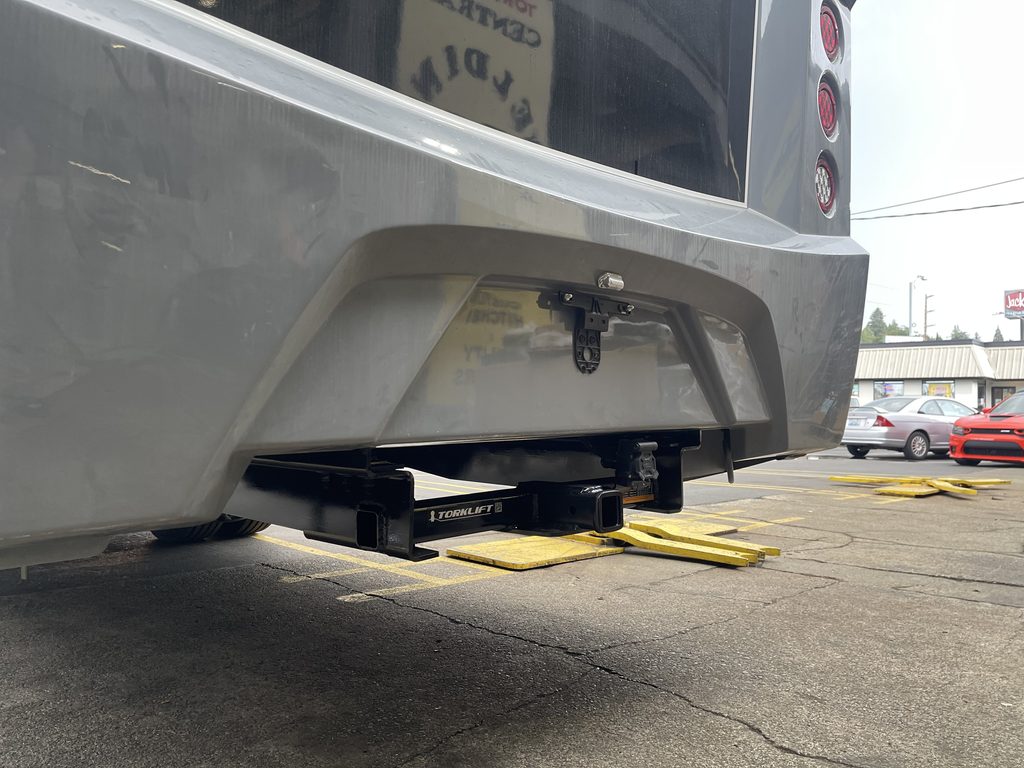
A bent, rusty, loose, or previously welded RV hitch raises one question for most owners: repair it or replace it? The hitch alone cannot answer that. The receiver you can see is attached to a cross tube, brackets, fasteners, and an RV frame or frame extension you mostly cannot see, and the condition of all of it decides what comes next.
Torklift Central in Kent, WA inspects the existing hitch and the RV structure behind it before recommending a repair, a replacement, or a custom hitch review. That applies to travel trailers, fifth wheels, and motorhomes with rear receivers. Here is what the inspection covers and what to bring.
Why the Hitch Appearance Cannot Answer the Question
A receiver can look straight and still be attached to cracked brackets. A receiver can look rough and still be sound underneath surface rust. And a hitch that has carried a bike rack for years can still be the wrong hitch for the cargo carrier or generator tray you want to add next.
Repair or replace depends on three things: the condition of the hitch components, the condition of the RV structure they attach to, and the load you plan to put on them. All three require hands-on inspection.
What Torklift Central Inspects
An RV rear hitch inspection at Torklift Central covers the full load path, from the receiver opening back into the RV structure:
- The existing receiver
- The cross tube
- Mounting brackets
- Welds
- Fasteners
- The RV frame
- Frame extensions
- The rear bumper
- Any previous reinforcement
- Previous modifications
- Corrosion, cracks, and deformation
- Nearby tanks, wiring, plumbing, and exhaust
The inspection also considers the accessory or towing load you plan to carry and the RV's rear overhang. Both affect the forces acting on the hitch, and both shape whether the existing hitch suits the job you have in mind.
Surface Corrosion vs Structural Corrosion
Rust is the most common reason owners ask about hitch replacement, and it is also the most commonly misread. Surface corrosion and finish deterioration affect appearance and protection. Structural corrosion involves material loss: pitting, scaling, thinning, or perforation that reduces the strength of the receiver, cross tube, brackets, or frame.
Visible rust alone does not prove a hitch must be replaced. Fresh paint alone does not resolve structural corrosion either. A painted-over hitch with material loss underneath is still a hitch with material loss.
Our technicians look at how deep the corrosion goes and where it sits. Corrosion at a weld, a mounting point, or around a fastener carries different weight in the decision than light rust on an exposed flat surface.
Previous Modifications and Hitches of Unknown Origin
Many RVs arrive at Torklift Central with rear hitch work someone else did. Common examples include:
- Added welds
- An extended receiver
- Homemade reinforcement
- A relocated cross tube
- Bumper-mounted accessory brackets
- Receiver extensions of unknown origin
- Previous custom fabrication
A modification that has been used for years is not automatically acceptable. Past use does not show how close the structure has been to its limit, and a new accessory or a heavier load changes the forces involved. When the origin of a hitch or modification is unknown, Torklift Central treats it as something to inspect, not something to assume. If you have records, receipts, or photos of the original work, bring them.
Leave Structural Hitch Repairs to the Inspection
Damaged structural hitch components are not a weekend project. Straightening a bent receiver tube, welding a cracked component, heating damaged steel, grinding out cracks, adding reinforcement plates, or drilling new structural mounting holes all change how the metal and the structure carry load, and the result is hard to verify after the fact.
If you suspect damage, stop using the hitch for accessories or towing until it has been inspected, and bring the RV in as it is. That gives our technicians and onsite engineers the clearest view of what happened and what the structure needs.
Possible Outcomes After Inspection
After reviewing the hitch, the structure, and your intended load, the result is one of these outcomes:
- The existing hitch remains usable for the intended load
- A hardware or maintenance issue can be corrected
- A compatible replacement hitch exists for the RV
- A custom replacement needs engineering review
- The RV structure needs additional evaluation
| Condition | Why it matters | What Torklift Central reviews | Possible next step |
|---|---|---|---|
| Bent or deformed receiver | Deformation can mean the receiver or mounts were overloaded or struck | Receiver alignment, mounts, brackets, and the frame behind them | Replacement, custom review, or structural evaluation |
| Surface rust or finish wear | Affects protection and appearance, not always strength | Whether corrosion is surface-level or involves material loss | Continued use with maintenance, or further inspection |
| Advanced corrosion or material loss | Thinner metal carries less load | Depth and location of corrosion on the receiver, cross tube, brackets, and frame | Replacement or structural evaluation |
| Loose hitch or fasteners | Movement can wear mounting holes and brackets | Fastener condition, hole wear, and bracket integrity | Hardware correction or replacement, based on findings |
| Cracks or questionable welds | Cracks can grow under repeated load | Weld quality, crack location, and surrounding structure | Replacement, custom review, or structural evaluation |
| Previous modification or unknown origin | Design and workmanship are unknown | How the modification was built and attached | Inspection-based decision, which can include replacement |
| New accessory or heavier load | The existing hitch may not suit the new use | Intended load, rear overhang, and component ratings | Keep, replace, or review a custom path |
| Nearby tanks, wiring, plumbing, or exhaust | These limit repair and replacement options | Clearance around the mounting area | Factored into any replacement or custom plan |
When a custom replacement is the right direction, the Kent, WA Retail Product Development Center can review it with onsite engineers and in-house fabrication, including 3D scanning, SolidWorks design, Finite Element Analysis, laser tube cutting, water jet cutting, welding, and powder coating as the project requires. Feasibility, design, capacity, price, and timeline are confirmed after review.
Inspect the RV Structure Before Deciding to Repair the Hitch
Bring these details to your inspection appointment, or send them with your request:
- RV type, year, make, and model
- Photos of the hitch, receiver, and underside of the rear frame area
- When the damage was noticed, and what happened if you know
- Any history of previous modifications, with records when available
- The accessory or trailer you plan to use, with weights
- Any labels or markings on the existing hitch
Inspections and installations take place at Torklift Central in Kent, WA. A requested date or time is confirmed once the service team reviews your details and approves the appointment.
How Torklift Central Can Help
As a towing equipment provider with onsite engineers and in-house fabrication, Torklift Central inspects your RV hitch and the structure behind it, then tells you whether the hitch can stay, needs correction, needs replacement, or needs a custom review. Call 253-854-1832 or request an inspection appointment with photos of the hitch and underside ready.
Key Takeaways
- An RV hitch repair or replacement decision depends on the hitch components, the RV structure, and the intended load, not on appearance alone.
- Surface rust does not automatically mean replacement, and paint does not fix structural corrosion.
- Previous modifications and hitches of unknown origin need inspection, even if they have been used for years.
- Do not straighten, weld, heat, grind, reinforce, or drill damaged structural hitch components. Bring the RV in for inspection.
Frequently Asked Questions
Can a bent RV hitch be repaired?
That depends on what bent it and what else was affected. Torklift Central inspects the receiver, cross tube, brackets, and RV structure before recommending repair, replacement, or a custom review. A bent receiver is often a sign the load reached the structure behind it too.
Should a rusty RV receiver be replaced?
Not automatically. Surface rust and structural corrosion are different conditions. Our technicians check whether the corrosion involves material loss and where it sits before recommending replacement.
Can Torklift Central inspect an old custom RV hitch?
Yes. Previous custom hitches and modifications of unknown origin are inspected for how they were built, how they attach, and whether they suit the load you plan to carry.
What if my RV hitch was previously welded?
Previous welds are part of the inspection. Torklift Central reviews weld quality, location, and the surrounding structure. Bring any records of the original work if you have them.
Can an RV hitch be replaced with a custom receiver?
When no compatible replacement exists, Torklift Central can review a custom receiver. Feasibility, design, capacity, price, and timeline are confirmed after inspection.
What should I bring to an RV hitch inspection?
Bring the RV type, year, make, and model, photos of the hitch and underside, what you know about the damage, any modification records, and the accessory or trailer details you plan to use.
Ratings and Safety Notice
A hitch repair or replacement does not increase the RV manufacturer's GVWR, GAWR, or towing capacity. Follow the RV manufacturer's guidance, the hitch rating, and accessory instructions, and stay within the lowest-rated component in the setup.
Worried about a damaged, corroded, or modified RV hitch? Request an RV hitch inspection at Torklift Central in Kent, WA, or call 253-854-1832 to talk to a technician.