
How to plan a 2 inch front receiver into a complete Silverado EV work truck package, from accessory selection to front axle loading.
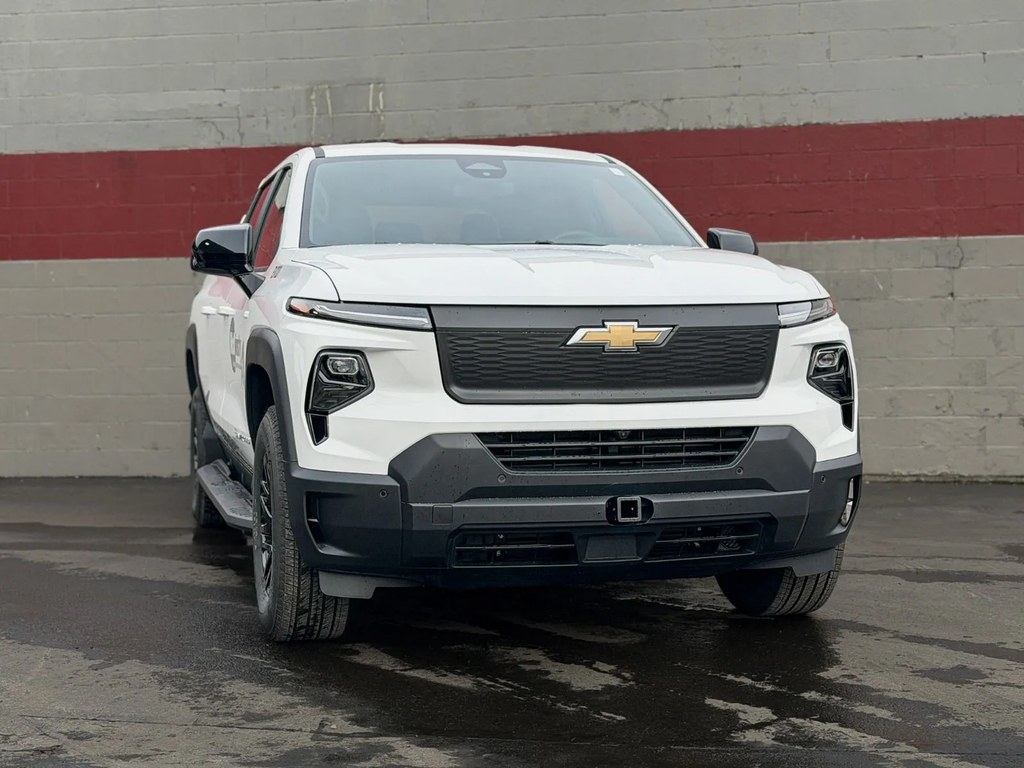
The NorthHitch for the 2024-2026 Chevrolet Silverado EV is the only front hitch option on the market for the Silverado EV. This front hitch adds a 2 inch stainless steel front receiver to the truck, giving a fleet a forward mounting point for equipment such as a winch, a receiver-mounted snow plow, or a front cargo tray. For a fleet, the hitch itself is the simple part. The real planning is deciding which front accessories each truck will carry, matching those accessories to the receiver and vehicle ratings, and making sure the front receiver works with everything else in the upfit.
This guide covers fitment, the current published ratings, front accessory planning, and how a front receiver fits into a complete Silverado EV fleet build.
What a Front Receiver Adds to a Silverado EV Work Truck
Most work trucks have one receiver, at the rear, so every hitch-mounted accessory competes for the same spot. On a truck that tows a trailer, carries a hitch-mounted liftgate, or runs a rear cargo carrier, that receiver is already spoken for.
A front receiver separates the jobs. The rear stays available for towing or rear equipment, and the front handles gear that is easier to use facing forward: a winch for self-recovery or equipment loading, a receiver-mounted plow for lots and access roads, or a cargo tray that keeps wet or dirty equipment out of the cab. The Silverado EV NorthHitch product page lists E-Bikes, cargo trays, winches, and snow plows among its intended front-mounted uses.
The NorthHitch uses a fully concealed cross tube with a receiver integrated into the bumper, so the truck keeps its ground clearance and the receiver sits flush rather than recessed under the fascia. That matters for fleet accessories, since a recessed receiver often needs an extender that adds leverage and play to every load.
Fitment and Part Number Details to Confirm
The NorthHitch is listed for 2024, 2025, and 2026 Chevrolet Silverado EV models. It bolts to the frame using pre-existing bolt holes, so installation does not require drilling.
Torklift Central currently lists the Silverado EV application as part number X7925S-P with a 2 inch receiver. Before the hitch goes into a fleet specification or purchase order, confirm the active part number on the current product page and in Find Your Fit. The part number written into a fleet standard should match the released product exactly, because that is the number your team will reorder from.
For a group of trucks, confirm each vehicle rather than assuming the whole fleet is identical. Model year and any front-end equipment already installed can affect fitment, even when two trucks look the same from the curb.
Reading the Published Ratings Correctly
The current product page lists these figures for the Silverado EV NorthHitch:
- Receiver: 2 inch, stainless steel (patent pending)
- Tongue weight: estimated 750 lb at the trailer ball
- Trailer weight: estimated 7,500 lb
- Line pull: estimated 10,000 lb
These ratings are labeled as estimates, and the product page states that confirmed design and specifications will be posted at release. Use them as planning references and write the final released ratings into any fleet specification.
Two rules apply to every setup. First, no hitch increases the Silverado EV's factory ratings. The truck's towing capacity, payload, and front axle rating set the outer limits, and the owner's manual controls. Second, the lowest-rated component in the system controls. If a winch mount, plow adapter, or cargo tray carries a lower rating than the receiver, the lower number is the limit.
Accessories that extend weight away from the receiver also reduce usable capacity. A cargo tray loaded at its outer edge puts more leverage on the receiver than the same weight carried close in. The Maximum Hitch Weight (Tongue Weight) Estimator helps estimate that effect before a setup goes into service.
Matching Front-Mounted Work Equipment to the Receiver
Winches
Line pull is the rating that governs winch use. Match the winch's rated pull, the winch carrier or mounting plate rating, and the recovery method to the receiver's line pull rating. A receiver-mounted winch also adds weight ahead of the front axle every mile the truck drives with it installed.
Snow plows
The NorthHitch is designed for controlled, low-speed pushing with front receiver-mounted plows. That does not make every plow a match. Confirm the specific plow's weight, its mounting requirements, and the plow maker's vehicle guidance, including how much weight the front axle carries with the blade raised for transport.
Cargo trays and racks
Trays and racks are the most flexible front accessories, and the easiest to overload. Weigh what the crew actually carries, not what the tray can hold, and keep heavier items close to the receiver.
Sensors and tow hooks
NorthHitch Sensor Safe design positions the hitch structure outside typical parking sensor and radar paths, and the hitch is designed to retain the OEM tow hooks. A mounted accessory is a separate question. A loaded tray or a raised plow can block sensors or cameras, so check driver-assist behavior with each accessory installed before the truck goes into service.
Planning the Front Receiver Into the Complete Upfit
A front receiver is one component in a work truck package. Before ordering for several trucks, look at how it interacts with everything else on the vehicle.
- Front axle load. A winch or plow adds weight ahead of the front axle. Total front axle load must stay within the front GAWR.
- Payload. Every installed item counts against payload, including the hitch, front and rear accessories, racks, storage, tools, and crew.
- Rear equipment. If the rear receiver tows or carries a hitch-mounted liftgate, plan front and rear accessories together so the combined load stays within the truck's ratings.
- Accessory power. A front winch needs power. Connections follow the winch maker's instructions and the vehicle's upfitter guidance. High-voltage systems are never modified or tapped for accessory power.
- Range. Added weight and front-mounted equipment that changes airflow can reduce driving range. Plan routes using the loaded configuration, not the empty truck.
Standardization is where a front receiver pays off. When every Silverado EV in a group uses the same receiver, the same accessory mounts, and the same documented setup, crews can move equipment between trucks and the next truck can be built to match.
Silverado EV Front Receiver Fleet Planning Checklist
| Planning item | What to confirm | Why it matters |
|---|---|---|
| Vehicle fitment | Model year (2024-2026) and the active part number for each truck | Front hitches are vehicle-specific |
| Released ratings | Final published tongue weight, trailer weight, and line pull | The current listing shows estimated figures |
| Front accessory list | Each accessory, its weight, and its own rating | The lowest-rated component controls |
| Accessory reach | How far the load sits from the receiver | Leverage reduces usable capacity |
| Front axle load | Weight added ahead of the front axle, including a raised plow | Must stay within front GAWR |
| Payload | Total weight of hitch, accessories, racks, tools, and crew | All installed equipment counts against payload |
| Sensors and cameras | Driver-assist function with each accessory mounted | Accessories can block sensor and camera paths |
| Accessory power | Winch power source and routing per the winch instructions | High-voltage systems are not modified |
| Rear equipment | What the rear receiver carries or tows | Front and rear plans share the same vehicle ratings |
| Documentation | Part numbers, accessory specs, and installation photos | The next truck can be built to match |
How Torklift Central Can Help You Shop
If you need front receiver capability on a 2024-2026 Silverado EV, the NorthHitch is the product to review first. As a towing equipment provider with on-site installation in Kent, WA, Torklift Central can help confirm the right part number for each truck, review your front accessory plan against the released ratings, and install the hitch with a technician walking through the setup with you. For larger rollouts, the fleet upfitting team can plan the front receiver as part of a complete work truck package.
Before you call, have each truck's model year, the front accessories you plan to mount, and the rear equipment already on the truck ready to share.
Key Takeaways
- The NorthHitch adds a 2 inch stainless steel front receiver to 2024-2026 Silverado EV models and bolts on using existing frame holes.
- Current published ratings are estimates (750 lb tongue weight, 7,500 lb trailer weight, 10,000 lb line pull). Fleet specifications should use the final released ratings.
- Every front accessory must be checked against its own rating, the receiver, front GAWR, and payload. The lowest-rated component controls.
- Plan the front receiver with rear equipment, accessory power, and range so the whole truck works as one repeatable package.
Frequently Asked Questions
Which Silverado EV model years does the NorthHitch fit?
The front-mounted NorthHitch is listed for 2024, 2025, and 2026 Chevrolet Silverado EV models. Use Find Your Fit or the product page to confirm the exact application for each truck.
Is the part number X7925S or X7925S-P?
The current Torklift Central listing shows X7925S-P with a 2 inch receiver. Confirm the active part number on the product page before writing it into a fleet specification or purchase order.
Does a front hitch increase the Silverado EV's towing or payload capacity?
No. A hitch does not increase any factory rating. The truck's published ratings and the lowest-rated component in the setup always set the limit.
Can any winch or snow plow be mounted on the front receiver?
No. Each accessory has its own rating and mounting requirements. Winches are matched to line pull, plows to the plow maker's vehicle guidance and front axle load, and every accessory to the released receiver ratings.
Will front-mounted equipment affect driving range?
It can. Added weight and equipment that changes airflow can reduce range, so plan routes based on how the truck is actually configured.
Can Torklift Central install the NorthHitch on several fleet trucks?
Yes. Torklift Central installs at its Kent, WA facility, and scheduling for multiple vehicles is set up with the fleet team based on your quantities and timing.
Shop the Silverado EV NorthHitch or Plan a Complete Fleet Upfit
Shop the Silverado EV NorthHitch at Torklift Central and review the current product page for released specifications before ordering.
Planning several trucks? Start with Fleet Upfitting or call 253-854-1832 to talk through a complete Silverado EV work truck package.
Torklift Central, 315 Central Ave N, Kent, WA 98032
IMPORTANT NOTICE:
While NorthHitch trailer hitches are built with high-strength materials and tested for exceptional weight ratings, your vehicle’s factory towing capacities are the ultimate limit. Always refer to your vehicle’s owner’s manual to determine its maximum towing and tongue weight ratings. No aftermarket hitch or accessory can increase your vehicle’s factory-rated towing capacities.
Using hauling accessories like extensions, cargo trays, bike racks, or other accessories that extend the load out from the trailer hitch, will significantly reduce the tongue weight capacity of your hitch system.
To estimate how your setup will affect tongue weight, we recommend using our Maximum Hitch Weight (Tongue Weight) Estimator before hauling your payload (cargo trays, bike racks, etc).
Disclaimer: It is the user’s responsibility to ensure safe towing practices and to confirm that all loads fall within the limits of the lowest-rated component in the towing system. Torklift is not liable for any damage or injury resulting from the misuse or overloading of towing/hauling equipment.